


1


Uuendatud oktoober 2026 · järjestatud meie populaarsusindeksi järgi (otsingud, külastused ja tellimused igale teosele) · 48 teost Othon Friesz meie kataloogis
Lühidalt
Scene in a Parisian Brasserie (1906) on Othon Friesz maalide kõige silmapaistvam teos; originaal kuulub museumi Museum Barberini, Potsdam. Pärast seda suunatakse pilk The Bathers of Andelys (1908) ja Interior (1914) suunas. Meie kataloogis olevatest Othon Friesz 48 teosest on need 48 kõige kuulsumat, millist igaüks on esitatud koos aasta, muuseumi ja põhjusega, miks teos on püsiv.


The oil on canvas titled Temptation (Adam and Eve) was painted by Othon Friesz in 1910. This work measures 73 x 60 cm. It captures a moment of profound weight through the figures of Adam and Eve. The scene is held within the permanent collection of the Hermitage Museum.


 Nude Reclining
12
 The CreekSan Diego Museum of Art
13
 The Harbour in Honfleur1907 · National Museum of Art, Architecture and Design
14
 Flowers (Tulips and Daisies)1910 · Hermitage muuseum
15
 Vue du château Fallet1907 · Musée d'Unterlinden
16
 The Sunken Road in Winter1913 · Statens Museum For Kunst
17
 The Arbour in the Pine Wood1914 · Statens Museum For Kunst
18
 Still Life with Brioches1916 · Statens Museum For Kunst
19
 Still Life with Apples1915 · Statens Museum For Kunst
20
 Terrace with Palms1914 · Statens Museum For Kunst
21
 The Cliff at Sainte Marguerite1914 · Statens Museum For Kunst
22
 The Peaches1914 · Statens Museum For Kunst
23
 Spring1913 · Statens Museum For Kunst
24
 The Harbour of Le Havre1921 · Royal Museum of Fine Arts Antwerp
25
 Under the Fig1922 · Statens Museum For Kunst
26
 The Mountain Coudon Seen from Cap BrunRoyal Museum of Fine Arts Antwerp
27
 The ramparts of Saint-MaloMusée Toulouse-Lautrec
28
 Port
29
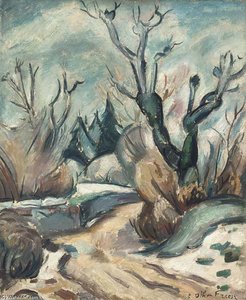 The Jura
30
 Landscape
31
 Port Of Toulon
32
 Baigneuses
33
 Flowers
34
 Construction Of Sheds At Istres
35
 Window On The Port Of Toulon
36
 Bateau Et Coquillages
37
 Seated Woman
38
 Nature Morte
39
 Landscape At Home
40
 A Village Street
41
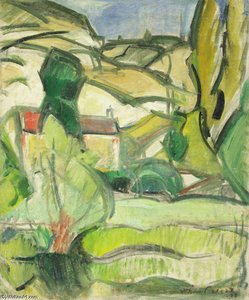 Landscape -
42
 A Still Life With Flowers In A Vase
43
 Drawings for ceramic platesMuseu do Caramulo
44
 Landscape of La Ciotat1907 · Centre Pompidou
45
 The Port of Anvers1906 · La Boverie
46
 Autumn Work1908 · National Museum of Art, Architecture and Design
47
 Roofs and Cathedral in Rouen1908 · Hermitage muuseum
48
 Le Havre, Bassin du Roy1906
Neli teemat, mis esinevad neis originaalkindel kõige sagedamini, ning iga teema parim näide.
Kümne 8 muuseumi kollektsioonid, mis sisaldavad kõige rohkem sellel lehel esitatud teoseid.
| Muuseumid | Linn | Othon Friesz teosid | Selle nimekirja maalid |
|---|---|---|---|
 Statens Museum For Kunst |
Kooberemaa | 13 | Interior, Mother's Love, The Lady on the Terrace |
 Hermitage muuseum |
Stiiitlinburg | 3 | Temptation (Adam and Eve), Flowers (Tulips and Daisies), Roofs and Cathedral in Rouen |
 National Museum of Art, Architecture and Design |
Oslo | 2 | The Harbour in Honfleur, Autumn Work |
 Royal Museum of Fine Arts Antwerp |
Antverp | 2 | The Harbour of Le Havre, The Mountain Coudon Seen from Cap Brun |
 Museum Barberini |
Potsdam | 1 | Scene in a Parisian Brasserie |
 Musee du Petit Palais |
Geneva | 1 | The Bathers of Andelys |
 Israel Muuseum |
Jeruusalemma | 1 | The Decorated Cruiser, Antwerp |
 San Diego Museum of Art |
San Diego | 1 | The Creek |
Vali vuosakülg, et näha selle ajastu definieerivat originaalteost.
Scene in a Parisian Brasserie (1906), Museum Barberini, Potsdam. Järgnevad The Bathers of Andelys (1908) ja Interior (1914).
27 aastat vanus: teos Scene in a Parisian Brasserie on pärinev aastast 1906 ning Othon Friesz sündis aastal 1879.
Scene in a Parisian Brasserie, The Bathers of Andelys, Interior, Mother's Love, The Lady on the Terrace, Female Nude, Temptation (Adam and Eve), The Decorated Cruiser, Antwerp, Le Havre Port ja Nude Lying in a Landscape. Ülemine reiting näitab iga teose puhul aastat ja muuseumi.
Meie kataloogist leiate 48 teost kunstnikult Othon Friesz, mis on pärinevad ajastust 1903 kuni 1923.
Peamiselt Statens Museum For Kunst (Kooberemaa), Hermitage muuseum (Stiiitlinburg) ja National Museum of Art, Architecture and Design (Oslo) muuseumites. Ülalpool olevate muuseumite tabelis on nendest kõik loetletud.
Ajal 1910s: 13 48 sellel lehel olevat teost on sellel perioodil loodud, მათart közül Interior.
Sellel lehel on kõige vanem teos Le Havre Port (1903) ja kõige värskeim Female Nude (1923).
Flowers (2) ja Landscape (2), kogu selle lehekülje 48 teose kohta.
Interior, Mother's Love ja The Lady on the Terrace: Statens Museum For Kunst, Kooberemaa säilitab 13 selle lehel olevat teost.