


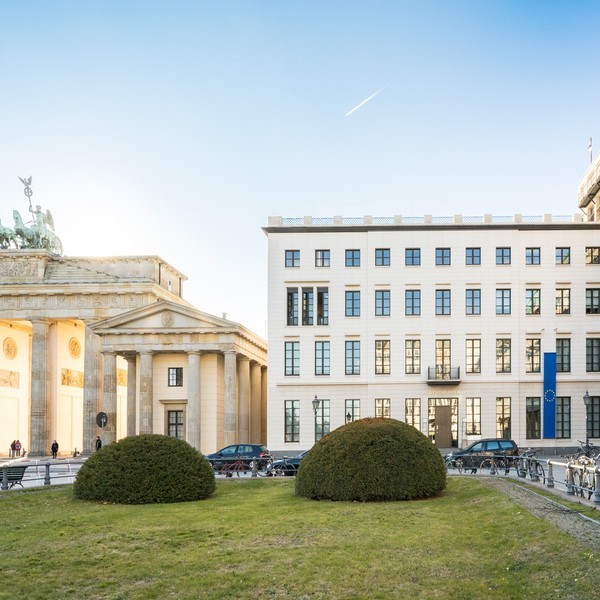
Un Faro de Arte y Memoria Alemana
Enclavada en el corazón palpitante de Berlín, junto a la icónica Puerta de Brandeburgo, la Stiftung Brandenburger Tor se erige como un profundo testimonio del perdurable espíritu artístico de Alemania y su capacidad de renacimiento. Más que un mero repositorio de artefactos, esta institución sirve como un puente vital entre las densas sombras de la historia y la luz vibrante del diálogo cultural contemporáneo. La fundación opera dentro de los muros sagrados de la Max Liebermann Haus , una estructura que es, en sí misma, una obra maestra del modernismo. Diseñada por el legendario Erich Mendelsohn en 1928, esta residencia de inspiración Bauhaus ofrece una experiencia arquitectónica definida por su imponente atrio y sus amplios ventanales, que invitan a la cambiante luz de Berlín a danzar sobre sus superficies, reflejando la misión del museo de iluminar la evolución de la identidad alemana.
Obras Maestras de Emoción e Identidad
El alma de la colección reside en su meticulosa curaduría de obras maestras alemanas que abarcan desde las eras transformadoras del Romanticismo hasta la cruda intensidad del Expresionismo. Se invita a los visitantes a deambular por una narrativa de emoción nacional, encontrándose con obras de luminarias que redefinieron los límites de la percepción. Es imposible recorrer la institución sin conmoverse ante el poder expresivo de Eranc Ludwig Kirchner . Su pintura monumental, Brandenburg Gate in Berlin , captura el monumento histórico de la ciudad con un sentido de solemnidad y grandeza, utilizando pinceladas audaces y rítmicas junto a una paleta de tonos apagados para transmitir el peso psicológico del pasado de una nación.
En contraste con la tensión urbana que se encuentra en la obra de Kirchner, la colección ofrece la delicada precisión de Max Liebermann , cuyas series de retratos desenmascaran magistralmente la vida interior de sus sujetos, revelando la vulnerabilidad humana a través de un sutil juego de luces y sombras. Estas obras, junto con las piezas provocativas de Otto Dix y Georg Baselitz , crean un diálogo que es tanto profundamente personal como ampliamente histórico. Para el coleccionista o el diseñador de interiores, la institución representa la cúspide de la inspiración estética, ofreciendo una mirada profunda a cómo el movimiento, el color y la forma pueden encapsular el zeitgeist de una era.
Un Diálogo Vivo con el Presente
Lo que verdaderamente distingue a la Stiftung Brandenburger Tor es su negativa a permanecer estática dentro de los confines del pasado. Si bien rinde homenaje a los maestros del patrimonio alemán, la fundación se nutre de la energía del presente a través de exposiciones temporales que abordan temas sociales y políticos apremiantes. Estas muestras curadas sirven como crisoles intelectuales, estimulando la reflexión crítica sobre cuestiones contemporáneas y fomentando un espacio donde el arte se encuentra con el activismo. A través de sus alianzas internacionales y robustas iniciativas educativas, la fundación continúa cultivando un aprecio global por el poder transformador del arte, asegurando que el legado de la creatividad alemana siga siendo una fuerza viva y palpitante en el mundo moderno.


