A Symphony of Stone and Light: Exploring the Würzburg Residence
The Würzburg Residence stands as a breathtaking testament to the power and artistry of the Baroque era, a palace not merely built but orchestrated. Rising from the heart of Germany’s Franconia region, in the city of Würzburg, it isn't simply a historical building; it is an immersive experience—a journey into a world where art, architecture, and ambition converged to create something truly extraordinary. Commissioned by the Prince-Bishops Johann Philipp Franz von Schönborn and Friedrich Carl in 1705, the Residence was conceived as a bold declaration of dynastic prestige and intellectual fervor, mirroring the grandeur of Versailles and Vienna while firmly rooted in Bavarian identity. Unlike many palaces that accrued wealth through incremental additions over centuries, this ambitious project saw its completion within a remarkably focused timeframe—a mere decade—thanks to the unwavering vision of Balthasar Neumann and the patronage of enlightened rulers determined to elevate their realm’s cultural standing. This singular dedication resulted in an unparalleled harmony between artistic expression and architectural innovation, establishing the Residence as one of Europe's most celebrated Baroque masterpieces.
The Frescoes of Tiepolo: A Narrative Tapestry
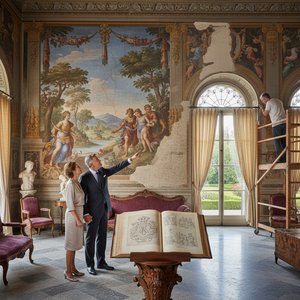
At the very core of the Residence’s allure lies the monumental œuvre of Giovanni Battista Tiepolo—a Venetian painter whose canvases transformed vast ceilings into immersive narratives celebrating the Schönborn family’s lineage and embodying the ideals of Habsburg rule. More than mere decoration, Tiepolo's frescoes constitute a profound engagement with mythology and allegory, skillfully interwoven to convey moral lessons and reinforce dynastic legitimacy. The Imperial Hall, dominated by “The Apotheosis of Saint George,” commands attention with its masterful perspective illusion and luminous color palette—a testament to Tiepolo’s unparalleled technical prowess. Scenes depicting biblical tales alongside portraits of Schönborn princes illuminate the grandeur of Habsburg power, inviting viewers into a world brimming with symbolism and artistic brilliance. The Stairwell of the Residence, arguably Tiepolo's crowning achievement, houses “The Triumph of Saint Luke,” an expansive fresco that ascends in dizzying curves—a breathtaking spectacle of color and movement designed to inspire awe and reverence. Each brushstroke contributes to a larger narrative, transforming architectural space into a canvas for artistic storytelling.
Neumann’s Architectural Genius: Shaping Space and Emotion
Complementing Tiepolo's frescoes is Balthasar Neumann’s architectural brilliance—a visionary designer who reshaped the very fabric of Würzburg itself. Departing from conventional château architecture, Neumann embraced innovative structural techniques to create a palace that defied gravity and captivated visitors with its soaring height and graceful curves. The Grand Staircase, considered by many to be the longest staircase in Europe, exemplifies Neumann’s mastery—its monumental proportions and intricate sculptural decorations convey an overwhelming sense of grandeur and majesty. Careful consideration was given to natural light—windows strategically positioned to bathe the interior spaces in ethereal illumination—enhancing the emotional impact of each room and reinforcing the palace's symbolic significance as a beacon of Habsburg splendor. Neumann’s architectural vision seamlessly blended Italian Renaissance influences with Viennese Baroque sensibilities, resulting in an aesthetic that remains remarkably influential today.
A Royal Legacy: From Schönborn Rule to Modern Exhibitions
The Würzburg Residence served as the seat of power for the Schönborn princes from 1705 until the Napoleonic Wars, witnessing pivotal moments in Bavarian history and fostering a vibrant cultural environment. Throughout its centuries-long existence, the palace hosted lavish celebrations—grand balls, diplomatic receptions, and theatrical performances—solidifying Würzburg’s reputation as a center of artistic patronage and aristocratic refinement. Today, the Residence continues to inspire visitors with its breathtaking beauty and historical grandeur—hosting exhibitions exploring diverse themes ranging from Baroque art history to contemporary interpretations of Bavarian identity. Guided tours illuminate the palace's architectural marvels and artistic treasures, providing insights into the lives of those who inhabited it and contributed to its enduring legacy. Furthermore, ongoing conservation efforts ensure that future generations can appreciate the splendor of this UNESCO World Heritage Site—a testament to Bavaria’s commitment to preserving cultural heritage for posterity.
Unique Features: The Largest Ceiling Fresco in the World
What distinguishes the Würzburg Residence from countless other palaces across Europe is undeniably its unparalleled artistic achievement—the Stairwell's fresco, which holds the distinction of being the largest ceiling fresco ever created—a monumental undertaking that pushed the boundaries of Baroque painting technique. Measuring over 60 square meters, this breathtaking artwork embodies Tiepolo’s mastery of perspective and color, transporting viewers into a realm of mythic grandeur and artistic splendor. Its sheer scale underscores Neumann's architectural ambition—creating a space designed to inspire awe and wonder—and reinforces the Residence’s status as one of Europe’s most extraordinary cultural landmarks. Visiting the Würzburg Residence is not merely observing art; it’s embarking on an unforgettable journey into the heart of Baroque artistry and Bavarian history.