

Índice
Información clave
- Works on APS: 1
- Alternate names:
- Registro de Baños de Bath
- Archivos de Bath
- Registro de Baños
- Bath Archives
- B&NES
- Featured artists: leonard frank skeats
- Location: Bath, United Kingdom
Test de arte
Cada pregunta tiene una única respuesta correcta.
Pregunta 1:
¿Cuál es el propósito principal del Registro de Baños?
Pregunta 2:
¿Qué colección se centra en la investigación genealógica?
Pregunta 3:
¿Qué característica arquitectónica distingue al Registro de Baños de otras instalaciones archivísticas modernas?
Pregunta 4:
¿El papel del Registro de Baños se extiende más allá simplemente almacenar documentos; tiene como objetivo...
Pregunta 5:
¿Qué tipo de material predomina en las colecciones del Registro?
Artistas en la colección

leonard frank skeats
Explore the evocative landscapes of Leonard Frank Skeats – a Pennsylvania Impressionist capturing rural scenes & light. Discover his serene paintings at the Payne Gallery.

Artículos relacionados
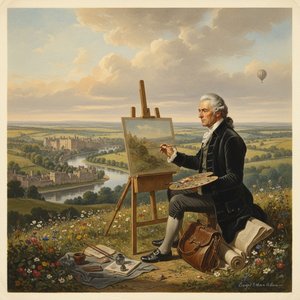
Thomas Sandby: Pioneering Watercolourist & Topographer of Georgian England
Explore the life & art of Thomas Sandby (1721-1798), a pioneering English watercolourist and architect. Discover his innovations, role in founding the Royal Academy, and lasting legacy at OriginalUniqueArt.

Echoes of Heritage: Continuity & Innovation in Traditional Art Forms
Explore the rich history of cultural heritage & folk art traditions worldwide! Discover inspiring artists, preservation efforts, and museum collections. Find handmade oil paintings & expert insights at OriginalUniqueArt.

Thomas H. Shepherd: Capturing Victorian London's Essence Through Topographical Precision
Explore the exquisite topographical paintings of Thomas H. Shepherd, renowned for his detailed depictions of Victorian London and beyond. Discover his legacy & artistic techniques.


Suscríbete a nuestro boletín informativo
Manténgase al día con las últimas noticias de arte, ofertas exclusivas e ideas de decoración.
Obtén 3 sugerencias de arte gratuitas
Cuéntanos sobre tu proyecto y nuestros expertos en arte te ofrecerán 3 sugerencias de obras personalizadas.
Not Sure Where to Start?
Let Us Curate 3 Options Just for You - Free!