Pinacoteca Comunale: Un Viaje a Través del Arte y la Historia de Volterra
The Pinacoteca Comunale (Museo Civil) of Volterra invites you on an unforgettable journey through Tuscan art and history, nestled within the magnificent Palazzo Minucci-Solaini. This museum isn’t merely a repository of artworks; it's a living testament to Volterra’s enduring cultural legacy—a place where echoes of Etruscan civilization mingle with the brilliance of Renaissance masters. Its intimate atmosphere encourages contemplation and discovery, allowing visitors to appreciate artistic treasures at their own pace and fostering a deeper connection to Volterran heritage.
Renaissance Masterpieces: Echoes of Florentine Innovation
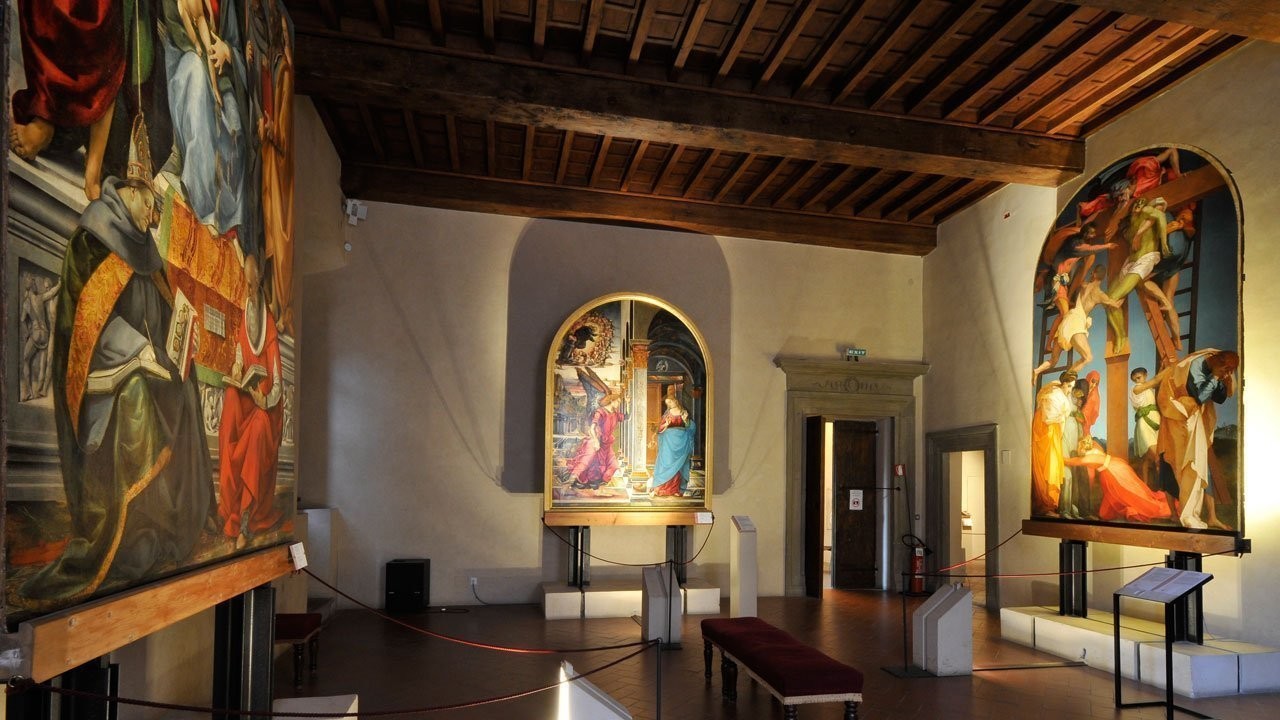
The Pinacoteca’s core collection shines brightest with paintings born from the crucible of Florence during the Renaissance—a period marked by intellectual ferment, artistic experimentation, and an unwavering belief in human potential. Among its most celebrated treasures is Rosso Fiorentino's “La Deposizione,” a monumental depiction of Christ being lowered from the cross that transcends mere representation to embody profound emotional resonance. Painted in 1521 for the chapel of San Francesco, this masterpiece captures the sorrowful gaze of Mary Magdalene and the solemn posture of Nicodemus—figures rendered with breathtaking realism and imbued with spiritual significance. Rosso Fiorentino’s masterful technique—characterized by angular folds, harsh colors, and hallucinatory faces—reflects the influence of Michelangelo Buonarroti and Fra Bartolomeo—artists who revolutionized artistic conventions during their time. The painting's dramatic composition speaks to the humanist ideals that underpinned Florentine art—emphasizing human emotion and striving for sublime beauty. Alongside Rosso Fiorentino’s masterpiece, Ghirlandaio’s frescoes adorning Palazzo Minucci Solaini showcase vibrant hues and intricate detail—a hallmark of Florentine artistic excellence. These canvases transport viewers into a realm of idealized form and luminous color—demonstrating the enduring power of Renaissance visual art. Luca Signorelli's “Madonna and Child with Saints” exemplifies his unparalleled skill in sculptural form and spatial illusion—creating a serene devotional space that invites contemplation and reverence. The painting’s pyramidal composition—inspired by classical models—commands attention while simultaneously conveying a sense of harmonious balance.
Medieval Art: Reflections of Faith and Tradition
Delving deeper into Volterra’s artistic past reveals the profound influence of medieval art—characterized by stylized figures, symbolic narratives rooted in Christian iconography, and meticulous craftsmanship. Fragments of frescoes unearthed from churches scattered across Volterra illuminate the spiritual sensibilities of the Middle Ages—reflecting a fervent devotion to religious beliefs and traditions. The delicate artistry evident in illuminated manuscripts— adorned with gilded lettering and vibrant illustrations—testifies to the skill of medieval scribes—who painstakingly transcribed sacred texts while adhering to exacting aesthetic standards. Sculptures crafted from alabaster and terracotta—often depicting saints and biblical scenes—demonstrate the artistic prowess of Volterran artisans—who skillfully manipulated materials to convey spiritual meaning. These artworks serve as tangible reminders of Volterra’s connection to its religious heritage—providing insights into the worldview of generations past.
Palazzo Minucci Solaini: A Monumental Setting for Artistic Treasures
The Pinacoteca Comunale resides within Palazzo Minucci Solaini—a building that itself narrates Volterra's architectural history—dating back to the late 1400s and attributed by historians to Antonio da Sangallo il Vecchio. This palazzo stands as a testament to Volterran civic pride—reflecting Renaissance grandeur while incorporating elements from earlier styles—demonstrating the city’s adaptability and artistic ambition throughout time. Its soaring ceilings, ornate decorations—including frescoes depicting scenes from Volterra's past—and harmonious proportions create an immersive environment for visitors—enhancing appreciation for the artworks housed within. The palazzo’s architectural design embodies the humanist ideals that prevailed during the Renaissance—emphasizing symmetry, proportion, and grandeur—reflecting a belief in human dignity and intellectual achievement.
What Makes It Unique: A Holistic Artistic Narrative
The Pinacoteca Comunale distinguishes itself from larger national museums through its intimate scale—allowing visitors to engage with artworks on a personal level—fostering contemplation and fostering a deeper understanding of Volterran artistic heritage. Unlike sprawling institutions dominated by impersonal displays, the Pinacoteca prioritizes accessibility—creating an inviting space for scholars, artists, and enthusiasts alike. Furthermore, its commitment to preserving Volterran cultural treasures ensures that future generations can continue to marvel at masterpieces created by masters like Rosso Fiorentino and Signorelli—solidifying Volterra’s position as a beacon of Tuscan art and culture. Its collection—spanning from Etruscan artifacts to Renaissance paintings—offers a comprehensive panorama of Volterran artistic history—providing visitors with invaluable insights into the city's cultural identity and its enduring legacy.