
Palacio de Peterhof: Una Visión Regia – La Declaración de Rusia en Piedra y Agua
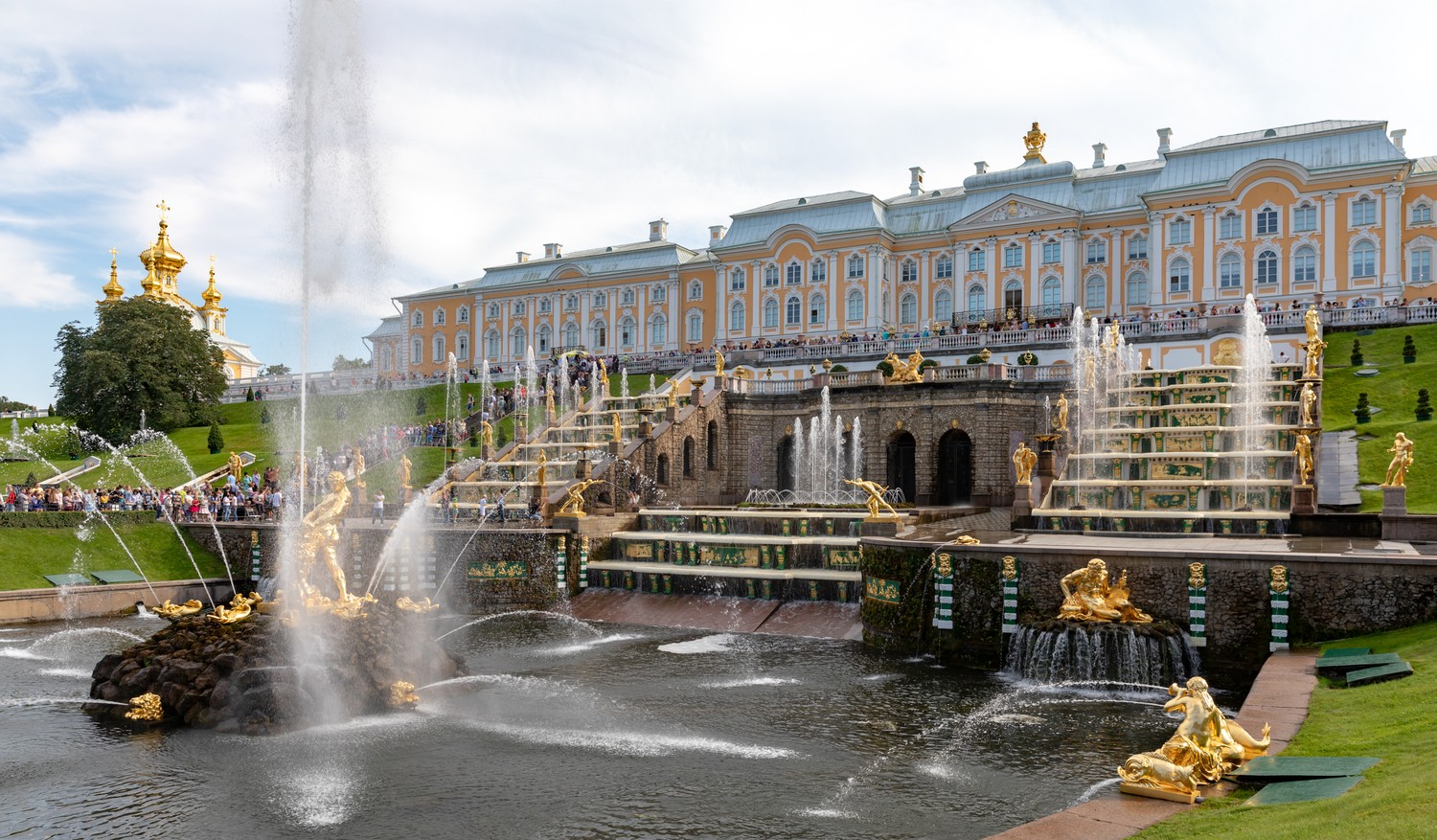
Desde el corazón de San Petersburgo, se despliega un viaje hacia un paisaje esculpido por la ambición imperial y la visión artística: Peterhof. A menudo comparado con Versalles, esta analogía resulta insuficiente; Peterhof no es una mera imitación, sino una articulación puramente rusa de poder, maestría y una profunda conexión con su entorno. Fundado en 1703 por Pedro el Grande, no fue concebido simplemente como una residencia, sino como un audaz manifiesto que anunciaba la llegada de Rusia al escenario europeo. Inspirado por sus viajes al extranjero, particularmente por la corte de Luis XIV, Pedro imaginó un complejo que rivalizara con Versalles en grandeza, pero imbuido de un espíritu distintivamente ruso, forjado tanto por la admiración como por el deseo de superación. La arquitectura misma refleja esta ambición, evolucionando a través del tiempo desde sus cimientos primordialmente barrocos bajo Domenico Trezzini y Bartolomeo Rastrelli, incorporando elementos neoclásicos a medida que sucesivos soberanos, como la emperatriz Isabel y Catalina la Grande, dejaron su huella indeleble en la finca. Aunque quizás no supere a Versalles en escala pura, el Gran Palacio se erige como una obra maestra del diseño ornamentado, fusionando armoniosamente diversas influencias arquitectónicas en un todo cohesivo.- Legado Imperial: La génesis de Peterhof reside en la determinación de Pedro I de elevar el estatus de Rusia en el escenario internacional y emular la magnificencia del Versalles de Luis XIV. Esta ambición impulsó una inversión sin precedancia en el mecenazgo artístico y la innovación arquitectónica.
- Grandeza Barroca: El diseño barroco inicial de Domenico Trezzini estableció una estética monumental, caracterizada por fachadas imponentes adornadas con esculturas e intrincada ornamentación, un eco deliberado de los palacios reales franceses.
- El Florecimiento de Rastrelli: Bartolomeo Rastrelli expandió dramáticamente la escala y la grandeza de Peterhof durante el reinado de Isabel I, incorporando elementos neoclásicos junto a florituras barrocas para crear un espectáculo impresionante.
- El Refinamiento de Catalina la Grande: Catalina II continuó el legado de Rastrelli, encargando nuevos embellecimientos y transformando Peterhof en un símbolo del esplendor imperial, testimonio de los logros culturales de Rusia durante su era.
Jardines con Vida: Fuentes, Cascadas y Retiros Imperiales
La verdadera esencia de Peterhof reside en sus extensos jardines, una intrincada interacción entre la arquitectura y la naturaleza diseñada para inspirar asombro y transmitir autoridad imperial. Estos no son meros espacios decorativos; son parte integral de la identidad del palacio, tejidos sin costuras en el terreno natural para crear efectos visual y vistas impresionantes. El Jardín Inferior está dominado por la Gran Cascada, una hazaña monumental de ingeniería hidráulica que exhibe el ingenio y la visión artística de Rusia. Más de sesenta fuentes convergen en su base, creando un despliegue hipnótico de agua y figuras esculpidas. Más allá de este eje central se encuentra el Parque Alexandria, que presenta estructuras de estilo neogótico como la Capilla, reflejando una fascinación por los estilos arquitectónicos europeos. El Jardín Superior ofrece un entorno más formal, caracterizado por céspedes meticulosamente cuidados y parterres de flores, un oasis de tranquilidad para la contemplación imperial.- La Gran Cascada: Esta obra maestra de la ingeniería barroca utiliza un complejo sistema de canales y bombas para proyectar el agua desde una altura de 72 metros, creando un espectáculo inolvidable.
- El Estilo Neogótico del Parque Alexandria: Construido durante el reinado de Nicolás I, el Parque Alexandria encarna la estética romántica, caracterizada por paisajes pintorescos y edificios ornamentados que recuerdan a los castillos europeos.
- Transformaciones Estacionales: Los jardines de Peterhof experimentan dramáticas transformaciones estacionales, mostrando la belleza de la flora rusa y brindando a los visitantes una experiencia en constante evolución.
Palacios dentro de un Palacio: Intimidad y Opulencia
Peterhof comprende varios palacios distintos, cada uno ofreciendo un vistazo a las vidas de los gobernantes imperiales de Rusia y reflejando sus gustos y aspiraciones individuales. El Palacio Monplaisir, el retiro personal de Pedro I, encarna su naturaleza pragmática: un espacio modesto pero exquisitamente decorado, diseñado para la reflexión silenciosa. El Palacio Marly, inspirado en el pabellón de caza de Luis XIV en Marly-le-Roi, muestra interiores opulentos y una estética refinada, demostrando el aprecio de la corte por la elegancia europea. El Palacio Cottage, construido en estilo neogótico por Nicolás I, proporciona una atmósfera más relajada, un espacio destinado a escapar de la formalidad de la vida cortesana.- Palacio Monplaisir: El retiro de Pedro I ejemplifica su elegancia discreta y practicidad, contrastando fuertemente con la grandeza de Versalles.
- Palacio Marly: Este palacio encarna la influencia del gusto aristocrático francés, reflejando el deseo de Catalina II de emular la sofisticación europea.
- El Palacio Cottage: Construido durante el reinado de Nicolás I, este palacio representa un refugio de la vida de la corte, un espacio diseñado para reuniones familiares y actividades de ocio.
Un Legado Grabado en Arte y Tesoros
Dentro de estos palacios residen colecciones que rivalizan con las de cualquier gran museo europeo. La colección de Muebles Imperiales y Artes Decorativas es particularmente impresionante, presentando una variedad de muebles exquisitos, porcelana y objetos de plata que reflejan el lujoso estilo de vida de la aristocracia rusa. Pinturas de renombrados artistas europeos y rusos adornan los interiores de los palacios, añadiendo capas de riqueza cultural a sus opulentos entornos. Estas obras de arte iluminan los gustos y las sensibilidades de los gobernantes imperiales de Rusia y ofrecen una visión del panorama artístico más amplio de Europa durante los siglos XVIII y XIX. Además, Peterhof alberga artefactos históricos relacionados con la dinastía Romanov: pertenencias personales de emperadores y emperatrices, insignias ceremoniales y documentos que proporcionan conexiones tangibles con el pasado de Rusia.Peterhof se distingue no solo por su escala y belleza artística, sino también por su integración única con el paisaje. A diferencia de Versalles, que impone un orden rígido a la naturaleza, Peterhof abraza el terreno natural, utilizando laderas y vías fluviales para crear efectos visuales dramáticos. Una visita a Peterhof es más que un simple recorrido por un palacio y sus jardines; es una inmersión en el corazón de la historia y el arte ruso, un viaje que te dejará cautivado por su esplendor regío y su legado perdurable.