Bishop’s Palace: A Jewel of Polish Art and Religious Heritage
Nestled atop Kielce Hill, overlooking the historic Franciscan Church, stands Bishop’s Palace – a testament to Poland's enduring spiritual tradition and architectural evolution. Established in 1918 as the seat of Kraków Metropolitan Curia, this magnificent edifice embodies centuries of history, artistic patronage, and cultural significance.
Its construction reflects the ambition of its patron—Bishop Jakub Zadzik—and embodies the spirit of the Vasa dynasty, marking a pivotal moment in Polish architectural identity. Today, Bishop’s Palace houses the National Museum of Kielce, safeguarding an extraordinary collection that narrates Poland's artistic journey from Baroque splendor to Romantic contemplation.
History & Background
Commissioned in 1637-1644 during the Vasa dynasty, Bishop’s Palace initially served as a bishopric residence—a symbol of ecclesiastical authority and piety. The palace’s façade is adorned with rusticated portals and towering towers, reflecting the grandeur of Baroque aesthetics and symbolizing the unwavering faith of its era.
Throughout subsequent centuries, it transitioned through periods of royal patronage and scholarly pursuits, adapting to evolving artistic tastes—a process culminating in its transformation into a national museum dedicated to preserving Polish heritage. Its walls resonate with tales of noble families, religious fervor, and intellectual discourse—creating an immersive experience for visitors eager to explore Poland’s cultural past.
Collection Highlights
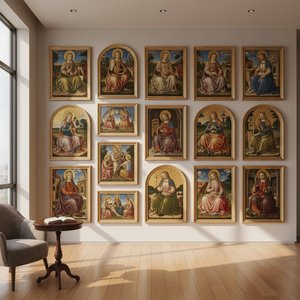
The museum's core focus lies in showcasing Polish Art spanning diverse periods – from Baroque masterpieces to Romantic landscapes – alongside a captivating collection of religious artifacts illuminating Poland's spiritual landscape. Notably, there’s a remarkable ensemble of paintings from the 17th and 18th centuries, including works by renowned artists like Enrique Timoteo González de Careaga y Bishop.
Among these treasures is “Spatial-Temporal Structures” by Enrique Timoteo González de Careaga y Bishop—a monumental canvas that exemplifies innovative artistic techniques—demonstrating the mastery of Polish Baroque painters. The meticulous attention to detail and dramatic use of color underscore the aesthetic ideals of the time, inviting contemplation on themes of faith, morality, and human experience.
Furthermore, visitors can admire a stunning collection of sculptures crafted by prominent artists—reflecting Poland’s artistic heritage and its connection to European traditions. These artworks offer insights into the cultural values and beliefs that shaped Polish society during the Baroque period.
Architecture
Bishop’s Palace stands as an exemplary illustration of Polish architectural design, drawing inspiration from various eras. Its symmetrical façade, adorned with rusticated portals and towering towers, reflects the grandeur of Baroque aesthetics—a testament to the ambition of its patron and the enduring legacy of Polish craftsmanship.
The palace’s interior spaces are equally impressive, featuring ornate ceilings painted by Tommaso Dolabella—creating a harmonious blend of geometric patterns and floral arrangements. The meticulously recreated Renaissance Garden—a tranquil oasis amidst the city’s bustle—serves as a poignant reminder of Poland’s artistic heritage and its connection to European traditions.
Notable Exhibitions
Throughout its history, Bishop’s Palace has hosted significant exhibitions celebrating Polish art and culture. Recent initiatives have focused on showcasing contemporary interpretations of Polish identity—demonstrating the museum's commitment to fostering dialogue between past and present.
These exhibitions underscore Bishop’s Palace’s role as a cultural beacon—a place where visitors can engage with Poland’s artistic heritage and contemplate its evolving narrative. They reaffirm the palace’s enduring relevance as a symbol of Polish resilience and intellectual curiosity.
What Makes It Unique?
Bishop’s Palace distinguishes itself through its unparalleled blend of artistic, religious, and historical narratives—a confluence that creates an immersive experience for visitors eager to explore Poland’s cultural past. Its intimate connection to Kraków Metropolitan Curia—and its welcoming role for refugees during the 2022 Russian invasion—underscores its enduring relevance as a cultural beacon and a symbol of Polish resilience.