A Legacy of Learning and Landscape Impressionism
The North Devon Athenaeum stands as a testament to the intellectual fervor of Victorian England, nestled in the heart of Barnstaple. Established in 1888 by William Frederick Rock—a visionary determined to elevate local knowledge—this unassuming building houses more than just books; it embodies a spirit of curiosity and artistic appreciation that continues to resonate today.
Its core mission has always been twofold: fostering scholarly pursuits and celebrating the beauty of North Devon’s surroundings. This duality is powerfully reflected in its remarkable collection, dominated by landscapes painted by Samuel Prout—a master of capturing atmospheric vistas with meticulous detail—and illuminated by a stunning mural depicting Saint Thomas, Antilles.
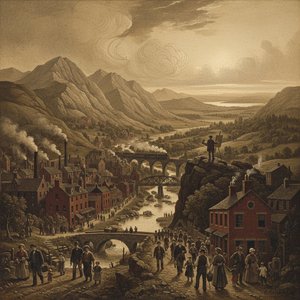
Samuel Prout's Vision: Prout’s canvases aren’t merely depictions of scenery; they are imbued with Ruskinian ideals and Turnerian techniques. His ability to convey the subtle nuances of light and shadow speaks volumes about his artistic understanding and underscores the Athenaeum’s commitment to preserving artistic heritage. The artist skillfully employed Impressionist brushstrokes—a technique championed by Turner—to capture the fleeting effects of sunlight on Dartmoor’s heather-covered hills, mirroring the Athenaeum's dedication to showcasing diverse artistic styles.
Saint Thomas, Antilles: This monumental artwork—a vibrant panorama of Saint Thomas Island—offers a breathtaking glimpse into the Antilles landscape during the Victorian era. Its rich colors and textured brushstrokes exemplify Impressionist principles, demonstrating the Athenaeum’s dedication to showcasing diverse artistic styles. Commissioned in 1890 by Barnstaple’s prominent benefactor, Sir Henry Edward Howard Trevelyan III, this mural depicts Saint Thomas Island bathed in golden light—a deliberate homage to Turner’s celebrated landscapes and a symbol of North Devon's enduring connection to the Romantic tradition.
Architectural Roots: Embracing Victorian Elegance
The Athenaeum’s structure itself embodies the aesthetic sensibilities of its time—a stately Victorian building constructed in red brick with decorative stone and terracotta accents. Its central courtyard, bathed in natural light, provides a tranquil space for contemplation and research, mirroring the institution's ethos.
Detailed architectural plans reveal a harmonious blend of Gothic Revival influences and classical proportions. The soaring staircase—crafted from Jacobean oak—is adorned with twisted balusters and elaborate carvings, symbolizing strength and refinement. Furthermore, the building’s façade is punctuated by arched windows that flood the interior with sunlight, enhancing the ambiance for scholarly pursuits.
The architect, George Gilbert Scott—a leading figure in Victorian Gothic Revival—employed meticulous craftsmanship to create a space that reflected both grandeur and spiritual contemplation. The use of locally sourced sandstone contributes to the building’s visual harmony and reinforces its connection to North Devon’s geological heritage.
A Repository of Historical Insight
Beyond its architectural splendor lies a treasure trove of historical documents—photographs, maps, and records spanning centuries—that illuminate North Devon's past. The Athenaeum’s archives are invaluable resources for genealogists researching family histories and historians reconstructing regional narratives.
Among the most significant holdings include correspondence between Victorian industrialists and agricultural reformers, documenting debates about economic progress and social responsibility. Additionally, extensive photographic collections capture scenes of daily life in Barnstaple during the Edwardian period—providing poignant glimpses into the lives of ordinary residents.
More Than Just Walls: The Museum’s Enduring Impact
The Athenaeum isn't merely a passive repository of artifacts; it actively engages the community through exhibitions showcasing regional art and history. Recent displays have explored themes of Cornish mining heritage, celebrating the artistic legacy of St Peters Church Ceiling—a masterpiece of Victorian stained glass that exemplifies the Gothic Revival style.
Moreover, collaborations with local educational institutions foster a deeper understanding of North Devon’s cultural landscape. The Athenaeum's commitment to accessibility—welcoming visitors interested in exploring their roots—solidifies its role as a cornerstone of local identity and ensures that Barnstaple’s artistic spirit continues to inspire future generations.