Philip de László (1869-1937): Explore retratos de la realeza y la aristocracia por este maestro anglo-húngaro. Descubre el realismo, el arte social y su legado.
A Jewel of Budapest’s Cultural Heart: Exploring the Hungarian National Museum
The Hungarian National Museum stands as a testament to Hungary's enduring spirit and artistic legacy—a place where history breathes alongside breathtaking artistry. Founded in 1802 by Count Ferenc Széchényi, this institution wasn’t merely conceived as a repository of artifacts; it was envisioned as a beacon of Hungarian identity, safeguarding the nation’s heritage for generations to come. Today, nestled within Budapest's historic Pest district, it continues to captivate visitors with its sprawling collections and architectural grandeur.
A Journey Through Time: From Prehistoric Roots to Contemporary Expression
The museum’s narrative unfolds across millennia, beginning with captivating displays of prehistoric Hungarian culture—tools crafted by nomadic tribes and stunning cave paintings that whisper tales of ancient beliefs. Subsequent halls delve into the Roman Pannonia province, showcasing remarkable sculptures and inscriptions unearthed from imperial ruins, offering invaluable insights into Hungary's interaction with the wider Mediterranean world. The museum’s curators meticulously reconstruct the daily life of Pannonian citizens, illuminating their customs, beliefs, and artistic achievements. Particularly noteworthy is the impressive collection of Roman coins bearing imperial insignia—a tangible connection to Hungary’s illustrious past.
Roman Pannonia: Treasures Unearthed From Imperial Hungary
Among its most celebrated treasures are relics originating from Roman Pannonia—a province ruled by Rome for centuries. These include exquisitely preserved mosaics depicting mythological scenes and portraits of emperors, alongside monumental sculptures that embody the power and sophistication of Roman art. The museum’s curators meticulously reconstruct the daily life of Pannonian citizens, illuminating their customs, beliefs, and artistic achievements. Particularly noteworthy is the impressive collection of Roman coins bearing imperial insignia—a tangible connection to Hungary’s illustrious past. The meticulous craftsmanship evident in these pieces speaks volumes about the artistic prowess of the Roman era and its lasting influence on Hungarian culture.
Medieval Hungarian Heritage: Stone Inscriptions and Royal Symbolism
Moving into the medieval period, visitors encounter monumental stone inscriptions commemorating royal deeds and religious devotion. The museum’s centerpiece is undoubtedly the Hungarian Coronation Mantle—a richly embroidered robe symbolizing Hungary's monarchy and spiritual tradition. Its intricate designs depict biblical scenes and heraldic emblems, reflecting the artistic sensibilities of the era and serving as a poignant reminder of Hungary’s medieval grandeur. Examining these symbols reveals profound insights into the beliefs and values that shaped Hungarian society during this formative period.
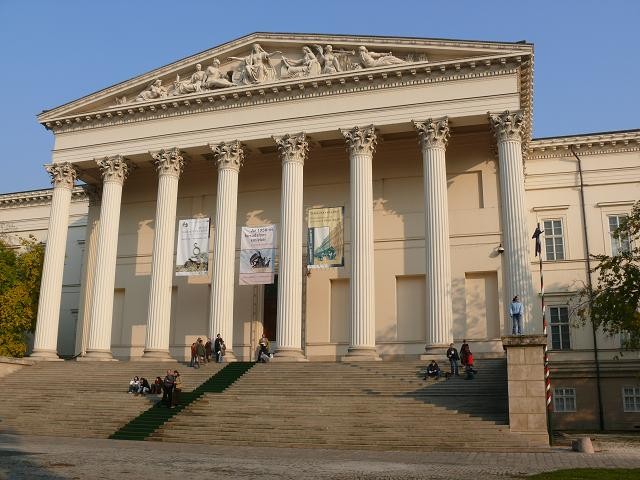
Constructed between 1837 and 1847 by Mihály Pollack—a celebrated Hungarian architect—the museum’s building embodies the elegance and symmetry of neoclassical style. Its central hall is dominated by a breathtaking stained glass window depicting Saint Stephen, Hungary's patron saint, casting kaleidoscopic hues across the polished marble floors. Sculptures adorning the walls depict scenes from Hungarian history and mythology, reinforcing the museum’s role as a visual embodiment of national identity. The grandeur of Pollack’s design—characterized by soaring columns, symmetrical proportions, and refined ornamentation—continues to inspire admiration for its timeless beauty and architectural sophistication.
A Legacy of Artistic Innovation and National Significance
The Hungarian National Museum isn't simply a collection of objects; it’s a crucible of artistic innovation and a cornerstone of Hungary’s cultural narrative. Its exhibitions consistently explore new perspectives on Hungarian history, fostering dialogue between scholars and the public alike. Furthermore, its role as a site for commemorating pivotal moments—such as the reading of Sándor Petőfi's Nemzeti dal during the 1848 Revolution—underscores its enduring importance in shaping Hungary’s collective memory. For art enthusiasts, collectors, and interior designers seeking inspiration rooted in Hungarian tradition, the Hungarian National Museum remains an unparalleled destination. Its commitment to preserving Hungary’s artistic heritage ensures that future generations will continue to marvel at the splendor of this cultural treasure.
Por el equipo editorial de OriginalUniqueArt.com
Test de arte
Cada pregunta tiene una única respuesta correcta.
Pregunta 1:
¿Cuál es el objetivo principal del Museo Nacional Húngaro?
Pregunta 2:
¿En qué año fue establecido el Museo Nacional Húngaro?
Pregunta 3:
¿Qué estilo arquitectónico caracteriza el diseño del edificio del museo?
Pregunta 4:
¿Qué evento histórico significativo tuvo lugar en los escalones del Museo Nacional Húngaro durante la Revolución de 1848?
Pregunta 5:
¿Qué es el Mantel de Coronación, un artefacto importante exhibido en el Museo Nacional Húngaro?
Explore the imperial grandeur of Vienna through art history. Discover the architectural mastery of Otto Wagner and the elegance of the Secessionist movement in this sophisticated guide to Austria's timeless aesthetic legacy.
OAsistente de estudioEn línea · responde en un minuto
¡Hola! Puedo ayudarte a elegir una obra de arte, realizar el seguimiento de un pedido o resolver tus dudas sobre la garantía. ¿En qué puedo ayudarte hoy?