

Una visión audaz para el alma artística de Groningen
En el corazón de los Países Bajos, donde el pulso de la ciudad se encuentra con la contemplación silenciosa de la galería, se erige el Museo Groninger: una estructura que es menos un edificio y más una provocación deliberada. Acercarse a esta institución es encontrarse con un manifiesto arquitectónico que desafía los límites tradicionales del diseño museístico. Es un lugar donde las paredes mismas parecen vibrar con la energía del posmodernismo, sirviendo como santuario para aquellos que buscan un arte que desafíe, rompa y, en última instancia, transforme la percepción de la realidad del espectador.
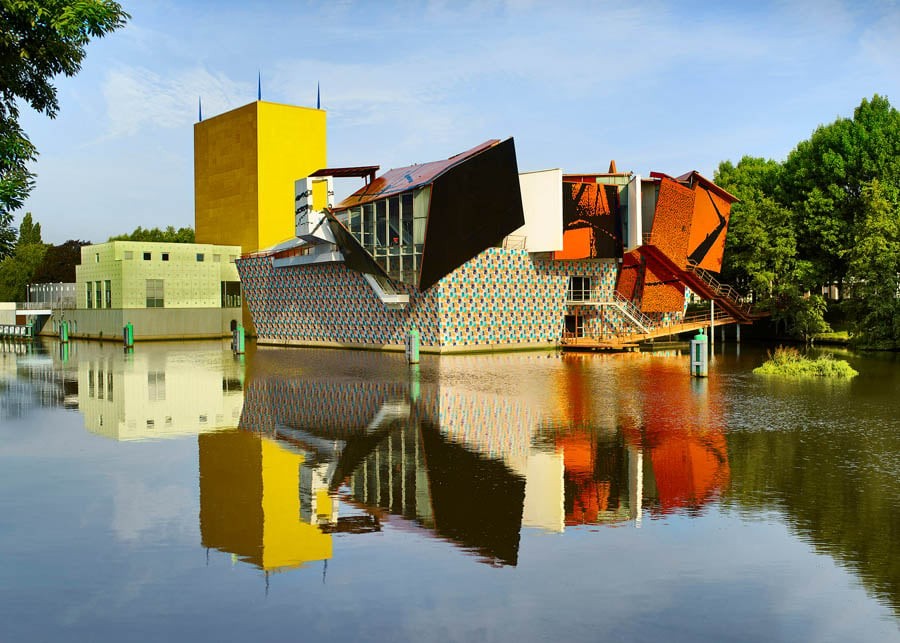
La presencia física del museo es un diálogo extraordinario entre tres voces arquitectónicas distintas, creando una estructura de pabellones tripartitos que se siente como una escultura viva. El elegante edificio cilíndrico y plateado diseñado por Philippe Starck ofrece un vistazo a la pulida elegancia del posmodernismo industrial, con su piel metálica reflejando los cambiantes cielos holandeses. En un contraste marcado y lúdico, el imponente pabellón amarillo de Alessandro Mendini se alza como un tributo exuberante al Grupo Memphis, rebosante de color y de un espíritu rebelde que rechaza las rígidas convenciones clásicas. Completando este trío de vanguardia se encuentra el pabellón azul pálido de Coop Himmelb(l)au, una clase magistral de deconstructivismo donde la fragmentación y la asimetría crean un espacio de tensión intelectual y movimiento. Conectado por un dramático puente que atraviesa la estación de tren de Groningen, el museo no solo se asienta en la ciudad; respira con ella, integrando sin fisuras el paisaje urbano en su misión artística.
Un caleidoscopio de expresión artística
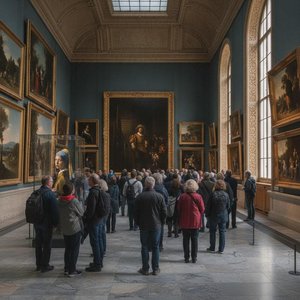
Más allá de su impactante exterior, el Museo Groninger alberga una colección que actúa como un vibrante caleidoscopio de la expresión moderna y contemporánea. La curaduría del museo evita lo predecible, optando en su lugar por una exploración profunda de diversos medios, que van desde las texturas densas de pinturas al óleo monumentales hasta la naturaleza efímera del arte de instalación. Los visitantes pueden encontrarse ante los vastos y emotivos lienzos de Ilya Repin, cuya maestría captura la esencia misma del espíritu ruso del siglo XIX, para luego ser transportados al legado eléctrico de la cultura pop de David Bowie a través de exposiciones especialmente seleccionadas que tienden un puente entre las bellas artes y la iconografía cultural.
Lo que verdaderamente distingue a esta institución es su compromiso inquebrantable con lo no convencional. Las exposiciones rotativas del museo son reconocidas por su valentía, profundizando frecuentemente en los reinos del surrealismo, el arte conceptual y las obras provocadoras de la vanguardia contemporánea. Es un destino donde la controversia es bienvenida como catalizador del diálogo, y donde la curaduría busca piezas que obliguen al observador a cuestionar las narrativas establecidas. Para el amante del arte, ofrece un estado constante de descubrimiento; para el coleccionista y el diseñador de interiores, proporciona una lección magistral sobre cómo una estética audaz y transformadora puede redefinir un espacio.
Un legado de innovación y compromiso
La historia del Museo Groninger es una de evolución notable, trazando un viaje desde sus modestos comienzos en 1874 hasta su estatus actual como faro internacional de innovación cultural. Si bien las raíces del museo están cimentadas en la preservación del patrimonio local —evidenciado por la inclusión de la histórica mansión Menkemaborg en su órbita—, su alma está firmemente plantada en el futuro. Esta dualidad permite al museo honrar el peso de la historia mientras actúa, simultáneamente, como un laboratorio para lo nuevo.
Atrayendo a cientos de miles de visitantes anualmente, el museo se ha convertido en mucho más que un repositorio de objetos; es un motor cultural para la provincia y más allá. Sigue siendo un lugar donde los límites entre la arquitectura, el arte y la vida urbana se disuelven, invitando a cada visitante a participar en un experimento continuo de creatividad. Ya sea que uno se sienta atraído por la audacia arquitectónica de sus pabellones o por la profundidad intelectual de su colección permanente, el Museo Groninger se erige como un testimonio del poder del arte para encender la curiosidad y fomentar un compromiso valiente con el mundo que nos rodea.