
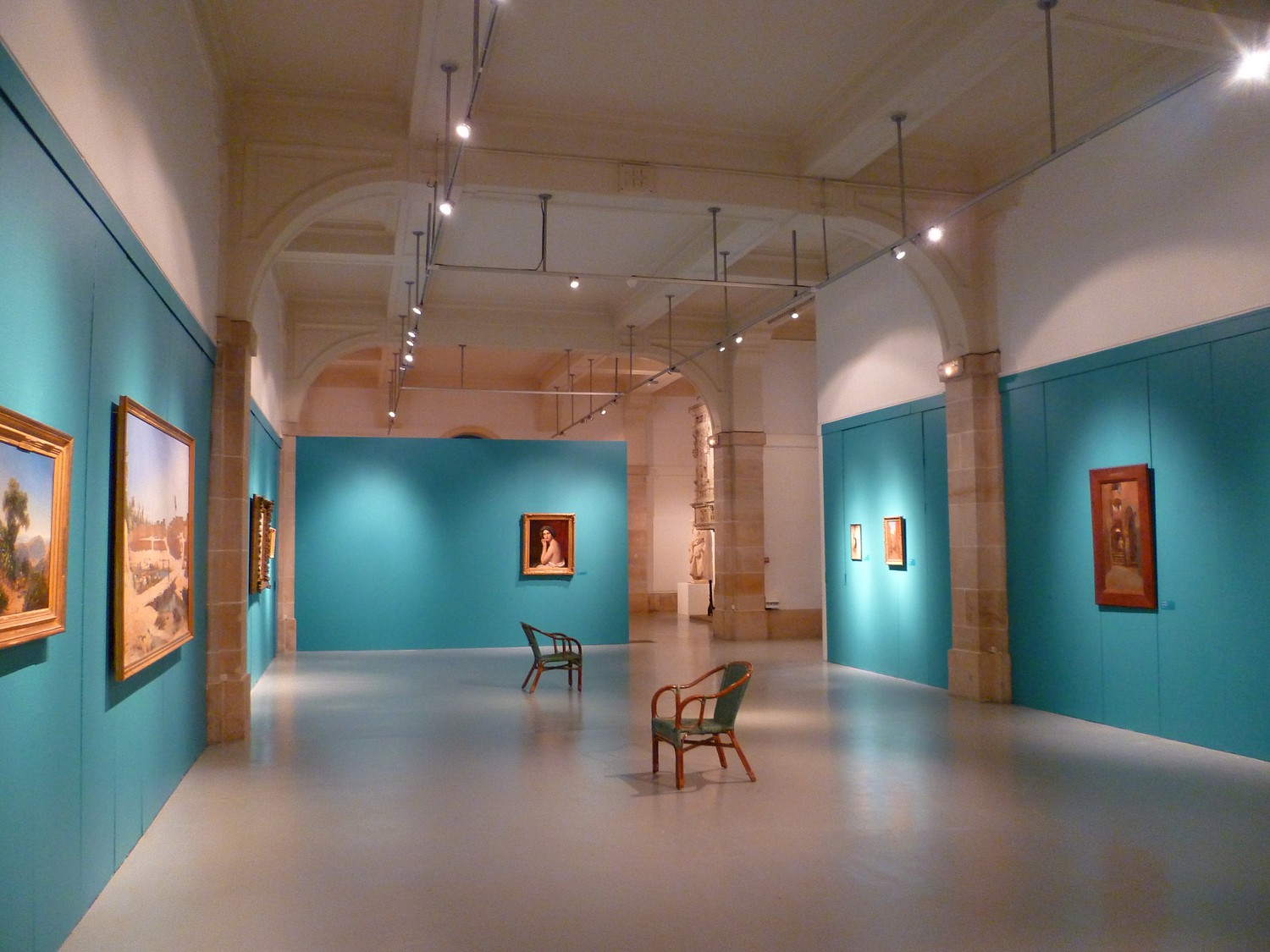
Índice
Información clave
- Alternate names:
- museo Saint-Loup
- Museo de las Bellas Artes
- Museo de las bellas artes de Troyes
- Museo Saint Loup
- Museo de Arte Fina de Troyes
- Works on APS: 3
- Location: Troyes, France
- Featured artists:
- Bernardo Bellotto
- Charles Le Brun
- Jan van Bijlert
Test de arte
Cada pregunta tiene una única respuesta correcta.
Pregunta 1:
¿Qué caracteriza principalmente al Museo de las Beaux Arts de Troyes?
Pregunta 2:
¿Dónde está ubicado el Museo de las Beaux Arts de Troyes?
Pregunta 3:
¿Cuál es uno de los principales tesoros arqueológicos que alberga el museo?
Pregunta 4:
¿Qué distingue al Museo de las Beaux Arts de Troyes de otros museos en Francia?
Pregunta 5:
¿Quiénes son algunos artistas cuyas obras están incluidas en la colección del Museo de las Beaux Arts de Troyes?
Artistas en la colección

Bernardo Bellotto
Descubre Bernardo Bellotto (1721-1780), pintor italiano y sobrino de Canaletto. Sus detalladas vistas urbanas de Dresde, Viena y Varsovia preservan la belleza arquitectónica perdida.


Charles Le Brun
Descubre a Charles Le Brun (1619-1690), pintor barroco clave y director de academias. Maestro en escenas históricas, retratos y decoración versallesca.

Jan van Bijlert
Jan van Bijlert (1598-1671) fue un pintor holandés clave del Siglo de Oro, destacado por su estilo Utrecht Caravaggista: dramatismo, claroscuro y escenas realistas. Co-fundador del Bentvueghels, legó más de 200 obras.
Artículos relacionados
The Enduring Legacy of Architecture in Art: A Historical Survey of Representation & Meaning
Explore the rich history of architecture in art, from Renaissance theory to 19th-century reconstructions. Discover key artists & movements shaping visual representation – a guide for discerning collectors.
The Enduring Legacy of Architecture in Art: A Historical Survey of Representation & Aesthetic Influence
Explore the rich history of architecture's influence on art! Discover Renaissance perspective techniques, symbolism, & iconic masterpieces. Enhance your understanding with our expert analysis.
Las 25 Obras Maestras del MET: Arte, Historia y Decoración para tu Hogar
Descubre las 25 obras maestras del MET de Nueva York: Van Gogh, Monet, Rembrandt y más. Explora la historia, el arte y los colores que inspiran tu hogar. Reproducciones de museo en OriginalUniqueArt.com.
Catálogo de obras de arte
No se encontraron obras de arte.


Suscríbete a nuestro boletín informativo
Manténgase al día con las últimas noticias de arte, ofertas exclusivas e ideas de decoración.
Obtén 3 sugerencias de arte gratuitas
Cuéntanos sobre tu proyecto y nuestros expertos en arte te ofrecerán 3 sugerencias de obras personalizadas.
Not Sure Where to Start?
Let Us Curate 3 Options Just for You - Free!