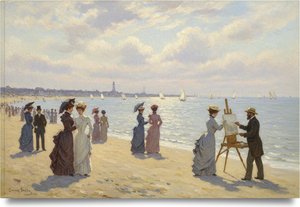
¿Quién fue Émile Friant? Descubre este pintor realista francés conocido por sus retratos conmovedores y escenas cotidianas como 'La Toussaint'. Explora su éxito en el Salón y cómo influyó en el arte de principios del siglo XX.
Descubre a Cecco del Caravaggio (Francesco Buoneri), pintor italiano conocido por su realismo dramático y escenas religiosas como 'El sacamuelas' y 'San Juan Bautista'. Explora su impactante arte.
A Journey Through European Artistic Heritage: Exploring the Musée des Beaux-Arts de Nancy
Nestled in the heart of Nancy, France – a UNESCO World Heritage site renowned for its Place Stanislas – lies the Musée des Beaux-Arts de Nancy, a treasure trove for anyone captivated by art history and design. Founded during the tumultuous years of the French Revolution, this museum’s origins are rooted in seizing artistic treasures from ecclesiastical and aristocratic estates, establishing it as an institution dedicated to preserving and disseminating European artistic excellence.
A Legacy Built on Transformation:
From its initial purpose as a university campus and Town Hall, the Musée des Beaux-Arts has undergone significant renovations throughout the centuries. Major expansions in 1936 by Jacques and Michel André, followed by another transformative project in 1999, dramatically increased exhibition space and solidified its position as a cornerstone of Lorraine’s cultural landscape.
A Singular Collection:
The museum distinguishes itself through an unparalleled blend of artistic disciplines. Its European Paintings collection boasts masterpieces spanning from the Renaissance to Impressionism, featuring luminaries like Caravaggio – whose iconic Annunciation resides prominently within its walls – and Delacroix, capturing pivotal moments in French artistic expression. Admire “Les Buveurs” by Emile Friant - a poignant depiction capturing human emotion and artistic skill. And don’t miss Albert Bierstadt's "Butterfly (second version)" - an impressive landscape painting showcasing masterful technique.
Architectural Grandeur: Place Stanislas and Its Pavilion
The museum’s home is an exquisite pavilion designed by Emmanuel Héré as part of the magnificent Place Stanislas complex. Originally conceived in the mid-18th century, this architectural masterpiece embodies Neoclassical elegance and reflects the aspirations of Louis XVI’s reign. Subsequent additions and renovations have adapted the building to evolving needs – serving as a university and Town Hall before its final dedication as a museum in 1936 – ensuring its enduring presence as a symbol of Nancy’s artistic legacy.
Notable Artistic Discoveries: École de Nancy Influence
Among its remarkable holdings are captivating artworks that exemplify diverse artistic movements. Consider ‘Two Nudes in a Landscape’ by Roger De La Fresnaye, a seminal Fauvist painting from 1910—its bold colors and dynamic composition offer a glimpse into the avant-garde spirit of the era. Furthermore, explore “Les Buveurs” by Emile Friant – a poignant depiction capturing human emotion and artistic skill. And don’t miss Albert Bierstadt's "Butterfly (second version)" - an impressive landscape painting showcasing masterful technique.
A Destination for Art Enthusiasts
The Musée des Beaux-Arts de Nancy stands apart as more than just a repository of art; it is a vibrant cultural experience. Its location on Place Stanislas, alongside the celebrated Daum Glasswork studio and Jean Prouvé’s architectural designs, creates an immersive environment that celebrates creativity and craftsmanship. Whether you are drawn to European painting traditions or fascinated by the evolution of modern design, Nancy's museum promises an unforgettable journey into the heart of artistic history.
Exploring Artistic Excellence: Highlights of the Collection
The Musée des Beaux-Arts’ collection shines with brilliance thanks to its remarkable diversity. Visitors can marvel at Caravaggio’s “Annunciation,” a cornerstone of Renaissance art and a testament to dramatic chiaroscuro technique—a masterful use of light and shadow that imbues the scene with palpable emotion. Delacroix's canvases resonate with Romantic fervor, capturing scenes from French history and embodying the spirit of artistic innovation. Don’t overlook the École de Nancy artists’ contribution: their vibrant palettes and organic forms revolutionized decorative arts, showcasing a profound understanding of color theory and sculptural form.
A Monument to Artistic Vision: The Pavilion of Place Stanislas
Constructed in 1757 as part of the grand Place Stanislas complex—a UNESCO World Heritage site—the museum’s pavilion exemplifies Neoclassical architectural ideals. Designed by Emmanuel Héré, it embodies symmetry and grandeur, reflecting the ambitions of Louis XVI's reign. Its meticulous ornamentation and harmonious proportions stand as a testament to the enduring power of artistic vision and represent an integral part of Nancy’s cultural heritage.
From Revolution to Renewal: A History Shaped by Artistic Patronage
Founded during the French Revolution, the Musée des Beaux-Arts initially benefited from the confiscation of ecclesiastical and aristocratic assets—a pivotal moment in establishing it as a champion of artistic preservation. Subsequent additions under Napoleon Bonaparte enriched its collection with treasures brought from the Louvre Museum, furthering its mission to showcase European artistic achievements. Renovations in 1936 and 1999 modernized the museum’s facilities while expanding exhibition space, ensuring its continued relevance and vitality for generations to come.
A Legacy of Innovation: Daum Glasswork and Jean Prouvé
The Musée des Beaux-Arts proudly presents a unique facet of Lorraine’s artistic heritage: Daum Glasswork—a celebrated studio that pioneered Art Nouveau techniques and established Nancy as a global center for glassmaking excellence. Alongside, visitors can admire the groundbreaking designs of Jean Prouvé—an architect and designer who revolutionized construction with innovative materials and modular systems—demonstrating the museum's commitment to showcasing both artistic mastery and architectural innovation.
Explore the life & art of Eugène Boudin, a pioneer of plein air painting and key influence on Impressionism. Discover his masterful light studies & atmospheric seascapes – a foundational figure in modern art history.
OAsistente de estudioEn línea · responde en un minuto
¡Hola! Puedo ayudarte a elegir una obra de arte, realizar el seguimiento de un pedido o resolver tus dudas sobre la garantía. ¿En qué puedo ayudarte hoy?