

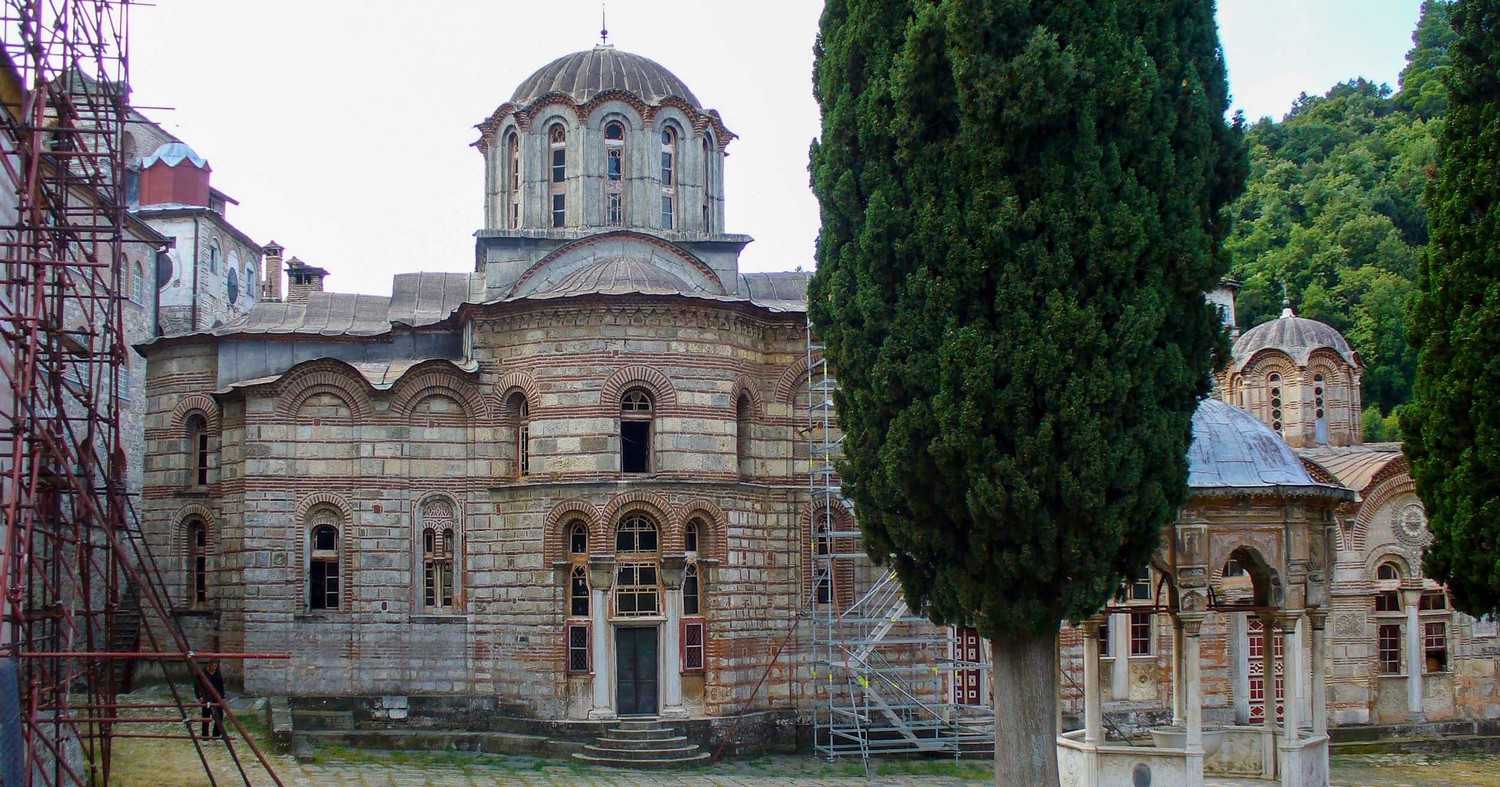
Un Santuario del Espíritu: El Legado Eterno de Hilandar
Enclavado entre los escarpados picos envueltos en bruma del Monte Athos, en Grecia, el Monasterio de Hilandar se erige como un testimonio inigualable del poder perdurable de la fe ortodoxa y de la profunda belleza del arte bizantino. Fundado por el venerable San Sava y su padre, el rey Stefan Nemanja, este enclave sagrado es mucho más que un simple retiro monástico; es una crónica viva de la identidad serbia y de la resiliencia espiritual. Durante más de ocho siglos, Hilandar ha servido como un faro de cultura, preservando un legado que ha resistido las turbulentas mareas del dominio otomano y las fronteras cambiantes de los imperios. Cruzar sus muros es dejar atrás el mundo temporal para entrar en un reino donde el tiempo no se mide por horas ni relojes, sino por el canto rítmico de los monjes y el suave resplandor de la luz de las velas reflejada en el antiguo pan de oro.
La grandeza arquitectónica del monasterio encarna una fusión sublime de precisión bizantina y tradición serbia. El paisaje está dominado por la magnífica iglesia dedicada a la Virgen María, una obra maestra del arte monástico del siglo XIV construida en 1395 por San Simeón Palaiologos. Dentro de su sagrado interior, frescos impresionantes adornan las paredes, representando intrincadas narrativas bíblicas y las luminosas vidas de los santos con una técnica que infunde vida a la piedra. Estas figuras pintadas, plasmadas con una profunda profundidad teológica, crean un entorno inmersivo donde lo divino y lo terrenal convergen. Más allá de la iglesia central, el complejo monástico se despliega en un laberinto de celdas monásticas, un refectorio y una biblioteca, donde cada estructura refleja una artesanía meticulosa y una devoción por crear un santuario tanto para el alma como para el intelecto.
Tesoros de Fe y Brillantez Intelectual
Los tesoros que alberga la colección de Hilandar son nada menos que milagrosos, ofreciendo una experiencia profunda tanto para historiadores del arte como para coleccionistas. El más notable es la venerada Theotokos de las Tres Manos , un icono de inmensa potencia espiritual y símbolo de compasión divina. Esta pieza extraordinaria, cuya creación se ha atribuido a maestros como Andrei Rublev y Dionisio Psello, sirve como el corazón espiritual del monasterio. Junto a estos iconos se encuentra un repositorio de maravillas manuscritas; la biblioteca del monasterio alberga textos invaluables escritos en serbio y eslavo eclesiástico antiguo, que iluminan el fervor intelectual de la Edad Media. Estos manuscitos no son meros artefactos históricos, sino obras de arte en sí mismos, con una caligrafía delicada y luminaciones que revelan el profundo intercambio cultural entre el mundo bizantino y los reinos eslavos.
Lo que distingue al Monasterio de Hilandar es su posición única como un museo vivo, donde el arte sigue siendo un participante activo en la liturgia diaria en lugar de una exhibición estática tras un cristal. Ha sido sede de importantes diálogos académicos y exposiciones que han llevado el esplendor de la iconografía rusa y la espiritualidad bizantina a audiencias internacionales. Para el diseñador de interiores o el amante de la estética sagrada, Hilandar ofrece un estudio sin igual de textura, luz y profundidad simbólica, desde la austera piedra de sus muros hasta el opulento oro de sus iconos. Sigue siendo un destino donde uno no solo observa el arte, sino que experimenta un viaje transformador a través del corazón mismo de la excelencia ortodoxa oriental.


