


Una Sinfonía Renacentista en Piedra: La Majestuosidad de la Catedral de Granada
En el corazón palpitante de Andalucía, donde los ecos de la grandeza islámica se encuentran con las elevadas ambiciones del triunfo cristiano, se erige la Catedral de Granada. Este no es simplemente un monumento de piedra y mortero; es una crónica viva de la era más transformadora de España. Caminar hacia su monumental fachada es presenciar la manifestación física de la Reconquista, una estructura nacida sobre el mismo emplazamiento de la Gran Mezquita de Granada. La catedral actúa como un profundo puente arquitectónico, donde la memoria de un califato desaparecido fue reescrita por el floreciente esplendor del Renacimiento y la dramática teatralidad del Barroco. Es un lugar donde la historia no solo reside en los libros, sino que respira a través de las intrincadas tallas y la atmósfera solemne y sagrada de su vasta nave.
El viaje arquitectónico de la catedral es uno de evolución y superposición artística, ofreciendo una clase magistral sobre cómo diferentes épocas pueden armonizar para crear un sentido singular y abrumador de asombro. La visión inicial, concebida por el maestro Diego de Siloe , buscaba honrar una base gótica; sin embargo, el espíritu de la época infundió rápidamente el proyecto con los ideales renacentistas de proporción y gracia clásica. A medida que las décadas se convirtieron en siglos, arquitectos como Enrique Egas y Juan de Maeda se sumaron a este cimiento, introduciendo la exuberante ornamentación característica del Barroco español. Esta fusión crea una tensión estética única: un juego rítmico entre la fuerza estructural de las tradiciones medievales y la energía fluida y emotiva de los movimientos posteriores que cautiva la mirada moderna.
Tesoros Espirituales y Maestría Artística
Al entrar, el visitante se ve envuelto en una colección inigualable de tesoros espirituales y artísticos que iluminan las cumbres del maestrazgo de los siglos XVII y XVIII. El interior actúa como un santuario para pinturas monumentales que utilizan el claroscuro para evocar profundas verdades teológicas, sumergiendo al espectador en escenas de un realismo impresionante. Para coleccionistas y diseñadores de espacios refinados, la catedral representa la inspiración definitiva de grandeza y textura, ofreciendo un legado de luz y sombra que trasciende el tiempo.
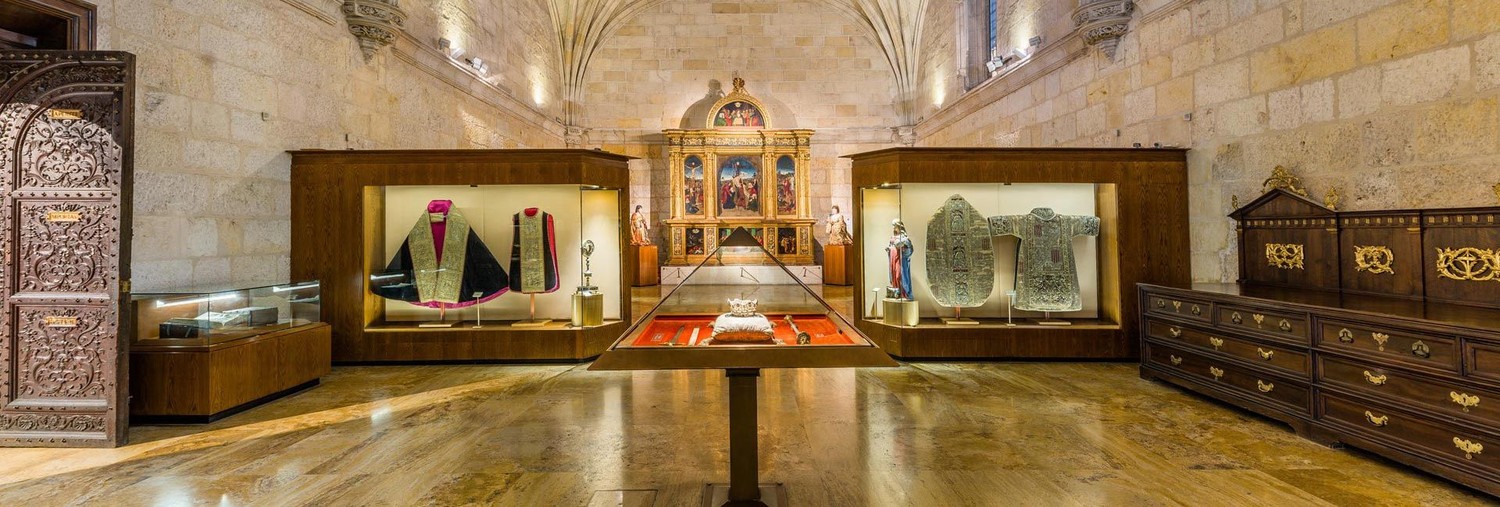
Quizás la experiencia más trascendente se encuentra dentro de la Capilla Real. Dedicado a la memoria de la Reina Isabel I y el Rey Fernando II, este espacio sagrado es un cofre de joyas de logros artísticos. Dentro de estos muros, uno puede hallar:
- Altísimos techos abovedados adornados con intrincados mosaicos que capturan la luz divina.
- Exquisitas vidrieras elaboradas por artesanos flamencos, que filtran la luz del sol en un caleidoscopio de color.
- La tumba de alabastro de los monarcas, que añade una capa de solemnidad y ancla el esplendor artístico de la catedral a los cimientos mismos de la identidad nacional española.
La catedral permanece como un faro de preservación, un testimonio del poder perdurable del arte para definir una cultura. Se erige como un recordatorio de que la verdadera belleza se encuentra en las capas del tiempo: en la forma en que un solo lugar puede albergar el peso de la conquista, la luz de la fe y la elegancia eterna de la creatividad humana.


