Descubre las cautivadoras pinturas de Abraham Cooper: batallas épicas y retratos ecuestres magistrales. Un artista clave de la Royal Academy (1787-1868), con obras que capturan el espíritu de su época.
A Hidden Gem Within London’s Cultural Landscape: Exploring the Department of Health Museum
The Department of Health museum in London isn't merely a repository of medical artifacts; it’s an immersive experience that illuminates the evolution of healthcare and celebrates human ingenuity. Situated on Victoria Street, this unassuming building houses a remarkable collection dedicated entirely to the history of medicine—a singular focus within the city’s vibrant artistic heritage. Its understated elegance belies the profound stories contained within its walls, offering visitors a captivating glimpse into scientific breakthroughs and societal shifts shaped by medical progress.
Collection Highlights:
At its core lies an extraordinary assemblage of pathology specimens—detailed illustrations and preserved tissues showcasing diseases from across centuries. Alongside these are meticulously crafted anatomical models and historical surgical instruments, transporting viewers back to pivotal moments in medical education and practice.
Iconic Artifacts:
Perhaps the museum’s most celebrated item is Lister's spray – a tangible reminder of Joseph Lister’s revolutionary antiseptic surgery technique. This simple yet transformative instrument embodies the spirit of scientific innovation and its enduring impact on patient care.
The museum’s architectural design reflects its dedication to precision and observation—a deliberate aesthetic mirroring the meticulous approach of medical researchers. Constructed in 1988, it prioritizes natural light and spaciousness, fostering an environment conducive to contemplation and scholarly engagement. Visitors can admire Gideon Yates' “West View Of New London Bridge And Old London Bridge,” capturing London’s architectural grandeur with impressionistic brushstrokes—a testament to artistic interpretation alongside historical documentation. Furthermore, Daniel Turner’s “London Bridge & St Paul’s Cathedral” offers a similarly evocative panorama, showcasing the city’s iconic landmarks through Turner's masterful technique.
Notable Exhibitions:
Recurring exhibitions delve into significant diseases like Bright’s disease and Hodgkin’s disease—tracing their discovery, understanding, and treatment over time. These displays illuminate not only scientific advancements but also the social context surrounding illness and healing.
Beyond its impressive collection and architectural beauty, what distinguishes this museum is its unwavering commitment to fostering dialogue between art and science. It serves as a valuable resource for healthcare professionals seeking historical perspective and inspires medical students with an unparalleled opportunity to study the evolution of medical practices. For anyone captivated by the human body’s resilience and the ongoing quest for improved health—and indeed, for discerning art lovers—the Department of Health museum presents a truly enriching encounter. It stands as a testament to London's intellectual heritage and invites exploration beyond conventional museum boundaries.
Further Exploration:
Interested in delving deeper into Victorian social life? Consider Christina Livingston Broom’s photograph “Refreshment department at the Women,” documenting a scene of suffragette volunteers actively participating in community service—a poignant illustration of societal values during the Edwardian era.
Por el equipo editorial de OriginalUniqueArt.com
Cuestionario de arte
Cada pregunta tiene una única respuesta correcta.
Pregunta 1:
¿Cuál es el enfoque principal del museo Departamento de Salud?
Pregunta 2:
¿Qué artefacto emblemático alojado dentro del museo es reconocido por revolucionar la cirugía estéril?
Pregunta 3:
¿Quién encontraría el museo Departamento de Salud particularmente valioso?
Pregunta 4:
¿Qué distingue al museo Departamento de Salud de otras instituciones similares?
Pregunta 5:
¿Para qué sirven principalmente las colecciones de patología del museo?
Explore the exquisite topographical paintings of Thomas H. Shepherd, renowned for his detailed depictions of Victorian London and beyond. Discover his legacy & artistic techniques.
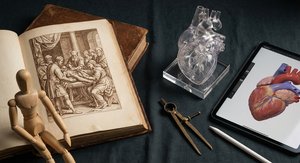
Explore the fascinating history of anatomy in art! From Renaissance dissections to modern masterpieces, discover how artists & scientists collaborated to depict the human form with unprecedented realism. Learn more at OriginalUniqueArt.
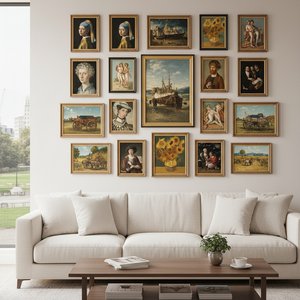
Descubre 25 obras maestras de la National Gallery, Londres. Explora la historia y el significado de Van Gogh, Monet, Leonardo da Vinci y más. Encuentra reproducciones de arte exclusivas para decorar tu hogar con estilo en OriginalUniqueArt.com.
OAsistente de estudioEn línea · responde en un minuto
¡Hola! Puedo ayudarte a elegir una obra de arte, realizar el seguimiento de un pedido o resolver tus dudas sobre la garantía. ¿En qué puedo ayudarte hoy?