

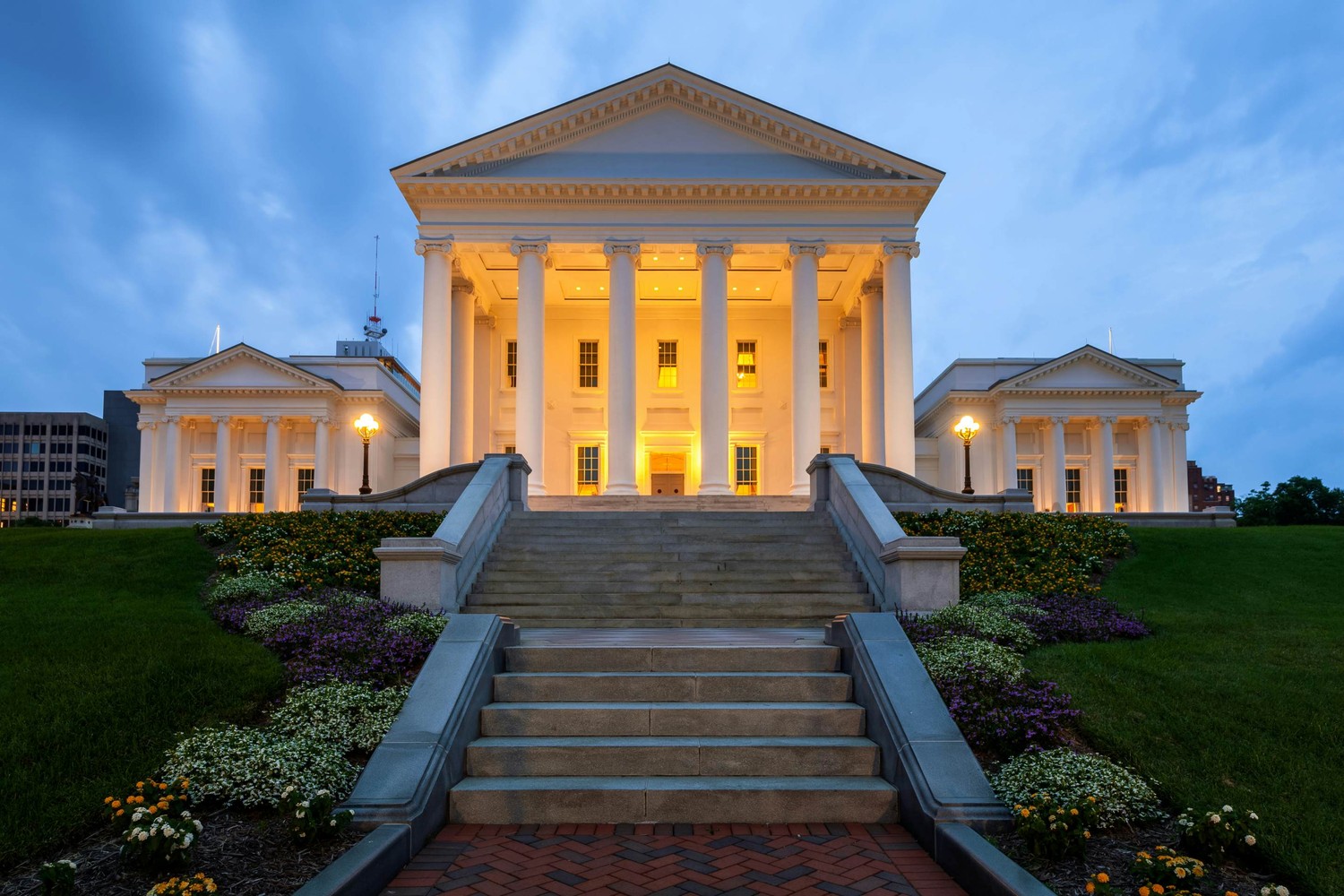
Un Reflejo Monumental de la Identidad Americana
El Capitolio del Estado de Virginia es mucho más que una simple sede de gobierno; es una crónica viva y palpitante del espíritu estadounidense, meticulosamente imaginada por Thomas Jefferson y materializada en 1788. Situado en el corazón de Richmond, este Monumento Histórico Nacional invita al visitante perspicaz a un viaje inmersivo a través de siglos de evolución política y profunda inspiración artística. Se erige como un testimonio del legado perdurable del diseño neoclásico, donde cada piedra y cada columna susurran relatos del complejo pasado de la nación. Recorrer sus pasillos es adentrarse en un espacio donde la grandeza arquitectónica del Viejo Mundo se encuentra con los florecientes ideales democráticos del Nuevo, creando una atmósfera que es, a la vez, autoritaria y profundamente conmovedora.
La esencia misma del Capitolio reside en su elegancia jeffersoniana, arraigada en los principios de la arquitectura palladiana. Inspirándose directamente en la Maison Carrée de Nîmes, Francia —un templo romano celebrado por su exquisita simetría—, el diseño de Jefferson prioriza un sentido de moderación y proporción matemática. A diferencia de muchos de sus homólogos estadounidenses que presumen de imponentes cúpulas, el Capitolio de Virginia se distingue por una gracia sobria, evitando la ostentación en favor de una pureza de forma que refleja las propias convicciones filosóficas de Jefferson. La fachada está dominada por magníficas columnas jónicas, elaboradas magistralmente para transmitir estabilidad, permanencia y el peso de la autoridad. Para el historiador del arte o el amante de la estética clásica, el edificio ofrece un estudio profundo sobre cómo la geometría arquitectónica puede utilizarse para manifestar la estabilidad política y la claridad intelectual.
Ecos de Revolución y Maestría Escultórica
Más allá de su brillantez estructural, el Capitolio alberga una narrativa entretejida con los hilos más dramáticos de la historia estadounidense. Dentro de sus muros, se encuentran los ecos de la revolución y los conmovedores vestigios del conflicto. La colección ofrece una ventana a los debates que dieron forma a una república naciente, exhibiendo documentos originales de la Revolución de Virginia que iluminan el nacimiento mismo de la libertad americana. A medida que uno se adentra en sus dependencias, la atmósfera cambia para reflejar las sombrías complejidades de la era de la Guerra Civil; artefactos y fotografías que documentan el papel del edificio como cuartel general confederado proporcionan una visión inquietante de un período de profunda división nacional y eventual resiliencia. Esta profundidad histórica se ve enriquecida, además, por una exquisita colección de retratos que presentan figuras influyentes como George Washington, cuya presencia en las paredes sirve para honrar a quienes defendieron los ideales de justicia y libertad.
Una verdadera joya dentro de esta corona arquitectónica es el conjunto escultórico conocido como las Puertas de Colón. Creadas por el renombrado escultor Randolph Rogers, estas puertas monumentales representan la cúspide de la maestría neoclásica. A través de su hábil combinación de formas clásicas con un potente simbolismo estadounidense, Rogers logró una potencia emotiva que cautiva la imaginación de todos los que las contemplan. El intrincado detalle y el movimiento expresivo dentro de la escultura sirven como un poderoso recordatorio del papel de Virginia en la narrativa más amplia del descubrimiento y la expansión. Para los coleccionistas y entusiastas de la escultura fina, estas puertas no son meros elementos decorativos, sino obras de arte profundas que tienden un puente entre la conmemoración histórica y la excelencia estética.
Hoy en día, el Capitolio del Estado continúa evolucionando, sirviendo como un espacio dinámico tanto para el compromiso cívico como para el discurso académico. Sigue siendo una piedra angular de la memoria cultural, donde las próximas exposiciones prometen explorar los matices del papel de Virginia en la formación de la cultura estadounidense, desde los delicados trazos de los movimientos artísticos coloniales hasta las interpretaciones contemporáneas de los ideales jeffersonianos. Para el diseñador de interiores que busca inspiración o el amante del arte que busca profundidad, el Capitolio ofrece una experiencia inigualable de belleza, historia y el poder perdurable de la voluntad creativa humana.


