Menú
Asesoría de arte gratuita

Biblioteca Teresiana

Información clave

  • Location: Mantúa, Italia
  • Works on APS: 9
  • Alternate names:
    • Biblioteca Teresiana
    • Teresiana
    • Biblioteca Comunale Teresiana
  • Featured artists:
    • Nicolas de Fer
    • paolo dal pozzo toscanelli
    • vincenzo maria coronelli
    • vindizio nodari pesenti
    • matthaeus greuter

Test de arte

Cada pregunta tiene una única respuesta correcta.

Pregunta 1:
¿Cuál fue el objetivo principal de la fundación de la Biblioteca Teresiana?
Pregunta 2:
¿Quién encargó la construcción del edificio original de la Biblioteca Teresiana?
Pregunta 3:
¿Paolo Pozzo diseñó las salas de lectura de la Biblioteca Teresiana con qué intención?
Pregunta 4:
¿Cuántas imágenes aproximadamente están disponibles en la colección digital de la Biblioteca Teresiana?
Pregunta 5:
¿Qué estilo arquitectónico caracteriza el edificio de la Biblioteca Teresiana?

A Sanctuary of Knowledge: Exploring the Biblioteca Teresiana

The Biblioteca Teresiana—a name synonymous with erudition and Baroque splendor—stands as a cornerstone of Mantuan cultural heritage, inviting visitors on a journey through centuries of intellectual curiosity and artistic patronage. More than just a repository for books, it embodies the Habsburg dynasty’s ambition to elevate Lombardy-Veneto through education and celebrates the enduring power of art to inspire contemplation and understanding. Established in 1780 by Empress Maria Theresa as part of broader reforms aimed at bolstering the region's intellectual life, this magnificent institution immediately became a focal point for scholars and artists alike—a testament to the transformative potential of cultural institutions.

Architectural Grandeur: Pozzo’s Vision for Learning

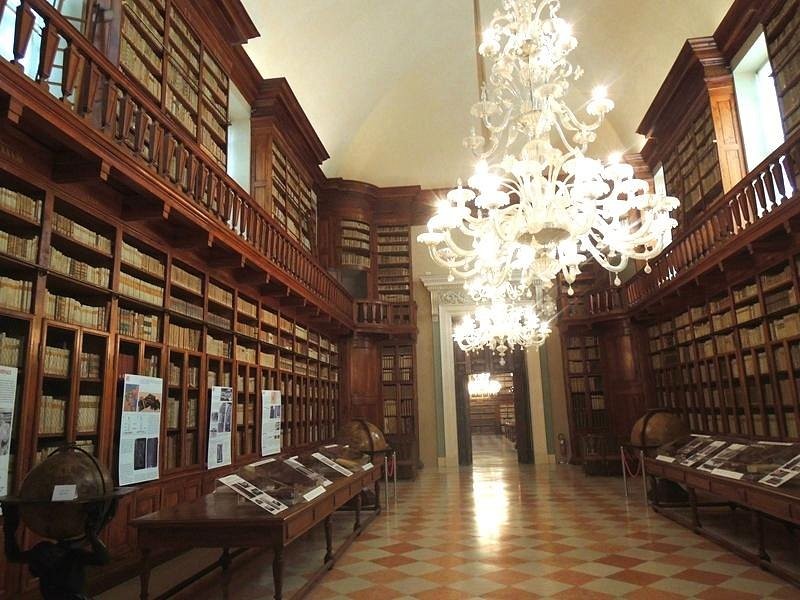
The Biblioteca Teresiana’s physical presence is as remarkable as its collection. Originally conceived as a Jesuit College, its building was repurposed into a public library following the suppression of the order in 1773—a poignant reminder of shifting societal priorities and the enduring legacy of religious institutions. Architect Paolo Pozzo skillfully transformed this historic edifice into a space perfectly suited for scholarly pursuits, designing two interconnected rooms that would become known as the Teresian Rooms. These spaces are characterized by soaring ceilings adorned with intricate frescoes depicting allegorical scenes celebrating knowledge and virtue—a deliberate choice reflecting the library’s mission to foster intellectual enlightenment. The meticulous craftsmanship of Pozzo's design—featuring walnut wood shelving and classical ornamentation—creates an atmosphere of dignified contemplation, transporting visitors back to the eighteenth century.

Treasures Within: A Collection Beyond Compare

The Biblioteca Teresiana’s collection is truly unparalleled, boasting over 520,000 images accessible through its digital platform—a remarkable feat considering its origins as a repurposed Jesuit College. Among its treasures are incunabula – books printed before 1501 – representing the earliest stages of printing and embodying the spirit of humanist scholarship. These volumes include exquisitely illuminated manuscripts from monasteries across Europe, offering glimpses into medieval artistic traditions and theological debates. Furthermore, the Biblioteca houses significant Renaissance artworks—including paintings by Vincenzo Coronelli—demonstrating Mantuan’s role as a center for artistic innovation during this transformative period. Notably, its collection contains globes crafted by Coronelli himself, reflecting the burgeoning scientific interest in mapping the world and furthering understanding of celestial mechanics. The Biblioteca's holdings are meticulously cataloged and preserved, ensuring that these invaluable artifacts continue to inspire awe and wonder for generations to come.

Historical Context: From Jesuit College to Imperial Legacy

The Biblioteca’s history is inextricably linked to the Habsburg dynasty’s influence in Lombardy-Veneto—a period marked by ambitious cultural endeavors aimed at bolstering the region's prestige and fostering intellectual discourse. Following Maria Theresa’s patronage, the library transitioned into a municipal institution in 1881—reflecting evolving societal values and the enduring importance of public education. Throughout its history, it has hosted exhibitions that illuminate both its artistic holdings and broader cultural trends—demonstrating how art and scholarship can engage in dialogue and inspire new perspectives. The Biblioteca’s architectural heritage—rooted in the Jesuit College tradition—serves as a constant reminder of Mantua's commitment to intellectual excellence and artistic patronage.

A Unique Cultural Landmark: Pozzo’s Rooms and Coronelli’s Globes

What distinguishes the Biblioteca Teresiana from other libraries is its harmonious blend of architectural grandeur and exceptional collections—a testament to Paolo Pozzo’s visionary design and the enduring legacy of Vincenzo Coronelli's globes. The Teresian Rooms, conceived as spaces for contemplation and scholarly study, exemplify Baroque elegance while housing treasures that illuminate the intellectual currents of their time. These rooms stand as a symbol of Mantuan cultural heritage—a place where visitors can immerse themselves in the beauty of art and engage with the wisdom of centuries past. The Biblioteca’s continued preservation ensures that this remarkable institution remains a beacon for learning and artistic appreciation—a testament to the enduring power of culture to inspire wonder and understanding.

Catálogo de obras de arte

No se encontraron obras de arte.