Retrato de Xu Beihong

Las 39 pinturas más famosas de Xu Beihong, una selección de la galería

Actualizado noviembre 2026 · clasificado según nuestro índice de popularidad (búsquedas, visitas y pedidos de cada obra) · 39 obras de Xu Beihong en nuestro catálogo

En resumen

De todos los originales que dejó Xu Beihong, la más famosa es El Hombre Sordo Traslada Montañas (1940), que forma parte de la colección del Museo de Arte CAFA, Pekín. Le siguen muy de cerca Retrato de Sun Duoci (1936) y Tian Heng y sus cinco cientos seguidores (1930). Nuestro catálogo cuenta con 39 obras de Xu Beihong; la galería ha conservado las 39 que el mundo más admira, cada una presentada con su fecha, su museo y su historia.

1895 – 1953, Yixing Realismo contemporáneo Más obras: Museo de Arte CAFA

Las 10 mejores pinturas de Xu Beihong: la elección de la galería

1
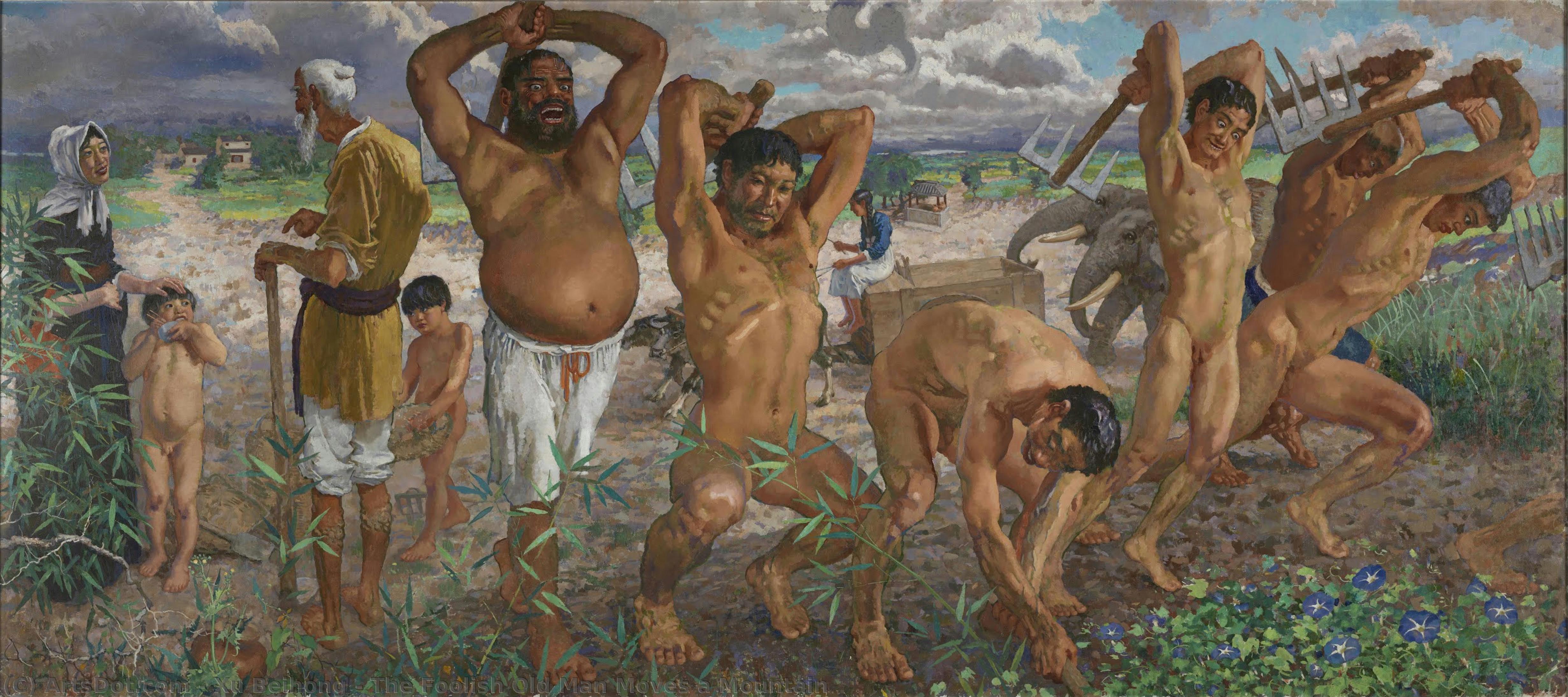
El Hombre Sordo Traslada Montañas (1940) de Xu Beihong

El Hombre Sordo Traslada Montañas

1940 · Óleo sobre lienzo · Museo de Arte CAFA, Pekín

El Hombre Sordo Traslada Montañas, de Xu Beihong, es una monumental pintura al óleo creada alrededor de 1940. La obra extrae su narrativa de una fábula contenida en el Libro de Lieh-tzu, un texto que se remonta al siglo IV a.C. Esta historia fue reinterpretada posteriormente en el siglo I a.C. y cobró una relevancia aún mayor cuando fue defendida en 1945. La pintura captura un momento de intenso trabajo…

2
Retrato de Sun Duoci (1936) de Xu Beihong

Retrato de Sun Duoci

1936 · Óleo sobre lienzo · Museo de Arte CAFA, Pekín

En la tranquila intimidad de un estudio en 1936, Xu Beihong capturó mucho más que un simple parecido; inmortalizó una conexión profunda. El Retrato de Sun Duoci se erige como un testimonio impresionante de un momento en el que el amor y la revolución artística convergieron. Al encontrarse con este lienzo monumental, el espectador es atraído de inmediato por la mirada serena de Sun Duoci, una mujer cuya presencia irradia…

3
Tian Heng y sus cinco cientos seguidores (1930) de Xu Beihong

Tian Heng y sus cinco cientos seguidores

1930 · Óleo sobre lienzo · Museo de Arte CAFA, Pekín

En este monumental óleo sobre lienzo, titulado Tian Heng y sus cinco cientos seguidores, el artista Xu Beihong presenta una escena de profundo peso histórico. Completada en 1930, la obra posee una presencia física expansiva, con unas dimensiones de 197 x 349 cm. Su escala exige un cierto nivel de contemplación silenciosa para cualquiera que se encuentre ante ella.

4
Caballo de pie (1947) de Xu Beihong

Caballo de pie

1947 · Museo de Arte CAFA, Pekín

Un único caballo ocupa el centro de esta pintura de tinta y aguada sobre papel. El animal es representado de pie sobre sus cuatro patas, con la cabeza elevada hacia el borde superior del encuadre. Su crin y su cola parecen moverse bajo un viento constante, creando una sensación de movimiento físico dentro de una pose estática. El caballo está plasmado en blanco y negro, utilizando diversos tonos de tinta…

5
Sketch of a Man from the Front and the Side (1924) de Xu Beihong

Sketch of a Man from the Front and the Side

1924 · Oil · Museo de Arte CAFA, Pekín

Xu Beihong’s Sketch of a Man from the Front and the Side, created about 1924, functions as a rigorous study of human anatomy and form. The composition centers on two nude male figures positioned against a dark, atmospheric background. One figure faces the viewer directly in a frontal view, while the second figure is presented in profile, facing right. This dual orientation allows for a comprehensive examination of the physical…
6
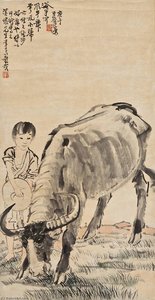
HORSE UNDER A WILLOW TREE de Xu Beihong

HORSE UNDER A WILLOW TREE

Ink

HORSE UNDER A WILLOW TREE is a painting by Xu Beihong. The work features a horse positioned beneath a tree, a central motif in the artist's oeuvre. Xu Beihong was born in 1895 in Yixing, People's Republic of China, and continued to influence the direction of Chinese art until his death in 1953.

7
Retrato de Xu (1943) de Xu Beihong

Retrato de Xu

1943 · Óleo sobre lienzo · Museo de Arte CAFA, Pekín

El “Retrato de Xu” de Xu Beihong, pintado en 1943, no es simplemente un parecido físico; es un cuadro cuidadosamente construido que rebosa de una contemplación silenciosa y del sutil poder de la sugerencia. Esta pintura al óleo, plasmada en un lienzo de 62 x 48 cm, ofrece un vistazo a la mente de una mujer joven —probablemente Jingwen, la esposa de Xu Beihong— capturada en un momento de serena…

8
Madre e hija (1939) de Xu Beihong

Madre e hija

1939 · Acrílico sobre lienzo · Museo de Arte CAFA, Pekín

Un vistazo a agosto de 1939 nos revela a Xu Beihong capturando meticulosamente a la Sra. Tchang Ju Chi y su hija en óleo sobre lienzo, un conmovedor retrato titulado "Madre e hija". Esta obra trasciende la mera representación; encarna el espíritu perdurable del amor familiar dentro del marco de la tradición artística china, hábilmente fusionada con influencias estilísticas occidentales.

9
Acariciando al gato (1924) de Xu Beihong

Acariciando al gato

1924 · Óleo sobre lienzo · Museo de Arte CAFA, Pekín

En esta escena íntima, Acariciando al gato reúne al artista Xu Beihong y a su compañera, Jiang Biwei, en un momento de quietud de la vida doméstica. La pintura captura a la pareja junto a su gato, una criatura que ambos atesoran. Existe una sensación palpable de cercanía entre las dos figuras mientras interactúan con el animal, creando una escena de afecto compartido. La composición se centra en esta conexión…

10
Portrait of a Young Woman (1940) de Xu Beihong

Portrait of a Young Woman

1940 · Oil · Museo de Arte CAFA, Pekín

A young woman sits in a room, her gaze drifting toward a distance we cannot see. She wears a floral shirt, the petals of which rest against her skin like small, silent memories. The light catches the dark weight of her hair, framing a face caught in a moment of deep thought. Behind her, the presence of another person lingers in the shadows, a soft silhouette that adds to the…

La selección de Xu Beihong continúa, de 11 a 39

Pinturas famosas de Xu Beihong, época por época

Los temas que cautivaron la mirada de Xu Beihong

Los cuatro temas que se repiten con más frecuencia en estas obras originales, cada uno con su mejor ejemplo.

Los museos que conservan los originales de Xu Beihong

Los 3 museos que albergan la mayoría de las pinturas de esta página.

Museos Ciudad Obras de Xu Beihong Pinturas de esta lista
Museo de Arte CAFA, PekínMuseo de Arte CAFA Pekín 24 El Hombre Sordo Traslada Montañas, Retrato de Sun Duoci, Tian Heng y sus cinco cientos seguidores
Centro de Investigación del Documento de Arte Moderna y Contemporánea de China, BeijingCentro de Investigación del Documento de Arte Moderna y Contemporánea de China Beijing 2 Jiu Fang Gao, Galloping horse
Long Museum West Bund, ShangháiLong Museum West Bund Shanghái 1 Dos caballos

Xu Beihong década tras década: la obra original que define cada una

Obras por década

Elige una década para ver la obra original que la define.

Preguntas de coleccionistas sobre las pinturas de Xu Beihong

¿Por qué obra es más famoso/a Xu Beihong?Descubre la respuesta

El Hombre Sordo Traslada Montañas (1940), Museo de Arte CAFA, Pekín. A Retrato de Sun Duoci (1936) y Tian Heng y sus cinco cientos seguidores (1930) le siguen.

¿Qué edad tenía Xu Beihong cuando se creó El Hombre Sordo Traslada Montañas?Descubre la respuesta

45 años: El Hombre Sordo Traslada Montañas data de 1940, y Xu Beihong nació en 1895.

¿Cuáles son las diez pinturas más famosas de Xu Beihong?Descubre la respuesta

El Hombre Sordo Traslada Montañas, Retrato de Sun Duoci, Tian Heng y sus cinco cientos seguidores, Caballo de pie, Sketch of a Man from the Front and the Side, HORSE UNDER A WILLOW TREE, Retrato de Xu, Madre e hija, Acariciando al gato y Portrait of a Young Woman. La clasificación anterior indica el año y el museo de cada una.

¿Cuántas pinturas dejó Xu Beihong?Descubre la respuesta

Nuestro catálogo cuenta con 39 obras de Xu Beihong, datadas desde 1924 hasta 1950.

¿En qué museos se exhiben las obras maestras de Xu Beihong?Descubre la respuesta

Principalmente en Museo de Arte CAFA (Pekín), Centro de Investigación del Documento de Arte Moderna y Contemporánea de China (Beijing) y Long Museum West Bund (Shanghái). La tabla de museos arriba los enumera todos.

¿En qué años pintó Xu Beihong sus obras más famosas?Descubre la respuesta

En 1930s: 9 de las 39 obras de esta página se realizaron entonces, Retrato de Sun Duoci de ellas.

¿Cuáles son las primeras y las últimas obras originales de Xu Beihong?Descubre la respuesta

En esta página, la más antigua es Sketch of a Man from the Front and the Side (1924) y la más reciente Cavalry Hero Tai Xide (1950).

¿Qué temas eligió Xu Beihong con mayor frecuencia?Descubre la respuesta

Arte chino (5), Paisaje (5) y Pintura china (4), en las 39 obras de esta página.

¿Qué técnica utilizó más Xu Beihong?Descubre la respuesta

Óleo sobre lienzo, para 9 de las 39 obras de esta página.

¿A qué movimiento artístico pertenece Xu Beihong?Descubre la respuesta

Realismo contemporáneo, a juzgar por los originales de esta página.

¿Qué obras de Xu Beihong se exhiben en el Museo de Arte CAFA?Descubre la respuesta

El Hombre Sordo Traslada Montañas, Retrato de Sun Duoci y Tian Heng y sus cinco cientos seguidores: el Museo de Arte CAFA, Pekín posee 24 de las obras de esta página.

Xu Beihong: vida y obra

A Pioneer Bridging Worlds: The Life and Art of Xu Beihong

Xu Beihong, born Xu Shoukang in 1895 in the tranquil town of Yixing, Jiangsu province, stands as a monumental figure in 20th-century Chinese art. His life was a compelling narrative of artistic evolution, dedicated to forging a new path for Chinese painting—one that harmoniously blended the rich traditions of his homeland with the innovations of Western art. From humble beginnings steeped in classical learning and traditional brushwork under the tutelage of his father, Xu Dazhang, a struggling artist himself, young Beihong’s early life was marked by both artistic promise and economic hardship. This formative period instilled within him not only technical skill but also a deep appreciation for Chinese culture and a resilient spirit that would define his career. The family's itinerant existence, painting portraits and landscapes to make ends meet, exposed him to the realities of rural China and fueled an early ambition to elevate the status of art and artists. A pivotal moment arrived when he adopted the name “Beihong,” meaning "sad wild goose," a reflection perhaps of his youthful anxieties and aspirations—a poignant symbol that would resonate throughout his life’s work.

The European Awakening: Forging a New Artistic Vision

Driven by a thirst for knowledge and a desire to modernize Chinese art, Xu Beihong embarked on a transformative journey to Europe in 1917. Initially studying in Tokyo, he soon secured a coveted scholarship to the prestigious École Nationale Supérieure des Beaux-Arts in Paris. This period proved crucial in shaping his artistic philosophy and technique. Immersed in the heart of European art, he meticulously studied oil painting and drawing, mastering Western principles of perspective, composition, and realism. While embracing these new techniques, Xu Beihong remained critical of certain modernist trends prevalent at the time, favoring instead the classical traditions he encountered. He adopted the French name "Ju Péon" during his stay, a testament to his immersion in European culture—a deliberate choice that signaled his intention to synthesize Eastern and Western artistic approaches. However, it was not merely technical skill that he sought; he aimed to understand the underlying principles of Western art and adapt them to revitalize Chinese painting—a vision articulated in his later writings and teachings. This period laid the foundation for his unique artistic style, characterized by a powerful synthesis of Eastern aesthetics and Western techniques. He spent years absorbing the works of masters like Ingres and Delacroix, studying their use of light, color, and form with unwavering dedication.

Iconic Motifs and Artistic Style: A Synthesis of East and West

Upon returning to China in 1927, Xu Beihong embarked on a prolific career marked by groundbreaking works that captured the spirit of a nation undergoing profound change. He quickly became renowned for his dynamic depictions of horses and birds—motifs that transcended mere representation to become powerful symbols of strength, freedom, and national pride. His horses, in particular, are celebrated for their muscularity, energy, and expressive power, often depicted galloping across vast landscapes with a sense of untamed spirit. Galloping Horse, perhaps his most iconic work, embodies this perfectly—a testament to the vitality and resilience of the Chinese people. The painting’s sweeping movement and vibrant colors convey a profound sense of dynamism and national aspiration. Beyond these signature subjects, Xu Beihong also excelled in portraiture and historical painting, demonstrating his mastery of both oil painting and traditional ink wash techniques. His style was characterized by a unique blend of bold brushstrokes, precise delineation, and a masterful command of light and shadow. He seamlessly integrated Western perspective and composition into the fluidity of Chinese brushwork, creating a visual language that was both innovative and deeply rooted in tradition. Foolish Old Man Who Removed the Mountains, inspired by a traditional Chinese fable, exemplifies his ability to imbue classical themes with modern energy and social commentary—a testament to his intellectual depth and artistic versatility.

Legacy and Influence: Shaping Modern Chinese Art Education

Xu Beihong’s impact extended far beyond his own artistic creations; he was also a pioneering art educator who profoundly shaped the development of modern Chinese art education. After returning to China, he held teaching positions at several prestigious universities, including National Central University and Peking University, where he tirelessly advocated for curriculum reform. He championed the incorporation of Western sketching and oil painting techniques into traditional Chinese art programs, believing that this integration was essential for revitalizing Chinese artistic expression. His approach wasn’t about discarding tradition but rather enriching it with new tools and perspectives. Following the founding of the People's Republic of China in 1949, he became president of the Central Academy of Fine Arts and chairman of the China Artists Association, further solidifying his influence on the nation’s artistic landscape. He trained generations of artists who went on to become leading figures in Chinese art, carrying forward his vision of a modern yet culturally grounded aesthetic. Xu Beihong's emphasis on artistic conception, the importance of life experiences, and the integration of Eastern and Western traditions left an indelible mark on Chinese art history, cementing his legacy as one of its most influential figures. His work continues to inspire artists and captivate audiences worldwide, serving as a powerful reminder of the enduring power of art to bridge cultures and transcend boundaries.

Key Works

  • Galloping Horse (1946): Arguably his most famous painting, embodying Chinese strength and dynamism.
  • Foolish Old Man Who Removed the Mountains (1938): A masterful blend of traditional storytelling and modern artistic techniques.
  • Portrait of Xu Beihong (1927): A self-portrait reflecting his evolving artistic style and philosophical outlook.
  • Mother and Daughter (1935): Demonstrates his ability to capture human emotion with both realism and sensitivity.

Further Resources