Retrato de William Dyce

Las 69 pinturas más famosas de William Dyce, cada una única en su clase

Actualizado octubre 2026 · clasificado según nuestro índice de popularidad (búsquedas, visitas y pedidos de cada obra) · 69 obras de William Dyce en nuestro catálogo

En resumen

Piedad: Los caballeros de la mesa redonda a punto de partir en busca del Santo Grial (1849) es la pintura de William Dyce que más llama la atención; la obra original pertenece al Galería Nacional de Escocia, Edimburgo. Después, la mirada se dirige a James Hamilton, 1749 - 1835. Médico (1832) y The meeting of Jacob and Rachel (1853). De las 69 obras de William Dyce en nuestro catálogo, estas 69 son las más famosas; cada una es un original único presentado con su año, su museo y la razón de su trascendencia.

1806 – 1864, Aberdeen Más obras: Galería Nacional de Escocia

Las 10 mejores pinturas de William Dyce, bajo la mirada de la galería

1
Piedad: Los caballeros de la mesa redonda a punto de partir en busca del Santo Grial (1849) de William Dyce

Piedad: Los caballeros de la mesa redonda a punto de partir en busca del Santo Grial

1849 · Óleo sobre lienzo · Galería Nacional de Escocia, Edimburgo

En el gran tapiz del Romanticismo victoriano, pocas obras capturan la intersección entre el mito y la moral con tanta profundidad como la obra maestra de 1849 de William Dyce, Piedad: Los caballeros de la mesa redonda a punto de partir en busca del Santo Grial. Este lienzo monumental es mucho más que un mero cuadro histórico; es una evocadora meditación sobre el anhelo espiritual que latía en el corazón…

2
James Hamilton, 1749 - 1835. Médico (1832) de William Dyce

James Hamilton, 1749 - 1835. Médico

1832 · Óleo sobre lienzo · Galería Nacional de Retratos de Escocia, Edimburgo

Una figura solitaria ocupa la composición vertical de este óleo sobre lienzo, plasmado con un estilo académico formal propio del siglo XIX. James Hamilton se presenta ligeramente descentrado, con el cuerpo orientado hacia el espectador. Viste un atuendo de época compuesto por una levita oscura y texturizada, calzones y un sombrero de estilo tricornio en tonos oscuros. Un pañuelo de color crema claro aporta un marcado contraste tonal frente a…

8
La Virgen y el Niño (1845) de William Dyce

La Virgen y el Niño

1845 · Óleo sobre lienzo · Royal Collection, Londres

Esta evocadora pintura, que representa a La Virgen y el Niño, sumerge inmediatamente al espectador en un momento de profunda intimidad. En su corazón reside la tierna conexión entre madre e hijo; María acuna a su pequeño con un amor palpable y un cuidado exquisito. Su rostro, velado por una delicada tela, dice mucho sobre la pureza y la modestia, otorgando un aire de gracia eterna al tema sagrado. La…

Pinturas famosas de William Dyce, de la número 11 a la 69

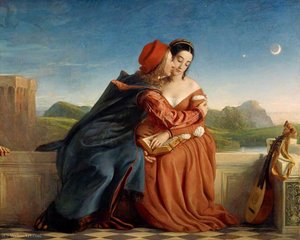
11Westburn (1827) de William DyceWestburn1827 12Portrait of Alexander Jardine (1834) de William DycePortrait of Alexander Jardine1834 13The Descent of Venus (2nd Version) de William DyceThe Descent of Venus (2nd Version) 14Life study de William DyceLife study 15The Judgement of Solomon de William DyceThe Judgement of SolomonGalería Nacional de Escocia 16Nicholson bain de William DyceNicholson bain 17Saint catherine de William DyceSaint catherineGalería Nacional de Escocia 18The honourable charlotte noel de William DyceThe honourable charlotte noel 19The Descent of Venus de William DyceThe Descent of Venus 20Beatrice de William DyceBeatrice 21Head of a Man de William DyceHead of a ManBirmingham Museum and Art Gallery 22Bacchus Nursed by the Nymphs of Nyssa de William DyceBacchus Nursed by the Nymphs of Nyssa 23Miss hannah carnegie de William DyceMiss hannah carnegie 24King Lear and the Fool in the Storm de William DyceKing Lear and the Fool in the StormGalería Nacional de Escocia 25San José (1847) de William DyceSan José1847 · Royal Collection 26Rosslyn Chapel, South Aisle de William DyceRosslyn Chapel, South AisleGalería Nacional de Escocia 27Westburn de William DyceWestburn 28Recollection of Pegwell Bay de William DyceRecollection of Pegwell Bay 29Isabella cay de William DyceIsabella cay 30View of Loch Lomond de William DyceView of Loch LomondGalería Nacional de Escocia 31Madonna and Child de William DyceMadonna and Child 32Motherhood de William DyceMotherhood 33John Small and His Son de William DyceJohn Small and His Son 34The Woman of Samaria de William DyceThe Woman of SamariaBirmingham Museum and Art Gallery 35The highland ferryman de William DyceThe highland ferryman 36Christ Enthroned with Saints de William DyceChrist Enthroned with Saints 37Pegwell Bay, Kent - a Recollection of October 5th (1858) de William DycePegwell Bay, Kent - a Recollection of October 5th (1858) 38Mrs william crombie de William DyceMrs william crombie 39Welsh Landscape with Two Women Knitting de William DyceWelsh Landscape with Two Women Knitting 40Virgin and Child de William DyceVirgin and Child 41The Garden of Gethsemane de William DyceThe Garden of Gethsemane 42Man of Sorrows de William DyceMan of SorrowsGalería Nacional de Escocia 43Christabel de William DyceChristabel 44Dante and Beatrice de William DyceDante and Beatrice 45Francis humberston de William DyceFrancis humberston 46Henry VI at Towton, North Yorkshire de William DyceHenry VI at Towton, North Yorkshire 47Alexander webster de William DyceAlexander webster 48Study for 'Cain' de William DyceStudy for 'Cain' 49The Daughters of Jethro Defended by Moses de William DyceThe Daughters of Jethro Defended by Moses 50Lowry william frederick dyce de William DyceLowry william frederick dyce 51Mrs John Clerk Maxwell and Her Son, James de William DyceMrs John Clerk Maxwell and Her Son, JamesBirmingham Museum and Art Gallery 52Sir James McGrigor de William DyceSir James McGrigor 53Omnia vanitas de William DyceOmnia vanitas 54John Knox Dispensing the Sacrament de William DyceJohn Knox Dispensing the Sacrament 55Francesca da Rimini de William DyceFrancesca da RiminiGalería Nacional de Escocia 56The goatherd de William DyceThe goatherd 57Christ's Entry into Jerusalem de William DyceChrist's Entry into Jerusalem 58Lamentation over the Dead Christ de William DyceLamentation over the Dead Christ 59Titian Preparing to Make His First Essay in Colouring de William DyceTitian Preparing to Make His First Essay in Colouring 60James chalmers de William DyceJames chalmers 61George Herbert at Bemerton, Salisbury de William DyceGeorge Herbert at Bemerton, Salisbury 62Portrait of a Lady de William DycePortrait of a Lady 63The Meeting of Jacob and Rachel de William DyceThe Meeting of Jacob and Rachel 64The infant hercules de William DyceThe infant herculesGalería Nacional de Escocia 65Sir galbraith lowry cole de William DyceSir galbraith lowry coleNational Portrait Gallery 66Titian's first painting de William DyceTitian's first painting 67Sketch of a Doorway with a Water Barrel de William DyceSketch of a Doorway with a Water Barrel 68Amongst the Trees de William DyceAmongst the Trees 69Pegwell Bay, Kent - un recuerdo del 5 de octubre de 1858 (1858) de William DycePegwell Bay, Kent - un recuerdo del 5 de octubre de 18581858 · Tate Britain

Pinturas famosas de William Dyce, época por época

Los temas que cautivaron la mirada de William Dyce

Los cuatro temas que se repiten con más frecuencia en estas obras originales, cada uno con su mejor ejemplo.

Los museos que conservan los originales de William Dyce

Los 8 museos que albergan la mayoría de las pinturas de esta página.

Museos Ciudad Obras de William Dyce Pinturas de esta lista
Galería Nacional de Escocia, EdimburgoGalería Nacional de Escocia Edimburgo 10 Piedad: Los caballeros de la mesa redonda a punto de partir en busca del Santo Grial, David in the Wilderness, The Judgement of Solomon
Birmingham Museum and Art Gallery, BirminghamBirmingham Museum and Art Gallery Birmingham 3 Head of a Man, The Woman of Samaria, Mrs John Clerk Maxwell and Her Son, James
Royal Collection, LondresRoyal Collection Londres 2 La Virgen y el Niño, San José
Galería Nacional de Retratos de Escocia, EdimburgoGalería Nacional de Retratos de Escocia Edimburgo 1 James Hamilton, 1749 - 1835. Médico
Museo y Galería de Arte de Leicester, LeicesterMuseo y Galería de Arte de Leicester Leicester 1 The meeting of Jacob and Rachel
Minneapolis Institute of Art, MinneapolisMinneapolis Institute of Art Minneapolis 1 Eliezer of Damascus
Aberdeen Art GalleryAberdeen Art Gallery 1 Portrait of a Lady (The Artist's Wife)
National Portrait Gallery, LondresNational Portrait Gallery Londres 1 Sir galbraith lowry cole

William Dyce a través de las décadas: una obra original única para cada una

Obras por década

Elige una década para ver la obra original que la define.

Pinturas de William Dyce: preguntas para la galería

¿Cuál es la obra más famosa de William Dyce?Descubre la respuesta

Piedad: Los caballeros de la mesa redonda a punto de partir en busca del Santo Grial (1849), Galería Nacional de Escocia, Edimburgo. A James Hamilton, 1749 - 1835. Médico (1832) y The meeting of Jacob and Rachel (1853) le siguen.

¿A qué edad creó William Dyce Piedad: Los caballeros de la mesa redonda a punto de partir en busca del Santo Grial?Descubre la respuesta

43 años: Piedad: Los caballeros de la mesa redonda a punto de partir en busca del Santo Grial data de 1849, y William Dyce nació en 1806.

¿Cuáles son las diez pinturas más famosas de William Dyce?Descubre la respuesta

Piedad: Los caballeros de la mesa redonda a punto de partir en busca del Santo Grial, James Hamilton, 1749 - 1835. Médico, The meeting of Jacob and Rachel, Eliezer of Damascus, Portrait of a Lady (The Artist's Wife), Design For A Stained Glass Window In Ely Cathedral by William Dyce - William Dyce, Scene in Arran, La Virgen y el Niño, Saint john leading home his adopted mother y David in the Wilderness. La clasificación anterior indica el año y el museo de cada una.

¿Cuántas obras de William Dyce se conocen?Descubre la respuesta

Nuestro catálogo cuenta con 69 obras de William Dyce, datadas desde 1827 hasta 1860.

¿Dónde se pueden ver los originales más famosos de William Dyce?Descubre la respuesta

Principalmente en Galería Nacional de Escocia (Edimburgo), Birmingham Museum and Art Gallery (Birmingham) y Royal Collection (Londres). La tabla de museos arriba los enumera todos.

¿En qué periodo creó William Dyce sus pinturas más conocidas?Descubre la respuesta

En 1850s: 5 de las 69 obras de esta página se realizaron entonces, The meeting of Jacob and Rachel de ellas.

¿Cuál es la pintura más antigua de William Dyce y cuál es la más reciente?Descubre la respuesta

En esta página, la más antigua es Westburn (1827) y la más reciente Eliezer of Damascus (1860).

¿Qué temas prefería William Dyce?Descubre la respuesta

Women (6), Portrait (4) y Victorian era (4), en las 69 obras de esta página.

¿Con qué materiales pintó más William Dyce?Descubre la respuesta

Óleo sobre lienzo, para 5 de las 69 obras de esta página.

¿Qué obras originales de William Dyce puedo ver en el Galería Nacional de Escocia?Descubre la respuesta

Piedad: Los caballeros de la mesa redonda a punto de partir en busca del Santo Grial, David in the Wilderness y The Judgement of Solomon: el Galería Nacional de Escocia, Edimburgo posee 10 de las obras de esta página.

William Dyce: un retrato del artista

Early Life and Artistic Training

William Dyce (1806–1864) was born in Aberdeen, Scotland, the son of Dr William Dyce FRSE, a physician and fellow of the Royal Society, and Margaret Chalmers, daughter of a wealthy banker. His family fostered an appreciation for learning and culture, equipping him with a strong foundation for his future artistic pursuits. He attended Marischal College, Aberdeen’s university, where he earned a Master's degree at just sixteen years old—a remarkable achievement for the time. Recognizing his talent for design, Dyce pursued formal training at the Royal Academy Schools in Edinburgh and London, immersing himself in the study of classical art and mastering techniques vital to his later career. His formative years were marked by exposure to influential artistic ideas circulating within Scotland and England, shaping his aesthetic sensibilities and establishing him as a student deeply committed to artistic excellence.

Italian Influences and Artistic Development

Dyce’s first major journey abroad occurred in 1825 when he travelled to Rome—a pivotal moment that irrevocably altered the trajectory of his artistic life. Inspired by the grandeur of Renaissance art and captivated by the spirit of the Nazarene painters, Dyce spent nine months diligently studying the works of Titian and Poussin, absorbing their compositional principles and mastering their masterful use of colour. This immersion in Italian artistic tradition profoundly impacted his style, fostering a preference for detailed observation and conveying profound spiritual contemplation—characteristics that would become hallmarks of his oeuvre. He returned to Aberdeen in 1826, continuing to hone his skills as a painter and producing several notable works, including Bacchus Nursed by the Nymphs of Nysa, which garnered considerable acclaim.

Edinburgh Years and Portraiture

Dyce established himself in Edinburgh as a portraitist during the mid-1830s, securing commissions from prominent figures of Scottish society. His meticulous attention to detail—particularly his ability to capture subtle expressions and psychological nuances—earned him considerable renown. He skillfully blended classical influences with Romantic sensibilities, producing portraits that were both aesthetically refined and emotionally resonant. Simultaneously, he championed the cause of art education, advocating for the establishment of a school of design in Edinburgh—a position he held until 1843, where he oversaw its expansion and modernization.

London Engagement and Architectural Patronage

In 1837 Dyce moved to London, accepting the role of Master of the School of Design at Somerset House. This marked a significant turning point in his career, propelling him into the heart of Victorian artistic discourse and securing him access to influential patrons—most notably Prince Albert. He undertook extensive research into art education practices abroad, informing the creation of the “South Kensington System,” which would dominate English art instruction for decades to come. Dyce’s involvement extended beyond pedagogical endeavors; he served as a consultant on architectural projects, including the design of the new Houses of Parliament—a project that showcased his mastery of fresco painting and cemented his reputation as one of Britain's foremost artists. ## Major Achievements and Legacy Dyce’s artistic legacy rests primarily upon two monumental undertakings: the decoration of Westminster Abbey and the creation of the Houses of Parliament. His frescoes in Westminster Abbey—particularly Neptune Resigning to Britannia—represent a triumph of Victorian ambition and artistic vision, embodying the grandeur of imperial Britain and demonstrating Dyce's unparalleled skill in fresco technique. However, his most celebrated work remains Pegwell Bay, Kent—a landscape painting that exemplifies Dyce’s meticulous observation of nature and his ability to convey profound emotional depth. Furthermore, Dyce’s contributions to art education—the establishment of the Royal College of Art and his advocacy for innovative pedagogical approaches—have endured as a testament to his unwavering belief in the transformative power of artistic training. William Dyce remains an artist whose work embodies the spirit of Victorian Britain—characterized by intellectual curiosity, moral earnestness, and a fervent devotion to elevating human culture.