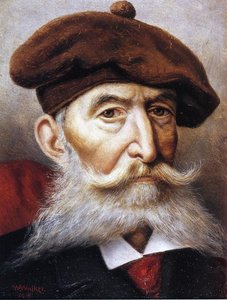
Retrato de William Aiken Walker

Las 100 pinturas más famosas de William Aiken Walker, cada una única en su clase

Actualizado noviembre 2026 · clasificado según nuestro índice de popularidad (búsquedas, visitas y pedidos de cada obra) · 166 obras de William Aiken Walker en nuestro catálogo

En resumen

Pareja negra en un campo de algodón, mujer con cofia amarilla (1889) es la pintura de William Aiken Walker que más llama la atención. Después, la mirada se dirige a View of Galveston Harbor (1874) y Louisiana Cabin Scene with Stretched Hide on Weatherboard and Stock Chimney Covered with Clay (1878). De las 166 obras de William Aiken Walker en nuestro catálogo, estas 100 son las más famosas; cada una es un original único presentado con su año, su museo y la razón de su trascendencia.

1839 – 1921, Charleston Contemporary realism Más obras: Museo de Bellas Artes

Las 10 mejores pinturas de William Aiken Walker, bajo la mirada de la galería

1
Pareja negra en un campo de algodón, mujer con cofia amarilla (1889) de William Aiken Walker

Pareja negra en un campo de algodón, mujer con cofia amarilla

1889 · Óleo sobre lienzo

Una vasta extensión de algodón se despliega hacia un cielo pesado y nublado. En el centro de este paisaje, un hombre y una mujer se desplazan entre los tallos. La mujer luce una cofia amarilla, un único punto de color frente a los tenues tonos terrosos del campo. Se encuentran anclados al suelo, con sus cuerpos posicionados entre los capullos blancos y la textura áspera y erizada de las plantas.…

2
View of Galveston Harbor (1874) de William Aiken Walker

View of Galveston Harbor

1874 · Oil On Canvas

The sea is a restless, dark expanse in the foreground, its surface broken by the rhythmic movement of choppy waves. Small boats and scattered figures navigate these waters, their forms etched against the shifting light. Beyond the immediate swell, a line of ships stretches across the midground, their masts rising like thin needles against the sky. These vessels, varying in scale and detail, suggest a harbor in constant motion, a…

3
Louisiana Cabin Scene with Stretched Hide on Weatherboard and Stock Chimney Covered with Clay (1878) de William Aiken Walker

Louisiana Cabin Scene with Stretched Hide on Weatherboard and Stock Chimney Covered with Clay

1878 · Oil On Canvas

In this 1878 oil painting, we find ourselves transported to a quiet, lived-in corner of Louisiana. The scene centers on a weathered wooden cabin, its structure defined by horizontal lines that suggest a sense of permanence amidst the shifting natural world. A large, sprawling tree arches over the composition, its branches heavy with hanging Spanish moss that frames the dwelling and adds a layer of atmospheric depth. The air feels…

4
Picking Cotton de William Aiken Walker

Picking Cotton

Oil

The scene unfolds in "Picking Cotton," a work by the American artist William Aiken Walker. He captures a moment of labor within the fields, a subject that defines much of his artistic legacy. Walker was born in Charleston, South Carolina, in 1839, a place that remains deeply connected to his identity. He lived his life through the lens of genre painting, focusing his gaze on the everyday realities of the…

5
Sharecroppers Gathered in the Yard (1895) de William Aiken Walker

Sharecroppers Gathered in the Yard

1895 · Oil

In "Sharecroppers Gathered in the Yard," the artist William Aiken Walker captures a quiet moment of communal life. Painted about 1895, this work brings us into a rural setting where the rhythms of daily existence unfold. The scene centers on a group of African American sharecroppers who have come together in a yard, finding a moment of social connection amidst their labors. They gather near a modest wooden cabin, their…

6
Self Portrait (1914) de William Aiken Walker

Self Portrait

1914 · Oil On Canvas

In this 1914 oil on canvas, we find ourselves in an intimate encounter with the artist himself. The composition is centered entirely on a single man, presented in a frontal view that invites a sense of immediate closeness. He wears a dark gray cap and a red necktie, attire that suggests a certain level of dignity and status. His face is framed by a meticulously rendered beard and mustache, textures…

Pinturas famosas de William Aiken Walker, de la número 11 a la 100

11Cotton Picking in Front of the Quarters de William Aiken WalkerCotton Picking in Front of the Quarters 12Man on Dock LIghting Pipe (1849) de William Aiken WalkerMan on Dock LIghting Pipe1849 13Dollarfish and Sheepshead (1860) de William Aiken WalkerDollarfish and Sheepshead1860 · Museo de Bellas Artes 14Dog Head with Post and Chain (1859) de William Aiken WalkerDog Head with Post and Chain1859 15Confederate Encampment at Seven Pines (Fair Oaks) Virginia (1862) de William Aiken WalkerConfederate Encampment at Seven Pines (Fair Oaks) Virginia1862 16Wolves Attacking Cattle (1859) de William Aiken WalkerWolves Attacking Cattle1859 17Negro Youth with Basket on Head (Cuba) (1869) de William Aiken WalkerNegro Youth with Basket on Head (Cuba)1869 18Newsboy Selling the Baltimore Sun (1871) de William Aiken WalkerNewsboy Selling the Baltimore Sun1871 19Ducks, Bobwhites, and Woodcocks (1866) de William Aiken WalkerDucks, Bobwhites, and Woodcocks1866 20Vegetable Vendor at Charleston Market (1870) de William Aiken WalkerVegetable Vendor at Charleston Market1870 21Dollar Fish and Sheephead (1866) de William Aiken WalkerDollar Fish and Sheephead1866 22St. Finebar's Church, Broad Street, Charleston (1868) de William Aiken WalkerSt. Finebar's Church, Broad Street, Charleston1868 23Horses in a Pasture (1880) de William Aiken WalkerHorses in a Pasture1880 24Squaring Off (1880) de William Aiken WalkerSquaring Off1880 25Levee at New Orleans (1883) de William Aiken WalkerLevee at New Orleans1883 26Traveling by Ox Cart (1884) de William Aiken WalkerTraveling by Ox Cart1884 27Plantation Portrait (1885) de William Aiken WalkerPlantation Portrait1885 28Card Players on the Steamboar (1880) de William Aiken WalkerCard Players on the Steamboar1880 29Ruffles and Rags (1881) de William Aiken WalkerRuffles and Rags1881 30Cotton Plantation on the Mississippi (1881) de William Aiken WalkerCotton Plantation on the Mississippi1881 31The Levee at New Orleans (1883) de William Aiken WalkerThe Levee at New Orleans1883 32Plantation Economy (1881) de William Aiken WalkerPlantation Economy1881 33Negro Man, Two Boys and Dog in Cotton Field (1885) de William Aiken WalkerNegro Man, Two Boys and Dog in Cotton Field1885 34Dt. Diehl and Morgan Horse in Louisville Kentucky (1879) de William Aiken WalkerDt. Diehl and Morgan Horse in Louisville Kentucky1879 35Old Shoe with Mice (1879) de William Aiken WalkerOld Shoe with Mice1879 36I'll Stick to Cotton as Long as It Sticks to Me (1886) de William Aiken WalkerI'll Stick to Cotton as Long as It Sticks to Me1886 37Palm Trees on the Beach at Fort Walton (1892) de William Aiken WalkerPalm Trees on the Beach at Fort Walton1892 38On the Levee (New Orleans) (1886) de William Aiken WalkerOn the Levee (New Orleans)1886 39Wagon Scene (1888) de William Aiken WalkerWagon Scene1888 40On the Road to Natchez (1888) de William Aiken WalkerOn the Road to Natchez1888 41Smoked Ham at the Bonnie Crest Inn, North Carolina (1886) de William Aiken WalkerSmoked Ham at the Bonnie Crest Inn, North Carolina1886 42Rabbit, Duck and Snipe (1887) de William Aiken WalkerRabbit, Duck and Snipe1887 43Ponce LIght House, Ponce Park, Florida (1898) de William Aiken WalkerPonce LIght House, Ponce Park, Florida1898 44The Cove at Ponce Park (1895) de William Aiken WalkerThe Cove at Ponce Park1895 45Ponce Park LIght House, Florida (1895) de William Aiken WalkerPonce Park LIght House, Florida1895 46North Carolina Homestead with Mountains and Field (1897) de William Aiken WalkerNorth Carolina Homestead with Mountains and Field1897 47Tobacco Field with Five Figures (North Carolina) (1895) de William Aiken WalkerTobacco Field with Five Figures (North Carolina)1895 48Cottage on Beach with Palm Trees (Florida) (1899) de William Aiken WalkerCottage on Beach with Palm Trees (Florida)1899 49Lighthouse at Ponce Park (1904) de William Aiken WalkerLighthouse at Ponce Park1904 50T-plan Cabin with Porch (1903) de William Aiken WalkerT-plan Cabin with Porch1903 51Crab (1903) de William Aiken WalkerCrab1903 52Negro Man with Cotton Basket on Head de William Aiken WalkerNegro Man with Cotton Basket on Head 53Negro Man in Cotton Field with Basket of Cotton on Head de William Aiken WalkerNegro Man in Cotton Field with Basket of Cotton on Head 54Negro Man in Cotton Field de William Aiken WalkerNegro Man in Cotton Field 55Family Gathered by a Cabin de William Aiken WalkerFamily Gathered by a Cabin 56Bombardment Of Fort Sumter, Charleston Harbor, Charleston, South Carolina, 1863 de William Aiken WalkerBombardment Of Fort Sumter, Charleston Harbor, Charleston, South Carolina, 1863 57Negro Man In Cotton Field With Basket Of Cotton 1 de William Aiken WalkerNegro Man In Cotton Field With Basket Of Cotton 1 58Mushrooms (1910) de William Aiken WalkerMushrooms1910 59North Carolina Cabin with Scalloped Trim on Roof and Wild Cannas de William Aiken WalkerNorth Carolina Cabin with Scalloped Trim on Roof and Wild Cannas 60Washday (1908) de William Aiken WalkerWashday1908 61Scene near Arden, North Carolina (1908) de William Aiken WalkerScene near Arden, North Carolina1908 62Runnymede on the Ashley River (1907) de William Aiken WalkerRunnymede on the Ashley River1907 63Juvenile Angel Fish (1907) de William Aiken WalkerJuvenile Angel Fish1907 64Forest with Ferns and Mushrooms (1910) de William Aiken WalkerForest with Ferns and Mushrooms1910 65Wooded Mountain Scene in North Carolina (1908) de William Aiken WalkerWooded Mountain Scene in North Carolina1908 66Self Portrait (1913) de William Aiken WalkerSelf Portrait1913 67Woodland Scene with Red-Flowered Bush (1914) de William Aiken WalkerWoodland Scene with Red-Flowered Bush1914 68River, Tree, City on Horizon (1914) de William Aiken WalkerRiver, Tree, City on Horizon1914 69Forest Scene with Moss-Covered Trees and Bamboo (1914) de William Aiken WalkerForest Scene with Moss-Covered Trees and Bamboo1914 70Ruins, Arden Park Lodge (1919) de William Aiken WalkerRuins, Arden Park Lodge1919 71Wooded Mountain Scene in North Carolina (1918) de William Aiken WalkerWooded Mountain Scene in North Carolina1918 72Girl with Pigtails (1918) de William Aiken WalkerGirl with Pigtails1918 73Ruin of Luturne Cottage, Arden, North Carolina (1918) de William Aiken WalkerRuin of Luturne Cottage, Arden, North Carolina1918 74Cotton Gin, Adams County, Mississippi (1883) de William Aiken WalkerCotton Gin, Adams County, Mississippi1883 75Still LIfe with Cheese, Bottle of Wine and Mouse (1876) de William Aiken WalkerStill LIfe with Cheese, Bottle of Wine and Mouse1876 76Cabin de William Aiken WalkerCabin 77Breakers In Florida de William Aiken WalkerBreakers In Florida 78Noontime Break de William Aiken WalkerNoontime Break 79Laundry Day de William Aiken WalkerLaundry Day 80Plantation Scene 1 de William Aiken WalkerPlantation Scene 1 81Cotton Picker de William Aiken WalkerCotton Picker 82Florida Beach Scene with Sand Dunes, Sea Oats and Surf de William Aiken WalkerFlorida Beach Scene with Sand Dunes, Sea Oats and Surf 83Log Cabin with Stretched Hide on Wall de William Aiken WalkerLog Cabin with Stretched Hide on Wall 84Ponce Park Light House, Florida 1 de William Aiken WalkerPonce Park Light House, Florida 1 85Sand Dunes and Clouds, Florida de William Aiken WalkerSand Dunes and Clouds, Florida 86Ocean Waves Breaking on Beach de William Aiken WalkerOcean Waves Breaking on Beach 87Cabin Scene 3 de William Aiken WalkerCabin Scene 3 88An Old Time Fishing Village de William Aiken WalkerAn Old Time Fishing Village 89Cuban Family de William Aiken WalkerCuban Family 90Negro Man in Cotton Field with Basket of Cotton de William Aiken WalkerNegro Man in Cotton Field with Basket of Cotton 91Cabin Scene 4 de William Aiken WalkerCabin Scene 4 92Negro Women in Cotton Field de William Aiken WalkerNegro Women in Cotton Field 93Portland Headlight, Maine de William Aiken WalkerPortland Headlight, Maine 94Negro Cabin with Palm Tree de William Aiken WalkerNegro Cabin with Palm Tree 95Board And Batten Northern South Carolina Cabin de William Aiken WalkerBoard And Batten Northern South Carolina Cabin 96Cotton Pickers 1 de William Aiken WalkerCotton Pickers 1 97Drying the Wash de William Aiken WalkerDrying the Wash 98Old Negro Man with Basket of Cotton de William Aiken WalkerOld Negro Man with Basket of Cotton 99Florida Seascape with Sand Dune, Palm Tree, and Yuccas de William Aiken WalkerFlorida Seascape with Sand Dune, Palm Tree, and Yuccas 100Sand Dunes, Palmetto (Sabal) and Steamboat de William Aiken WalkerSand Dunes, Palmetto (Sabal) and Steamboat

Pinturas famosas de William Aiken Walker, época por época

Los temas que cautivaron la mirada de William Aiken Walker

Los cuatro temas que se repiten con más frecuencia en estas obras originales, cada uno con su mejor ejemplo.

Los museos que conservan los originales de William Aiken Walker

El museo que alberga la mayor parte de las obras de esta página.

Museos Ciudad Obras de William Aiken Walker Pinturas de esta lista
Museo de Bellas Artes, BostonMuseo de Bellas Artes Boston 1 Dollarfish and Sheepshead

William Aiken Walker a través de las décadas: una obra original única para cada una

Obras por década

Elige una década para ver la obra original que la define.

Pinturas de William Aiken Walker: preguntas para la galería

¿Cuál es la obra más famosa de William Aiken Walker?Descubre la respuesta

Pareja negra en un campo de algodón, mujer con cofia amarilla (1889). A continuación, View of Galveston Harbor (1874) y Louisiana Cabin Scene with Stretched Hide on Weatherboard and Stock Chimney Covered with Clay (1878).

¿A qué edad creó William Aiken Walker Pareja negra en un campo de algodón, mujer con cofia amarilla?Descubre la respuesta

50 años: Pareja negra en un campo de algodón, mujer con cofia amarilla data de 1889, y William Aiken Walker nació en 1839.

¿Cuáles son las diez pinturas más famosas de William Aiken Walker?Descubre la respuesta

Pareja negra en un campo de algodón, mujer con cofia amarilla, View of Galveston Harbor, Louisiana Cabin Scene with Stretched Hide on Weatherboard and Stock Chimney Covered with Clay, Picking Cotton, Sharecroppers Gathered in the Yard, Self Portrait, Noon Day Pause in the Cotton Field, Plantation Scene, Negro Man And Woman In Cotton Field With Cotton Baskets 1 y Negro Man And Woman In Cotton Field With Baskets Of Cotton 1. La clasificación anterior indica el año y el museo de cada una.

¿Cuántas obras de William Aiken Walker se conocen?Descubre la respuesta

Nuestro catálogo cuenta con 166 obras de William Aiken Walker, datadas desde 1849 hasta 1919.

¿Dónde se pueden ver los originales más famosos de William Aiken Walker?Descubre la respuesta

Principalmente en Museo de Bellas Artes (Boston). La tabla de museos arriba los enumera todos.

¿En qué periodo creó William Aiken Walker sus pinturas más conocidas?Descubre la respuesta

En 1880s: 19 de las 100 obras de esta página se realizaron entonces, Pareja negra en un campo de algodón, mujer con cofia amarilla de ellas.

¿Cuál es la pintura más antigua de William Aiken Walker y cuál es la más reciente?Descubre la respuesta

En esta página, la más antigua es Man on Dock LIghting Pipe (1849) y la más reciente Ruins, Arden Park Lodge (1919).

¿Qué temas prefería William Aiken Walker?Descubre la respuesta

Cotton (13), Usa (11) y Scenes (9), en las 100 obras de esta página.

¿Con qué materiales pintó más William Aiken Walker?Descubre la respuesta

Oil On Canvas, para 3 de las 100 obras de esta página.

¿A qué movimiento pertenece la obra de William Aiken Walker?Descubre la respuesta

Contemporary realism y Genre painting, a juzgar por los originales de esta página.

William Aiken Walker: un retrato del artista

William Aiken Walker: Una Vida en la Pintura

William Aiken Walker (11 de marzo de 1839 – 3 de enero de 1921) fue un artista estadounidense reconocido por sus pinturas de género, particularmente aquellas que capturan las vidas de los afroamericanos en el Sur de la era posterior a la Reconstrucción. Su obra ofrece una visión conmovedora de un período crucial de la historia estadounidense.

Primeros Años e Influencias

Nacido en Charleston, Carolina del Sur, hijo de un padre protestante irlandés y una madre con profundas raíces en la sociedad carolina del sur, la primera infancia de Walker se vio marcada por reubicaciones tras la muerte de su padre en 1842. La familia se mudó a Baltimore, Maryland, antes de regresar a Charleston en 1848. Esta exposición a diferentes entornos probablemente moldeó su perspectiva artística.

Desarrollo Artístico y Carrera

El viaje artístico de Walker comenzó con una formación formal, aunque los detalles permanecen escasos. Es principalmente autodidacta. Durante la Guerra Civil Americana, se alistó en el Ejército Confederado, sirviendo bajo el mando del General Wade Hampton. Herido en la Batalla de Seven Pines en 1862, su posterior asignación a tareas de patrulla le proporcionó inesperadamente tiempo para pintar.

Él se hizo famoso por sus representaciones de la vida cotidiana, centrándose particularmente en las experiencias de los arrendatarios negros y trabajadores. Sus pinturas son caracterizadas por un estilo realista y una representación empática de sus sujetos. Dos de sus obras más reconocidas –que representan escenas de la vida rural sureña– fueron reproducidas como cromolitografías por Currier and Ives, ampliando significativamente su alcance.

Obras Destacadas

  • Bombardeo del Fuerte Sumter, Puerto de Charleston, Charleston, Carolina del Sur, 1863: Una poderosa representación de un evento clave que inició la Guerra Civil. Walker capturó con detalle la tensión y el peligro de la batalla, reflejando la importancia histórica del momento.
  • St. Finebar's Church, Broad Street, Charleston: Exhibiendo la habilidad de Walker en la pintura arquitectónica y capturando la esencia del paisaje urbano de Charleston. Esta obra maestra demuestra su dominio técnico y sensibilidad estética hacia el entorno construido.
  • Algodonera, Condado de Adams, Mississippi: Un ejemplo representativo de sus escenas de género centradas en el trabajo agrícola. Walker logró transmitir la atmósfera rural con una precisión impresionante, ofreciendo una visión íntima de la vida cotidiana en el Sur estadounidense.
  • Escena de Cabaña 1: Ilustrando las condiciones de vida de los arrendatarios con un realismo impactante. Esta pintura destaca por su capacidad para comunicar emociones y experiencias humanas comunes, convirtiéndose en un testimonio conmovedor del período histórico representado.

Temas y Estilo

La obra de Walker se distingue por su enfoque en la pintura de género, un estilo que representa escenas de la vida cotidiana. Capturó magistralmente la dignidad y la resiliencia de sus sujetos, ofreciendo una perspectiva matizada de la sociedad sureña de la era posterior a la Guerra Civil que a menudo está ausente de los relatos históricos más formales. Sus pinturas suelen retratar las dificultades enfrentadas por los afroamericanos al tiempo que destacan su fuerza y espíritu comunitario.

Significado Histórico & Legado

El arte de Walker proporciona una valiosa documentación histórica de un período complejo en la historia estadounidense. Ofrece información sobre la dinámica social, económica y racial del Sur de la era posterior a la Guerra Civil que a menudo está ausente de los relatos históricos más formales. Sus pinturas sirven como testimonios visuales de las vidas de aquellos que vivieron durante esta época.

Continuó pintando hasta su muerte el 3 de enero de 1921, en Charleston, donde fue enterrado en la parcela familiar del Cementerio Magnolia. Hoy en día, su obra se puede encontrar en museos como el Gibbes Museum of Art en Charleston, Carolina del Sur, asegurando que su legado continúe inspirando e informando a las generaciones futuras.

Influencias

Aunque no están extensamente documentadas influencias artísticas específicas, el realismo de Walker sugiere una conciencia de los pintores estadounidenses de género contemporáneos. Su enfoque en el comentario social se alinea con una tendencia más amplia en el arte del siglo XIX hacia la abordaje de cuestiones de clase y desigualdad.