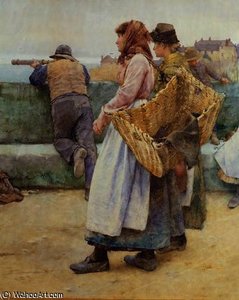
Retrato de Walter Langley

Las 59 pinturas más famosas de Walter Langley, cada una única en su clase

Actualizado noviembre 2026 · clasificado según nuestro índice de popularidad (búsquedas, visitas y pedidos de cada obra) · 59 obras de Walter Langley en nuestro catálogo

En resumen

Old Market Hall and Fountain, Birmingham (1880) es la pintura de Walter Langley que más llama la atención; la obra original pertenece al Birmingham Museum and Art Gallery, Birmingham. Después, la mirada se dirige a Memories (1885) y But Men Must Work and Women Must Weep (1883). De las 59 obras de Walter Langley en nuestro catálogo, estas 59 son las más famosas; cada una es un original único presentado con su año, su museo y la razón de su trascendencia.

1852 – 1922, Birmingham Social realism Más obras: Birmingham Museum and Art Gallery

Las 10 mejores pinturas de Walter Langley, bajo la mirada de la galería

1
Old Market Hall and Fountain, Birmingham (1880) de Walter Langley

Old Market Hall and Fountain, Birmingham

1880 · Watercolor · Birmingham Museum and Art Gallery, Birmingham

The interior of the Old Market Hall in Birmingham stretches upward, a vast shell of iron and glass. High above, a skylight filters the daylight, casting a soft, diffused glow over the architecture. At the heart of this space sits an ornate bronze fountain, its presence anchored by a heavy base of Yorkshire sandstone. A solitary woman, draped in dark, Victorian-era clothing, moves past the basin. Her silhouette provides a…

2
Memories (1885) de Walter Langley

Memories

1885 · Oil On Canvas · Birmingham Museum and Art Gallery, Birmingham

In this 1885 oil on canvas, three generations of women occupy a rustic interior, their presence anchored by a heavy visual weight on the left. A seated elderly woman and a young girl reading create a focal point of stillness, while a third figure stands near a window on the right. The composition relies on an asymmetrical balance, using the verticality of the standing figure to counter the seated group.…

3
But Men Must Work and Women Must Weep (1883) de Walter Langley

But Men Must Work and Women Must Weep

1883 · Oil On Canvas · Birmingham Museum and Art Gallery, Birmingham

The composition centers on two female figures within a dimly lit, enclosed interior. A younger woman sits slumped forward, her head resting heavily in her hands. Her posture suggests a state of profound exhaustion or sorrow. Standing behind her, an older woman observes the scene, her features weathered and her expression somber. The lighting originates from a single source to the left, casting soft shadows across the heavy folds of…

4
In Memoriam (1882) de Walter Langley

In Memoriam

1882 · Oil · Birmingham Museum and Art Gallery, Birmingham

In In Memoriam, Walter Langley presents an oil painting of an elderly woman captured in a moment of profound grief or exhaustion. The subject is seated slightly to the left of the center, her head resting heavily upon her hand near a table. This posture, combined with the stillness of the figure, suggests themes of mourning, loss, or weary reflection. The work, dating from about 1882, focuses on the quietude…

5
Disaster Scene in a Cornish Fishing Village (1889) de Walter Langley

Disaster Scene in a Cornish Fishing Village

1889 · Oil · Birmingham Museum and Art Gallery, Birmingham

In this oil painting, titled Disaster Scene in a Cornish Fishing Village, the artist Walter Langley explores the heavy emotional toll of life on the coast. Created about 1889, the work focuses on the immediate human impact of a maritime disaster. Rather than focusing on the sea itself, the subject matter centers on the communal grief found within the village. It is a quiet, somber study of how a single…

6
Study of an Old Fisherwoman (1889) de Walter Langley

Study of an Old Fisherwoman

1889 · Watercolor · Birmingham Museum and Art Gallery, Birmingham

A single figure sits anchored in the dim light of an interior. She is an old fisherwoman, her body slumped in a posture of heavy, settled weariness. The light enters from a window to the left, a soft and diffused glow that traces the deep folds of her clothing and the weathered topography of her skin. She does not look at the viewer. Her gaze is turned inward, lost in…

7
But O For the Touch of a Vanished Hand (1888) de Walter Langley

But O For the Touch of a Vanished Hand

1888 · Oil · Birmingham Museum and Art Gallery, Birmingham

In this 1888 work, titled But O For the Touch of a Vanished Hand, we encounter the quiet, observational style of Walter Langley. Born in Birmingham, United Kingdom, Langley developed a perspective deeply rooted in the realities of the working class, a focus that would define much of his career. This piece emerged during a period when he was establishing himself as a significant figure within the Newlyn School of…

8
An Old Cornish Woman (1891) de Walter Langley

An Old Cornish Woman

1891 · Oil On Canvas · Birmingham Museum and Art Gallery, Birmingham

An Old Cornish Woman is a portrait by Walter Langley, executed about 1891. The subject is an elderly woman seated within a dimly lit interior. This portrait utilizes a vertical orientation to emphasize her presence against the sparse surroundings of the room. The depiction follows the conventions of late 19th-century realism, focusing on a truthful and unidealized representation of everyday life and character.

9
Never Morning Wore to Evening but Some Heart Did Break (1894) de Walter Langley

Never Morning Wore to Evening but Some Heart Did Break

1894 · Oil · Birmingham Museum and Art Gallery, Birmingham

Painted in 1894, this work reflects the social realism that defined much of the period's interest in the working class. The subject matter avoids embellishment, choosing instead to honor the humanity found within quiet struggles. There is a palpable sense of shared sorrow in the way the figures interact, suggesting a narrative of loss that extends beyond the frame. The composition uses the receding perspective of the coastline to provide…

10
Expert Opinion (1905) de Walter Langley

Expert Opinion

1905 · Oil On Canvas · Birmingham Museum and Art Gallery, Birmingham

In Expert Opinion by Walter Langley, a quiet moment unfolds by the seaside. Painted about 1905, this genre scene captures a pause in the rhythm of coastal life. Three figures occupy the space, arranged in a way that draws the eye across their silent interaction. An older man sits on the left, his presence grounded and steady. In the center, a young boy becomes the focal point of the group,…

Pinturas famosas de Walter Langley, de la número 11 a la 59

Pinturas famosas de Walter Langley, época por época

Los temas que cautivaron la mirada de Walter Langley

Los cuatro temas que se repiten con más frecuencia en estas obras originales, cada uno con su mejor ejemplo.

Los museos que conservan los originales de Walter Langley

El museo que alberga la mayor parte de las obras de esta página.

Museos Ciudad Obras de Walter Langley Pinturas de esta lista
Birmingham Museum and Art Gallery, BirminghamBirmingham Museum and Art Gallery Birmingham 10 Old Market Hall and Fountain, Birmingham, Memories, But Men Must Work and Women Must Weep

Walter Langley a través de las décadas: una obra original única para cada una

Obras por década

Elige una década para ver la obra original que la define.

Pinturas de Walter Langley: preguntas para la galería

¿Cuál es la obra más famosa de Walter Langley?Descubre la respuesta

Old Market Hall and Fountain, Birmingham (1880), Birmingham Museum and Art Gallery, Birmingham. A Memories (1885) y But Men Must Work and Women Must Weep (1883) le siguen.

¿A qué edad creó Walter Langley Old Market Hall and Fountain, Birmingham?Descubre la respuesta

28 años: Old Market Hall and Fountain, Birmingham data de 1880, y Walter Langley nació en 1852.

¿Cuáles son las diez pinturas más famosas de Walter Langley?Descubre la respuesta

Old Market Hall and Fountain, Birmingham, Memories, But Men Must Work and Women Must Weep, In Memoriam, Disaster Scene in a Cornish Fishing Village, Study of an Old Fisherwoman, But O For the Touch of a Vanished Hand, An Old Cornish Woman, Never Morning Wore to Evening but Some Heart Did Break y Expert Opinion. La clasificación anterior indica el año y el museo de cada una.

¿Cuántas obras de Walter Langley se conocen?Descubre la respuesta

Nuestro catálogo cuenta con 59 obras de Walter Langley, datadas desde 1880 hasta 1905.

¿Dónde se pueden ver los originales más famosos de Walter Langley?Descubre la respuesta

Principalmente en Birmingham Museum and Art Gallery (Birmingham). La tabla de museos arriba los enumera todos.

¿En qué periodo creó Walter Langley sus pinturas más conocidas?Descubre la respuesta

En 1880s: 7 de las 59 obras de esta página se realizaron entonces, Old Market Hall and Fountain, Birmingham de ellas.

¿Cuál es la pintura más antigua de Walter Langley y cuál es la más reciente?Descubre la respuesta

En esta página, la más antigua es Old Market Hall and Fountain, Birmingham (1880) y la más reciente Expert Opinion (1905).

¿Qué temas prefería Walter Langley?Descubre la respuesta

Woman (9), Elderly woman (5) y Interior (4), en las 59 obras de esta página.

¿Con qué materiales pintó más Walter Langley?Descubre la respuesta

Oil, para 5 de las 59 obras de esta página.

¿A qué movimiento pertenece la obra de Walter Langley?Descubre la respuesta

Social realism y Newlyn school, a juzgar por los originales de esta página.

¿Qué obras originales de Walter Langley puedo ver en el Birmingham Museum and Art Gallery?Descubre la respuesta

Old Market Hall and Fountain, Birmingham, Memories y But Men Must Work and Women Must Weep: el Birmingham Museum and Art Gallery, Birmingham posee 10 de las obras de esta página.

Walter Langley: un retrato del artista

Una voz cornuallesca en el realismo victoriano

Walter Langley (1852–1922) se erige como una figura fundamental dentro de la Escuela de Newlyn de pintores al aire libre, representando una vertiente significativa de la historia del arte británico a finales del siglo XIX. Nacido en Birmingham, su crianza le inculcó una profunda conexión con la clase trabajadora, una influencia formativa que impregnaría su visión artística y daría forma profundamente a sus representaciones de la vida en Cornualles. Su padre era un sastre oficial, lo que proporcionó a Langley una comprensión temprana del oficio y el trabajo manual, valores que mantuvo durante toda su vida y que posteriormente tradujo en sus lienzos. Este respeto fundacional por la dignidad del esfuerzo se convirtió en el latido mismo de su producción creativa.

A los quince años, Langley inició un aprendizaje con un litógrafo, perfeccionando habilidades cruciales para capturar el detalle y la textura, destrezas que resultarían invaluables en sus posteriores obras en acuarela. A los veintiuno, obtuvo una beca para la Escuela de Arte de South Kensington, donde estudió diseño junto a otros artistas como Frederic Leighton, absorbiendo las convenciones estilísticas del arte académico mientras nutría simultáneamente sus florecientes sensibilidades artísticas. Esta doble exposición fomentó una mezcla distintiva de competencia técnica y exploración imaginativa, permitiéndole tender un puente entre la formación formal y la verdad pura de la observación.

El alma de Newlyn

El gran salto artístico de Langley llegó en 1881, cuando recibió 500 libras por un año de trabajo de manos del Sr. Thrupp, un fotógrafo de Birmingham; un generoso mecenazgo que le permitió trasladar a su familia a Newlyn, en Cornuello. Este movimiento consolidó el compromiso de Langley con la documentación de la vida cotidiana de los pescadores cornualleses y sus familias, estableciéndolo como uno de los primeros artistas en establecerse en esta floreciente comunidad artística. Su decisión de priorizar la pintura sobre la fotografía refleja una dedicación a capturar la esencia de la experiencia humana a través del arte visual, más allá de la mera reproducción fotográfica.

Como un consumado acuarelista, Langley poseía una capacidad insuperable para capturar la forma humana y los sutiles matices de la luz dentro de este medio. Su obra a menudo trascendía el simple paisaje, centrándose en cambio en la intimidad doméstica y las luchas silenciosas de los habitantes de la costa. Ya fuera a través de los tonos apagados de In The Firelight o las conmovedoras narrativas presentes en The Letter, su pincelada transmitía una profunda empatía por sus sujetos. No era un mero observador de la costa de Newlyn; era su cronista, tejiendo el tejido social del pueblo pesquero en cada aguada de color.

Realismo social y un legado perdurable

Políticamente alineado con los ideales socialistas —apoyando particularmente a Charles Bradlaugh, un político radical—, la obra de Langley defendió constantemente el realismo social. Retrató con maestría las dificultades y la silenciosa resiliencia de la clase trabajadora, convirtiendo su arte en un vehículo para la observación social. Este compromiso con la verdad le valió reconocimiento internacional; notablemente, el gran escritor Leo Tolstoy citó la obra de Langley como un ejemplo ejemplar de arte bueno y significativo. Sus pinturas no buscaban embellecer la pobreza, sino honrar la humanidad que reside en ella.

La importancia histórica de Walter Langley reside en su papel como fundador de la comunidad artística de Newlyn y su capacidad para elevar las luchas cotidianas de la vida rural al nivel del gran arte. Su legado se define por varias contribuciones clave:

  • Realismo social pionero: Aportó una profundidad política y empática a la Escuela de Newlyn, yendo más allá de la pura estética para abordar la condición humana.
  • <Maestría de la acuarela: Es recordado como uno de los mejores acuarelistas que el Reino Unido haya producido jamás, particularmente por su habilidad para plasmar texturas y emociones en un medio tan delicado.
  • <Documentación cultural: Su obra sirve como un registro visual vital de la industria pesquera de Cornualles y de las estructuras sociales de la Gran Bretaña de finales de la época victoriana y eduardiana.

A través de su dedicación a la pintura en plein air y su enfoque inquebrantable en la dignidad del trabajo, Walter Langley aseguró que las voces de los pescadores de Cornualles resonaran mucho más allá de las costas de Newlyn, dejando una huella indeleble en el panorama del realismo británico.