Retrato de Pinturicchio

The 87 Most Famous Pinturicchio Paintings, Each One of a Kind

Actualizado octubre 2026 · clasificado según nuestro índice de popularidad (búsquedas, visitas y pedidos de cada obra) · 87 obras de Pinturicchio en nuestro catálogo

In short

Santa Catalina de Alejandría con un donante (1490) is the Pinturicchio painting that draws the most eyes; the original belongs to the National Gallery, Londres. After it, the eye goes to Virgin and Child with Saints Jerome and Francis of Assisi (1485) and The beheading of Saint Catherine of Alexandria (1485). Among the 87 works of Pinturicchio in our catalog, these 87 are the most famous, each a unique original presented with its year, its museum and the reason it endures.

1454 – 1513, Perugia Renacimiento Más obras: Museo Nacional de Varsovia

Top 10 paintings by Pinturicchio, through the gallery's eye

1
Santa Catalina de Alejandría con un donante (1490) de Pinturicchio

Santa Catalina de Alejandría con un donante

1490 · Témpera sobre tabla · National Gallery, Londres

Esta pintura al temple sobre tabla, datada en 1490 y perteneciente a la era del Renacimiento, presenta una escena religiosa de equilibrio y verticalidad. La composición se articula en torno a dos figuras principales situadas ante un telón de fondo paisajístico. En el centro de la obra se erige Santa Catalina de Alejandría, identificada por su corona y una rueda rota. La santa es representada con la mirada dirigida hacia…

Pinturicchio's famous paintings, numbers 11 to 87

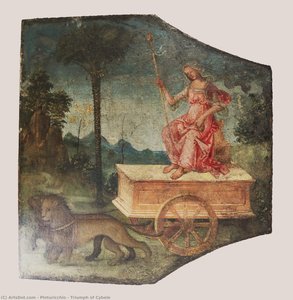
11Saint Bartholomew (1497) de PinturicchioSaint Bartholomew1497 12Madonna with Child Jesus and St. John (1495) de PinturicchioMadonna with Child Jesus and St. John1495 · Museo Nacional de Varsovia 13The Virgin and Child (1492) de PinturicchioThe Virgin and Child1492 · Isabella Stewart Gardner Museum 14Madonna and Child with St. Jerome and St. Gregory the Great (1502) de PinturicchioMadonna and Child with St. Jerome and St. Gregory the Great1502 15Retrato de un joven (1500) de PinturicchioRetrato de un joven1500 · Brooklyn Museum 16Helle on a Ram (1509) de PinturicchioHelle on a Ram1509 17El triunfo de Cibeles (1509) de PinturicchioEl triunfo de Cibeles1509 18Putto with garlands (1509) de PinturicchioPutto with garlands1509 19Putto with garlands (1509) de PinturicchioPutto with garlands1509 20Untitled (D2X9QX) (1509) de PinturicchioUntitled (D2X9QX)1509 21El triunfo de un guerrero (1509) de PinturicchioEl triunfo de un guerrero1509 22El rapto de Proserpina (1509) de PinturicchioEl rapto de Proserpina1509 23Antique Hero de PinturicchioAntique HeroMusée du Petit Palais 24Portrait of a Boy de PinturicchioPortrait of a Boy 25Untitled (739) de PinturicchioUntitled (739) 26Susanna and the Elders de PinturicchioSusanna and the Elders 27Aeneas Piccolomini Leaves for the Council of Basle de PinturicchioAeneas Piccolomini Leaves for the Council of Basle 28Dos niños sentados (1513) de PinturicchioDos niños sentados1513 · Château de Chantilly 29Putto with garlands (1509) de PinturicchioPutto with garlands1509 30Rape of Europa (1509) de PinturicchioRape of Europa1509 31Jupiter and Antiope (1509) de PinturicchioJupiter and Antiope1509 32Galatea (?) (1509) de PinturicchioGalatea (?)1509 33Venus and Cupid (1509) de PinturicchioVenus and Cupid1509 34Bacchus, Pan and Silenus (1509) de PinturicchioBacchus, Pan and Silenus1509 35The Three Graces (1509) de PinturicchioThe Three Graces1509 36Triumph of Mars (1509) de PinturicchioTriumph of Mars1509 37Triumph of Alexander (1509) de PinturicchioTriumph of Alexander1509 38Untitled (627) de PinturicchioUntitled (627) 39Untitled (349) de PinturicchioUntitled (349) 40Untitled (836) de PinturicchioUntitled (836) 41Untitled (919) de PinturicchioUntitled (919) 42Untitled (892) de PinturicchioUntitled (892) 43Untitled (212) de PinturicchioUntitled (212) 44Untitled (857) de PinturicchioUntitled (857) 45Untitled (963) de PinturicchioUntitled (963) 46Annunciation (detail) de PinturicchioAnnunciation (detail) 47Untitled (643) de PinturicchioUntitled (643) 48Death of St. Bernardine de PinturicchioDeath of St. Bernardine 49Portrait of a Boy de PinturicchioPortrait of a Boy 50The Resurrection (center view) de PinturicchioThe Resurrection (center view) 51Pope Aeneas Piccolomini Canonizes Catherine of Siena (detail) de PinturicchioPope Aeneas Piccolomini Canonizes Catherine of Siena (detail) 52Untitled (487) de PinturicchioUntitled (487) 53The Return of Odysseus de PinturicchioThe Return of Odysseus 54Aeneas Piccolomini Canonizes Catherine of Siena de PinturicchioAeneas Piccolomini Canonizes Catherine of Siena 55The Crucifixion with Sts Jerome and Christopher de PinturicchioThe Crucifixion with Sts Jerome and Christopher 56Untitled (913) de PinturicchioUntitled (913) 57Virgin and Child de PinturicchioVirgin and Child 58Adoration of the Christ Child de PinturicchioAdoration of the Christ Child 59The Virgin and Child with Two Angels de PinturicchioThe Virgin and Child with Two Angels 60Untitled (364) de PinturicchioUntitled (364) 61Aeneas Piccolomini Arrives to Ancona de PinturicchioAeneas Piccolomini Arrives to Ancona 62Untitled (343) de PinturicchioUntitled (343) 63Adoration of the Child de PinturicchioAdoration of the Child 64The Mystical Marriage of St Catherine de PinturicchioThe Mystical Marriage of St Catherine 65Untitled (824) de PinturicchioUntitled (824) 66The arithmetic de PinturicchioThe arithmetic 67Ceiling decoration de PinturicchioCeiling decoration 68The Virgin and Child de PinturicchioThe Virgin and Child 69The resurrection de PinturicchioThe resurrection 70The Return of Odysseus de PinturicchioThe Return of Odysseus 71Bernardino di betto the madonna and child before a landscape de PinturicchioBernardino di betto the madonna and child before a landscape 72The Return of Odysseus de PinturicchioThe Return of Odysseus 73Madonna and Crucifixion and Saints (1496) de PinturicchioMadonna and Crucifixion and Saints1496 · Galería Nacional del Umbria 74Madonna con el niño escribiendo (1498) de PinturicchioMadonna con el niño escribiendo1498 · Philadelphia Museum of Art 75The Crucifixion with Sts Jerome and Christopher de PinturicchioThe Crucifixion with Sts Jerome and ChristopherGalleria Borghese 76Saint Augustine (1500) de PinturicchioSaint Augustine1500 · Galería Nacional del Umbria 77Madonna with Writing Child and St. Jerome (1481) de PinturicchioMadonna with Writing Child and St. Jerome1481 · Gemäldegalerie 78Semi-Gods Ceiling (1490) de PinturicchioSemi-Gods Ceiling1490 79Saint Jerome in the Wilderness (1477) de PinturicchioSaint Jerome in the Wilderness1477 · Walters Art Museum 80Madonna with child (1490) de PinturicchioMadonna with child1490 81Madonna and Child (1494) de PinturicchioMadonna and Child1494 · Museo de Arte del Norte Carolina 82Madonna with Writing Child and Bishop (1495) de PinturicchioMadonna with Writing Child and Bishop1495 83Coronation of Pius III (1503) de PinturicchioCoronation of Pius III1503 84Madonna del Latte (1492) de PinturicchioMadonna del Latte1492 85Infant Christ blessing (1492) de PinturicchioInfant Christ blessing1492 86Self-portrait (1501) de PinturicchioSelf-portrait1501 87Madonna enthroned with child and saints (1506) de PinturicchioMadonna enthroned with child and saints1506

Pinturicchio's famous paintings, period by period

The subjects that held Pinturicchio's eye

The four subjects that come back most often in these originals, each with its finest example.

The museums that keep Pinturicchio's originals

Los 8 museos que albergan la mayor parte de las pinturas de esta página.

Museo Ciudad Obras de Pinturicchio Pinturas de esta lista
Museo Nacional de Varsovia, VarsoviaMuseo Nacional de Varsovia Varsovia 2 Madonna and Child with St. John the Baptist, Madonna with Child Jesus and St. John
Galería Nacional del Umbria, PerugiaGalería Nacional del Umbria Perugia 2 Madonna and Crucifixion and Saints, Saint Augustine
National Gallery, LondresNational Gallery Londres 1 Santa Catalina de Alejandría con un donante
Yale University Art Gallery, New HavenYale University Art Gallery New Haven 1 Virgin and Child with Saints Jerome and Francis of Assisi
Bonnefanten Museum, MaastrichtBonnefanten Museum Maastricht 1 The beheading of Saint Catherine of Alexandria
Museo de Bellas Artes, BostonMuseo de Bellas Artes Boston 1 Virgin and Child with Saint Jerome
Cleveland Museum of Art, ClevelandCleveland Museum of Art Cleveland 1 Virgin and Child
Fitzwilliam MuseumFitzwilliam Museum 1 Virgin and Child with St John the Baptist

Pinturicchio across the decades: one unique original for each

Obras por década

Pick a decade to see the original that defines it.

Pinturicchio's paintings: questions for the gallery

What is the single most famous work of Pinturicchio?Reveal the answer

Santa Catalina de Alejandría con un donante (1490), National Gallery, Londres. Virgin and Child with Saints Jerome and Francis of Assisi (1485) and The beheading of Saint Catherine of Alexandria (1485) come next.

At what age did Pinturicchio create Santa Catalina de Alejandría con un donante?Reveal the answer

36 years old: Santa Catalina de Alejandría con un donante dates from 1490, and Pinturicchio was born in 1454.

Which ten paintings by Pinturicchio are the most famous?Reveal the answer

Santa Catalina de Alejandría con un donante, Virgin and Child with Saints Jerome and Francis of Assisi, The beheading of Saint Catherine of Alexandria, Virgin and Child with Saint Jerome, Madonna with child, Virgin and Child, Virgin and Child with St John the Baptist, Madonna and Child with Saint John the Baptist, Madonna and Child with St. John the Baptist y Holy Family and Saint John. The ranking above gives each one's year and museum.

How many works by Pinturicchio are known?Reveal the answer

Our catalog holds 87 works by Pinturicchio, dated from 1477 to 1513.

Where can the most famous Pinturicchio originals be seen?Reveal the answer

Mostly in Museo Nacional de Varsovia (Varsovia), Galería Nacional del Umbria (Perugia) y National Gallery (Londres). The museum table above lists them all.

During which period did Pinturicchio create the best-known paintings?Reveal the answer

In 1500s: 22 of the 87 works on this page were made then, Madonna and Child with St. Jerome and St. Gregory the Great among them.

Which famous Pinturicchio painting is the earliest, and which the latest?Reveal the answer

On this page, the earliest is Virgin and Child with Saint Jerome (1477) and the latest Dos niños sentados (1513).

What subjects did Pinturicchio favour?Reveal the answer

Children (6), Renaissance art (5) y Mujer (4), across the 87 works on this page.

What materials did Pinturicchio paint with most?Reveal the answer

Fresco, for 4 of the 87 works on this page.

Which movement does the work of Pinturicchio belong to?Reveal the answer

Renacimiento, judging by the originals on this page.

What Pinturicchio originals can I see at the Museo Nacional de Varsovia?Reveal the answer

Madonna and Child with St. John the Baptist y Madonna with Child Jesus and St. John: the Museo Nacional de Varsovia, Varsovia holds 2 of the works on this page.

Where can I order a hand-painted Pinturicchio reproduction?Reveal the answer

Yes, as a reproduction: the original stays in its museum, but any painting on this page can be painted by hand for you, made to order one at a time, from the painting's own page.

Pinturicchio: a portrait of the artist

Bernardino di Betto Pinturicchio: A Renaissance Master of Grace and Detail

Bernardino di Betto, universally recognized as Pinturicchio—a moniker affectionately bestowed upon him for his diminutive stature—emerged from the artistic crucible of Perugia in 1454. His life unfolded during a period of unparalleled cultural dynamism, the High Renaissance surging across Italy; yet Pinturicchio distinguished himself through an aesthetic sensibility that transcended mere imitation, forging instead a singular path rooted in refined elegance and meticulous craftsmanship. While titans like Leonardo da Vinci and Michelangelo wrestled with anatomical precision and dramatic grandeur, Pinturicchio cultivated a style characterized by delicate grace, intricate detail, and a vibrant, decorative fervor—a testament to his mastery of transforming established forms into expressions of unparalleled beauty.

Early Training and Artistic Roots

Pinturicchio’s formative years were steeped in Umbrian artistic traditions, nurtured under the tutelage of masters like Bonfigli and Fiorenzo di Lorenzo. These early influences instilled within him a profound appreciation for Gothic sensibilities—particularly the expressive power of drapery and the subtle interplay of light and shadow—which would subtly permeate his subsequent oeuvre. Crucially, he benefited from the mentorship of Pietro Perugino, arguably Umbria’s foremost painter during this era, whose influence extended beyond mere technique to encompass broader artistic principles. Vasari recounts that Pinturicchio served as Perugino’s assistant, a collaboration that undoubtedly honed his skills and solidified his understanding of the Renaissance ideal—a harmonious blend of classical erudition and humanist compassion.

The Sistine Chapel Commission: A Turning Point

A pivotal moment arrived when Pinturicchio secured a commission for the Sistine Chapel in Rome during the early 16th century, coinciding with the reign of Pope Julius II. This undertaking represented an extraordinary challenge—a chance to collaborate alongside some of the most celebrated artists of his time—including Botticelli, Ghirlandaio, and Signorelli. The frescoes Pinturicchio undertook within this monumental space showcased not only his technical prowess but also his ability to synthesize disparate influences into a cohesive artistic vision. Though sadly his contributions were subsequently obliterated by Michelangelo’s ambitious undertaking to adorn the chapel with *The Last Judgement*, this experience nonetheless served as an invaluable catalyst, exposing him to new stylistic currents and cementing his reputation as a respected artist within papal circles.

Rome and the Borgia Apartments: Decorative Splendor

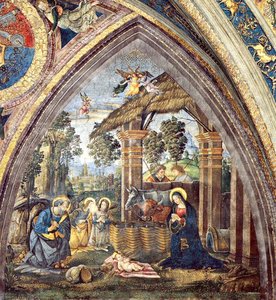
Between 1484 and 1492 Pinturicchio resided primarily in Rome, where he undertook commissions from influential families like the Della Rovere—decorating chapels within Santa Maria del Popolo with his distinctive style—demonstrating a remarkable aptitude for fresco technique. These works underscored his commitment to capturing not merely visual likeness but also emotional resonance—a hallmark of Renaissance art that sought to elevate the viewer’s experience beyond mere observation. However, it was his engagement on the Borgia Apartments project in the Vatican Palace between 1492 and 1494 that truly elevated Pinturicchio's artistic stature. Collaborating with Giovanni Battista Rastrelli and Federico Mazzola, he created a suite of rooms lavishly adorned with frescoes depicting mythological narratives, portraits, and allegorical representations—a bold assertion of papal authority and an opulent celebration of humanist ideals. The masterful use of gold leaf, vibrant pigments, and illusionistic techniques transformed these spaces into immersive environments that mirrored the grandeur of the Borgia court.

Legacy and Enduring Influence

Pinturicchio’s artistic legacy resides in his unwavering devotion to refined elegance and meticulous craftsmanship—qualities that continue to inspire admiration centuries after his death in Siena in 1513. While he may not have achieved the monumental fame enjoyed by Leonardo or Michelangelo, Pinturicchio nonetheless exerted a profound influence on subsequent generations of artists—particularly those drawn to Umbrian decorative art. His distinctive style—characterized by delicate grace and intricate detail—served as a beacon for painters seeking to emulate his mastery of color and composition. As evidenced by his frescoes in the Piccolomini Library in Siena, Pinturicchio’s work embodies an enduring aesthetic ideal—one that prioritizes beauty, harmony, and intellectual stimulation. He remains a poignant reminder that artistic greatness can flourish not merely through revolutionary innovation but also through unwavering adherence to established traditions—transformed into expressions of unparalleled artistry.

Todas las 87 obras de Pinturicchio →