


1


Actualizado octubre 2026 · clasificado según nuestro índice de popularidad (búsquedas, visitas y pedidos de cada obra) · 21 obras de Hedda Sterne en nuestro catálogo
En resumen
De todos los originales que dejó Hedda Sterne, la más famosa es Untitled (1941). Le siguen muy de cerca Katsonarock (Portrait of V.X.) (1941) y Untitled (August 13, 2001) (2001). Nuestro catálogo cuenta con 21 obras de Hedda Sterne; la galería ha conservado las 20 que el mundo más admira, cada una presentada con su fecha, su museo y su historia.


La obra “Señales III” de Hedda Sterne, creada en 1981, se erige como un testimonio impactante del poder perdurable de la abstracción y su capacidad para transmitir una profunda resonancia emocional. Más que una simple representación de nieve o arena —aunque estos elementos dominan el lienzo—, la obra encarna una compleja interacción entre el lenguaje visual y la contemplación filosófica.

En esta obra, titulada Sin título de Metáforas y Metamorfosis, nos encontramos con el lenguaje preciso y meditativo de Hedda Sterne. Creada en 1967, la pieza pertenece al movimiento del Expresionismo Abstracto, un periodo en el que la artista exploró los límites entre la forma y el paisaje interno. Sterne, quien vivió entre 1910 y 2011, aportó una perspectiva única a la Escuela de Nueva York, navegando a menudo en…

La pintura de 1953 de Hedda Sterne, "Sin título (D2WW32)", no es simplemente la representación de una habitación; es una inmersión. Se trata de un eco cuidadosamente construido de memoria y emoción, plasmado en la rica paleta terrosa de una era pasada. El lienzo respira con una intensidad silenciosa, invitando al espectador a perderse en su complejidad estratificada. Esta obra, nacida en el corazón de la Escuela de Nueva York,…


 N.Y. 1 (Road #4)1956 · Krannert Art Museum
12
 Cauliflower1967 · Smithsonian American Art Museum
13
 Tondo1973
14
 Diary1976
15
 Nueva York1956 · Art Institute of Chicago
16
 Untitled1983
17
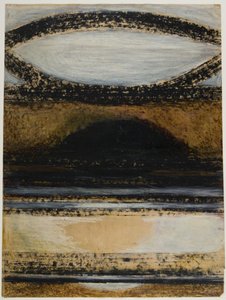 Untitled1960 · Harvard Art Museums
18
 New York, VIIIBonnefanten Museum
19
 Nueva York, N.Y., 19551955 · Whitney Museum of American Art
20
 Roads, No. 61956 · Pennsylvania Academy of the Fine Arts
Los cuatro temas que se repiten con más frecuencia en estas obras originales, cada uno con su mejor ejemplo.
Los 8 museos que albergan la mayoría de las pinturas de esta página.
| Museos | Ciudad | Obras de Hedda Sterne | Pinturas de esta lista |
|---|---|---|---|
 MoMA - Museum of Modern Art |
Nueva York | 2 | Señales III, Sin título de Metáforas y Metamorfosis |
 Metropolitan Museum of Art |
Nueva York | 1 | Sin título (D2WW32) |
 Krannert Art Museum |
Champaign | 1 | N.Y. 1 (Road #4) |
 Smithsonian American Art Museum |
Washington, D.C. | 1 | Cauliflower |
 Art Institute of Chicago |
Chicago | 1 | Nueva York |
 Harvard Art Museums |
Cambridge | 1 | Untitled |
 Bonnefanten Museum |
Maastricht | 1 | New York, VIII |
 Whitney Museum of American Art |
Nueva York | 1 | Nueva York, N.Y., 1955 |
Elige una década para ver la obra original que la define.
La pintura de 1953 de Hedda Sterne, "Sin título (D2WW32)", no es simplemente la representación de una habitación; es una inmersión. Se trata de un eco cuidadosamente construido de memoria y emoción, plasmado en la rica paleta terrosa de una era pasada. El lienzo respira con una intensidad silenciosa, invitando al espectador a perderse en su complejidad estratificada. Esta obra, nacida en el corazón de la Escuela de Nueva York,…
En esta obra, titulada Sin título de Metáforas y Metamorfosis, nos encontramos con el lenguaje preciso y meditativo de Hedda Sterne. Creada en 1967, la pieza pertenece al movimiento del Expresionismo Abstracto, un periodo en el que la artista exploró los límites entre la forma y el paisaje interno. Sterne, quien vivió entre 1910 y 2011, aportó una perspectiva única a la Escuela de Nueva York, navegando a menudo en…

La obra “Señales III” de Hedda Sterne, creada en 1981, se erige como un testimonio impactante del poder perdurable de la abstracción y su capacidad para transmitir una profunda resonancia emocional. Más que una simple representación de nieve o arena —aunque estos elementos dominan el lienzo—, la obra encarna una compleja interacción entre el lenguaje visual y la contemplación filosófica.
Untitled (1941). A continuación, Katsonarock (Portrait of V.X.) (1941) y Untitled (August 13, 2001) (2001).
31 años: Untitled data de 1941, y Hedda Sterne nació en 1910.
Untitled, Katsonarock (Portrait of V.X.), Untitled (August 13, 2001), Señales III, Sin título de Metáforas y Metamorfosis, Sin título (D2WW32), Composition, The Ballerina, Figure and Black Mantle y Third Avenue El. La clasificación anterior indica el año y el museo de cada una.
Nuestro catálogo cuenta con 21 obras de Hedda Sterne, datadas desde 1941 hasta 2001.
Principalmente en MoMA - Museum of Modern Art (Nueva York), Metropolitan Museum of Art (Nueva York) y Krannert Art Museum (Champaign). La tabla de museos arriba los enumera todos.
En 1950s: 6 de las 20 obras de esta página se realizaron entonces, Sin título (D2WW32) de ellas.
En esta página, la más antigua es Untitled (1941) y la más reciente Untitled (August 13, 2001) (2001).
Óleo sobre lienzo, para 2 de las 20 obras de esta página.
Expresionismo abstracto y Surrealism, a juzgar por los originales de esta página.
Señales III y Sin título de Metáforas y Metamorfosis: el MoMA - Museum of Modern Art, Nueva York posee 2 de las obras de esta página.


