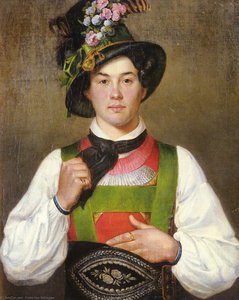
Retrato de Franz Defregger

Las 89 pinturas más famosas de Franz Defregger, cada una única en su clase

Actualizado noviembre 2026 · clasificado según nuestro índice de popularidad (búsquedas, visitas y pedidos de cada obra) · 92 obras de Franz Defregger en nuestro catálogo

En resumen

Yendo a la escuela es la pintura de Franz Defregger que más llama la atención. Después, la mirada se dirige a Granjero tirolés (1860) y El intérprete de cítara y dos niñas (1860). De las 92 obras de Franz Defregger en nuestro catálogo, estas 89 son las más famosas; cada una es un original único presentado con su año, su museo y la razón de su trascendencia.

1835 – 1921, Iselsberg-Stronach Realismo Más obras: Colecciones de Pintura del Estado Bávaro

Las 10 mejores pinturas de Franz Defregger, bajo la mirada de la galería

1
Yendo a la escuela de Franz Defregger

Yendo a la escuela

En Yendo a la escuela, Franz Defregger captura un momento vibrante de la vida cotidiana mientras un grupo de nueve niños asciende por una colina. Los pequeños están vestidos para sus lecciones, algunos con libros apretados bajo sus brazos, mientras su marcha hacia la escuela sugiere el comienzo de una jornada llena de actividad.

2
Granjero tirolés (1860) de Franz Defregger

Granjero tirolés

1860 · Óleo sobre tabla

En "Granjero tirolés" de Franz Defregger, el mundo se reduce a un único rostro curtido por el tiempo. Este retrato de busto en primer plano sitúa a un hombre anciano contra un fondo oscuro e indistinto que no ofrece distracciones ante su presencia. Viste un sombrero de ala ancha, una silueta que enmarca una espesa barba blanca. El sujeto, probablemente un granjero tirolés, mira hacia adelante desde una perspectiva a…

3
El intérprete de cítara y dos niñas (1860) de Franz Defregger

El intérprete de cítara y dos niñas

1860 · Óleo

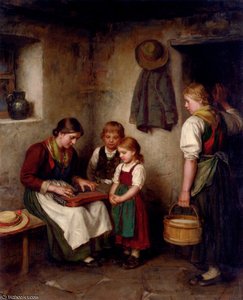
En la pintura El intérprete de cítara y dos niñas de Franz Defregger, una tranquila escena doméstica se despliega en el corazón de un interior rústico. La composición se articula en torno a tres figuras humanas y un perro, dispuestos en una formación triangular que guía la mirada inevitablemente hacia el sujeto central. Un hombre descansa sentado en un banco, absorto en la ejecución de su cítara, acompañado por dos…

4
Desnudo femenino recostado (1860) de Franz Defregger

Desnudo femenino recostado

1860 · Óleo

En "Desnudo femenino recostado" de Franz Defregger, la composición se centra en una figura única. El cuerpo se posiciona diagonalmente a través del encuadre, apoyado contra una estructura drapeada. Esta disposición crea una sensación de reposo tranquilo. El sujeto descansa en un estado de quietud, enmarcado por los pesados pliegues verticales de la tela que contrastan con las líneas orgánicas de la anatomía. La perspectiva es una vista de primer…

5
Niña leyendo (1860) de Franz Defregger

Niña leyendo

1860 · Óleo sobre lienzo

En "Niña leyendo" de Franz Defregger, la composición se asienta en un plano medio de primer plano. El sujeto es capturado desde el pecho hacia arriba, posicionado ligeramente descentrado contra un vacío de negros profundos. Esta oscuridad empuja la figura hacia adelante, creando una sensación de intimidad y quietud. La paleta en escala de grises elimina la distracción del color, dejando únicamente el juego esencial de luz y sombra. Es,…

6
Retr. de un hombre con condecoraciones (1860) de Franz Defregger

Retr. de un hombre con condecoraciones

1860 · Óleo

El retrato al óleo titulado Retr. de un hombre con condecoraciones es una obra del artista austriaco Franz Defregger. Creada alrededor de 1860, esta pieza captura a un hombre anciano en un momento de quietud. El sujeto está representado con un enfoque en el peso de los años y la presencia de su distinción.

7
Niña Liesal (medio cuerpo) (1860) de Franz Defregger

Niña Liesal (medio cuerpo)

1860 · Óleo

La obra titulada "Niña Liesal (medio cuerpo)" es una pintura del artista austriaco Franz Defregger. Esta pieza específica fue creada alrededor de 1860. La composición se centra en una única figura humana, presentada en un formato de medio cuerpo que sitúa al sujeto en el centro del encuadre.

8
Retrato de una niña (1860) de Franz Defregger

Retrato de una niña

1860 · Óleo sobre lienzo

Franz Defregger, en su Retrato de una niña, creado alrededor de 1860, nos presenta un estudio centrado de busto de un único sujeto. La niña se sitúa ante un fondo oscuro e indistinto que proyecta su figura hacia el espectador. Posee un cabello oscuro y ondulado y contempla directamente al observador, estableciendo una conexión íntima a través de su mirada firme y su orientación frontal. Esta franqueza se ve enmarcada…

9
Campesinos frente a la casa (1860) de Franz Defregger

Campesinos frente a la casa

1860 · Óleo sobre lienzo

La escena conocida como Campesinos frente a la casa emerge de la pincelada de Franz Defregger, un artista cuya vida estuvo profundamente arraigada en los escarpados paisajes de su tierra natal. Nacido en Iselsberg-Stronach, Austria, Defregger traslada el espíritu del campo tirolés a su obra. Esta pieza en particular data de alrededor de 1860, un periodo en el que el artista comenzaba a encontrar su propia voz en medio de…

10
Escena campesina (Hablando sobre el matrimonio) (1860) de Franz Defregger

Escena campesina (Hablando sobre el matrimonio)

1860 · Óleo sobre lienzo · Museo Alemán, Berlín

En Escena campesina (Hablando sobre el matrimonio), Franz Defregger concentra la gravedad de la estancia en una única mesa de madera. Seis campesinos se reúnen en un semicírculo estrecho, con sus cuerpos inclinados hacia adentro para formar un anillo cerrado de intimidad. Esta disposición atrapa al espectador dentro del rústico interior, haciendo que la interacción social se sienta inmediata y privada. Las figuras están sumergidas en una discusión seria, quizás…

Pinturas famosas de Franz Defregger, de la número 11 a la 89

11El herrero (1850) de Franz DefreggerEl herrero1850 · Minneapolis Institute of Art 12the bath of a child (1868) de Franz Defreggerthe bath of a child1868 13The Last Muster (Oil Sketch) (1872) de Franz DefreggerThe Last Muster (Oil Sketch)1872 · Colecciones de Pintura del Estado Bávaro 14Tyrolean Home Guard returning from the war of 1809. (1876) de Franz DefreggerTyrolean Home Guard returning from the war of 1809.1876 · Alte Nationalgalerie 15The Visit (1875) de Franz DefreggerThe Visit1875 · Colecciones de Pintura del Estado Bávaro 16The Last Contingent (1874) de Franz DefreggerThe Last Contingent1874 17Children with a bird + cage. (1874) de Franz DefreggerChildren with a bird + cage.1874 18Family scene in front of the house (1872) de Franz DefreggerFamily scene in front of the house1872 19Die Kraftprobe (1878) de Franz DefreggerDie Kraftprobe1878 20The Storming of the Roter Turm in the Sendling Bauernschlacht 1705 (1881) de Franz DefreggerThe Storming of the Roter Turm in the Sendling Bauernschlacht 17051881 · Lenbachhaus 21The Storming of the Roter Turm in München by the Oberländer Peasants on Christmas Morning 1705 (1881) de Franz DefreggerThe Storming of the Roter Turm in München by the Oberländer Peasants on Christmas Morning 17051881 · Colecciones de Pintura del Estado Bávaro 22Female Portrait in Black (1885) de Franz DefreggerFemale Portrait in Black1885 23Young Peasant Girl (1885) de Franz DefreggerYoung Peasant Girl1885 24Peasant Girl (1885) de Franz DefreggerPeasant Girl1885 25Portrait of a Peasant Girl (1885) de Franz DefreggerPortrait of a Peasant Girl1885 26Tyrolean Woman with Hat (1885) de Franz DefreggerTyrolean Woman with Hat1885 27Man with Beard (1879) de Franz DefreggerMan with Beard1879 28Tyrolean Peasant Woman with Hat (1885) de Franz DefreggerTyrolean Peasant Woman with Hat1885 29The Salon Tyrolean (1882) de Franz DefreggerThe Salon Tyrolean1882 30merry society of young peasants in an inn (1882) de Franz Defreggermerry society of young peasants in an inn1882 31portrait of a girl (1885) de Franz Defreggerportrait of a girl1885 32The young Mother (1884) de Franz DefreggerThe young Mother1884 33Young Girl (1890) de Franz DefreggerYoung Girl1890 34Portrait of a Young Girl (1888) de Franz DefreggerPortrait of a Young Girl1888 35Assembly of Tyrolean Freedom Fighters (1886) de Franz DefreggerAssembly of Tyrolean Freedom Fighters1886 36Tyrolean Hunter (1887) de Franz DefreggerTyrolean Hunter1887 · Augustiner Museo 37portrait of an old man (1890) de Franz Defreggerportrait of an old man1890 38Young man with pipe (1892) de Franz DefreggerYoung man with pipe1892 39The War Council of Andreas Hofer in the Year 1809 (1897) de Franz DefreggerThe War Council of Andreas Hofer in the Year 18091897 · Colecciones de Pintura del Estado Bávaro 40The Painter Franz von Lenbach (1895) de Franz DefreggerThe Painter Franz von Lenbach1895 · Lenbachhaus 41The Strength Test (1898) de Franz DefreggerThe Strength Test1898 42interior scene with peasants (1896) de Franz Defreggerinterior scene with peasants1896 43Scene in a country- inn (1899) de Franz DefreggerScene in a country- inn1899 44group of peasant people in a cottage (1899) de Franz Defreggergroup of peasant people in a cottage1899 45The sick dachshund (1903) de Franz DefreggerThe sick dachshund1903 46Girl Portrait with Headscarf (1907) de Franz DefreggerGirl Portrait with Headscarf1907 47Young peasant-girl (1913) de Franz DefreggerYoung peasant-girl1913 48Girl with rake + letter (1915) de Franz DefreggerGirl with rake + letter1915 49Andreas Hofer - Franz von Defregger (2026) de Franz DefreggerAndreas Hofer - Franz von Defregger2026 50The Story Of St. Nicholas de Franz DefreggerThe Story Of St. Nicholas 51The Salon-Tyrolean (1882) de Franz DefreggerThe Salon-Tyrolean1882 · Alte Nationalgalerie 52The Burning Seppenhaus in Reith (1890) de Franz DefreggerThe Burning Seppenhaus in Reith1890 · Lenbachhaus 53Head of girl (1890) de Franz DefreggerHead of girl1890 · Galería Regional en Liberec 54Bust Portrait of a Tyrolean Peasant de Franz DefreggerBust Portrait of a Tyrolean PeasantColecciones de Pintura del Estado Bávaro 55Portrait of a girl de Franz DefreggerPortrait of a girl 56portrait of a peasant de Franz Defreggerportrait of a peasant 57Brand in Reith de Franz DefreggerBrand in Reith 58Schauspieler de Franz DefreggerSchauspieler 59Alte Strasse de Franz DefreggerAlte Strasse 60Erstürmung des Roten Turmes de Franz DefreggerErstürmung des Roten Turmes 61Portrait of the artist de Franz DefreggerPortrait of the artist 62Kindbildnis de Franz DefreggerKindbildnis 63Poacher in the Alpine dairy hut de Franz DefreggerPoacher in the Alpine dairy hut 64Pregunta difícil de Franz DefreggerPregunta difícilGalería Regional en Liberec 65Portrait of a Man de Franz DefreggerPortrait of a ManColecciones de Pintura del Estado Bávaro 66Nicolaus Gysis de Franz DefreggerNicolaus Gysis 67Portrait of a girl de Franz DefreggerPortrait of a girl 68Training of monkeys Affendresur de Franz DefreggerTraining of monkeys Affendresur 69Wallfahrer de Franz DefreggerWallfahrer 70Bauernbursch Mit Pfeife de Franz DefreggerBauernbursch Mit Pfeife 71A Pan de Franz DefreggerA Pan 72The Zither Player de Franz DefreggerThe Zither Player 73A tyrolean peasant de Franz DefreggerA tyrolean peasant 74The Last Contingent de Franz DefreggerThe Last ContingentColecciones de Pintura del Estado Bávaro 75Hunter And Maid In The Kuchl At Happy Geplauder de Franz DefreggerHunter And Maid In The Kuchl At Happy Geplauder 76A Bavarian Peasant Girl - de Franz DefreggerA Bavarian Peasant Girl - 77Girl Portrait de Franz DefreggerGirl PortraitColecciones de Pintura del Estado Bávaro 78A Bavarian Peasant Girl de Franz DefreggerA Bavarian Peasant Girl 79Defegger Franz von Jungen Bauern de Franz DefreggerDefegger Franz von Jungen Bauern 80Ein junges Mädchen (The Little Girl) de Franz DefreggerEin junges Mädchen (The Little Girl) 81Die marchenerzahlerin de Franz DefreggerDie marchenerzahlerin 82The music lesson de Franz DefreggerThe music lesson 83Mother's Pride de Franz DefreggerMother's Pride 84Die erste studienreise de Franz DefreggerDie erste studienreise 85Idle Hours in the Harem de Franz DefreggerIdle Hours in the Harem 86Abschied der jager de Franz DefreggerAbschied der jager 87Der zitherspieler Auf Der Alm de Franz DefreggerDer zitherspieler Auf Der Alm 88A young man in tyrolean costume de Franz DefreggerA young man in tyrolean costume 89The happy family de Franz DefreggerThe happy family

Pinturas famosas de Franz Defregger, época por época

Los temas que cautivaron la mirada de Franz Defregger

Los cuatro temas que se repiten con más frecuencia en estas obras originales, cada uno con su mejor ejemplo.

Los museos que conservan los originales de Franz Defregger

Los 7 museos que albergan la mayoría de las pinturas de esta página.

Museos Ciudad Obras de Franz Defregger Pinturas de esta lista
Colecciones de Pintura del Estado Bávaro, MúnichColecciones de Pintura del Estado Bávaro Múnich 8 The Last Muster (Oil Sketch), The Visit, The Storming of the Roter Turm in München by the Oberländer Peasants on Christmas Morning 1705
Lenbachhaus, MúnichLenbachhaus Múnich 3 The Storming of the Roter Turm in the Sendling Bauernschlacht 1705, The Painter Franz von Lenbach, The Burning Seppenhaus in Reith
Alte Nationalgalerie, BerlínAlte Nationalgalerie Berlín 2 Tyrolean Home Guard returning from the war of 1809., The Salon-Tyrolean
Galería Regional en Liberec, LiberecGalería Regional en Liberec Liberec 2 Head of girl, Pregunta difícil
Museo Alemán, BerlínMuseo Alemán Berlín 1 Escena campesina (Hablando sobre el matrimonio)
Minneapolis Institute of Art, MinneapolisMinneapolis Institute of Art Minneapolis 1 El herrero
Augustiner Museo, FreiburgoAugustiner Museo Freiburgo 1 Tyrolean Hunter

Franz Defregger a través de las décadas: una obra original única para cada una

Obras por década

Elige una década para ver la obra original que la define.

Pinturas de Franz Defregger: preguntas para la galería

¿Cuál es la obra más famosa de Franz Defregger?Descubre la respuesta

Yendo a la escuela. A continuación, Granjero tirolés (1860) y El intérprete de cítara y dos niñas (1860).

¿Cuáles son las diez pinturas más famosas de Franz Defregger?Descubre la respuesta

Yendo a la escuela, Granjero tirolés, El intérprete de cítara y dos niñas, Desnudo femenino recostado, Niña leyendo, Retr. de un hombre con condecoraciones, Niña Liesal (medio cuerpo), Retrato de una niña, Campesinos frente a la casa y Escena campesina (Hablando sobre el matrimonio). La clasificación anterior indica el año y el museo de cada una.

¿Cuántas obras de Franz Defregger se conocen?Descubre la respuesta

Nuestro catálogo cuenta con 92 obras de Franz Defregger, datadas desde 1850 hasta 1915.

¿Dónde se pueden ver los originales más famosos de Franz Defregger?Descubre la respuesta

Principalmente en Colecciones de Pintura del Estado Bávaro (Múnich), Lenbachhaus (Múnich) y Alte Nationalgalerie (Berlín). La tabla de museos arriba los enumera todos.

¿En qué periodo creó Franz Defregger sus pinturas más conocidas?Descubre la respuesta

En 1880s: 16 de las 89 obras de esta página se realizaron entonces, The Storming of the Roter Turm in the Sendling Bauernschlacht 1705 de ellas.

¿Cuál es la pintura más antigua de Franz Defregger y cuál es la más reciente?Descubre la respuesta

En esta página, la más antigua es El herrero (1850) y la más reciente Girl with rake + letter (1915).

¿Qué temas prefería Franz Defregger?Descubre la respuesta

Woman (19), Man (13) y Clothing (10), en las 89 obras de esta página.

¿Con qué materiales pintó más Franz Defregger?Descubre la respuesta

Oil On Canvas, para 23 de las 89 obras de esta página.

¿A qué movimiento pertenece la obra de Franz Defregger?Descubre la respuesta

Realismo y Munich school, a juzgar por los originales de esta página.

¿Qué obras originales de Franz Defregger puedo ver en el Colecciones de Pintura del Estado Bávaro?Descubre la respuesta

The Last Muster (Oil Sketch), The Visit y The Storming of the Roter Turm in München by the Oberländer Peasants on Christmas Morning 1705: el Colecciones de Pintura del Estado Bávaro, Múnich posee 8 de las obras de esta página.

Franz Defregger: un retrato del artista

Early Life and Artistic Awakening in the Tyrolean Landscape

Franz von Defregger emerged from the rugged beauty of Tyrol, Austria, born on April 30, 1835, in the small hamlet of Strohn. His beginnings were steeped in the realities of rural life; his parents, Michael and Maria Defregger, were farmers who instilled in him a deep connection to the land. However, hardship marked his early years—a typhoid epidemic tragically claimed the lives of his mother and two sisters when he was young, casting a long shadow over his childhood. Despite these sorrows, a spark of creativity ignited within him. He displayed an aptitude for music, finding solace and expression in playing the flugelhorn in local bands. Simultaneously, a natural talent for drawing and woodcarving began to blossom as he worked alongside his father on the farm. These early artistic endeavors were self-taught, born from observation and a desire to capture the world around him. The decision to pursue art professionally came after his father’s death in 1858, when Defregger bravely sold the family farm, sacrificing security for the uncertain path of an artist. This act signaled not merely a career change but a profound commitment to his burgeoning passion.

Formal Training and the Embrace of Munich

Defregger’s artistic journey led him first to Innsbruck, where he apprenticed with sculptor Michael Stolz, honing his skills in woodcarving. However, Stolz quickly recognized that Defregger's true calling lay in painting, facilitating an introduction to the influential Karl von Piloty at the Academy of Fine Arts in Munich. This marked a pivotal moment. From 1860 to 1861, he attended preparatory classes under Hermann Dyck, laying the groundwork for his formal artistic education. A period of study at the École des Beaux-Arts in Paris followed (1863-1865), where he encountered the Barbizon school and participated in the Salon des Refusés—a testament to his willingness to engage with avant-garde movements. The landscapes and naturalism of the Barbizon painters left an indelible mark on his style, influencing his later depictions of the Tyrolean countryside. Upon returning to Munich, Defregger formally became a pupil of Karl von Piloty, immersing himself in genre art and history painting—the dominant styles of the Munich School. This period solidified his technical skills and shaped his artistic vision, blending realism with narrative storytelling.

A Style Rooted in Tyrolean Life and Historical Narrative

Franz von Defregger’s style is instantly recognizable for its realistic depictions of Tyrolean peasant life and significant historical events. His paintings are imbued with a sentimentality and nostalgia that resonated deeply with audiences of his time, and continues to captivate viewers today. He became closely associated with the Munich School, known for its detailed realism and narrative focus. The influence of the Barbizon school is evident in his landscape paintings, which capture the atmospheric beauty of the Tyrolean mountains and valleys. However, Defregger’s true mastery lay in his ability to portray the lives and stories of ordinary people—farmers, storytellers, musicians—with dignity and empathy. Mother’s Pride (1872) exemplifies this talent, offering a touching glimpse into domestic life, while The Storyteller (1876) beautifully captures the warmth of family connection. He frequently returned to scenes from the Tyrolean national uprising of 1809, particularly focusing on the heroic figure of Andreas Hofer—a subject that allowed him to explore themes of patriotism, resistance, and cultural identity. Andreas Hofer mit seinen Beratern in der Hofburg in Innsbruck (1879) stands as a powerful depiction of this pivotal moment in Tyrolean history. Other notable works like Beauty of the Tyrol (1880) and Der Zitherspieler (1876) further showcase his ability to celebrate the beauty of his homeland and capture the essence of traditional Tyrolean culture.

Recognition, Legacy, and Enduring Appeal

Defregger’s talent did not go unnoticed. In 1878, he achieved a significant milestone by becoming a professor of history painting at the Munich Art Academy, a position he held until 1910, influencing generations of aspiring artists. He received numerous accolades throughout his career, including the Order of Merit of Bavaria (1883) and the Prussian Order of Merit for Science and the Arts, solidifying his reputation as one of Austria’s leading painters. His work was prominently displayed at the Century of German Art exhibition in Berlin (1906), further enhancing his national recognition. Among his notable students were Josef Moroder Lusenberg, Hans Perathoner, Lovis Corinth, Walter Thor and Hugo Engl—artists who would go on to make their own contributions to the art world. Beyond his artistic achievements, Defregger demonstrated a deep connection to his homeland by building both a private home in Munich (the Defregger House) and a residence in Bolzano (Villa Defregger). Streets were even named in his honor in Vienna, Bolzano, and Gries am Brenner—a testament to the esteem in which he was held. Franz von Defregger passed away on January 2, 1921, in Munich at the age of 85, leaving behind a rich artistic legacy. He is remembered as a master of genre painting and historical narrative, whose sentimental depictions of Tyrolean life continue to offer a valuable glimpse into 19th-century Austrian culture and identity. His works remain cherished for their realism, emotional depth, and enduring celebration of the Tyrolean spirit.