Retrato de Félix Ziem

Las 100 pinturas más famosas de Félix Ziem, una selección de la galería

Actualizado noviembre 2026 · clasificado según nuestro índice de popularidad (búsquedas, visitas y pedidos de cada obra) · 293 obras de Félix Ziem en nuestro catálogo

En resumen

De todos los originales que dejó Félix Ziem, la más famosa es El viejo puerto de Marsella y la torre Saint Jean. Le siguen muy de cerca Portrait of a Young Girl (1846) y Marseille, marché sur le Cours (1845). Nuestro catálogo cuenta con 293 obras de Félix Ziem; la galería ha conservado las 100 que el mundo más admira, cada una presentada con su fecha, su museo y su historia.

1821 – 1911, Beaune Escuela de barbizon Más obras: Petit Palais

Las 10 mejores pinturas de Félix Ziem: la elección de la galería

1
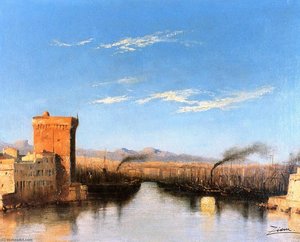
El viejo puerto de Marsella y la torre Saint Jean de Félix Ziem

El viejo puerto de Marsella y la torre Saint Jean

Óleo sobre lienzo

Esta obra, titulada "El viejo puerto de Marsella y la torre Saint Jean", fue pintada por Felix Ziem. La pieza ofrece una mirada serena a la atmósfera marítima del Mediterráneo, capturada alrededor de 1850. Se trata de un estudio de escala modesta, con unas dimensiones de 14 × 21 cm, que invita a una inspección cercana e íntima de sus detalles.

2
Portrait of a Young Girl (1846) de Félix Ziem

Portrait of a Young Girl

1846 · Oil On Panel · Petit Palais, París

Portrait of a Young Girl by Felix Ziem, created about 1846, presents a close-up bust-length portrait of a single human figure. The subject is positioned slightly off-center against a dark, textured background. This placement creates a sense of depth between the girl and the space behind her. The perspective is direct and at eye-level, establishing a steady connection between the subject and the viewer.

3
Marseille, marché sur le Cours (1845) de Félix Ziem

Marseille, marché sur le Cours

1845 · Watercolor · Musee Felix Ziem, Martigues

Marseille, marché sur le Cours is a watercolor painting by the French artist Felix Ziem. Created about 1845, the work captures a bustling street scene reminiscent of 19th-century urban life. Although the title references Marseille, the composition focuses on the activity of a Parisian street, documenting the movement of pedestrians and the presence of carriages amidst a backdrop of architectural forms.

4
Study of a Woman, Copy after Rembrandt (1853) de Félix Ziem

Study of a Woman, Copy after Rembrandt

1853 · Oil On Canvas · Petit Palais, París

A single light source carves a face out of the dark. The subject, a woman, emerges from a deep, umber void, her features caught in a moment of quiet stillness. This is not a portrait of a person, but a study of how light meets skin. The shadows are heavy, swallowing the contours of her neck and the back of her head, leaving only the essential geometry of her gaze…

5
The Drum, Head of a Man after Rembrandt (1853) de Félix Ziem

The Drum, Head of a Man after Rembrandt

1853 · Oil · Petit Palais, París

A single light source strikes the brow and the bridge of the nose, carving a face out of the surrounding gloom. The man is weathered, his beard a thicket of textured strokes that catch the light in uneven patches. He looks downward, eyes lost to the heavy shadows of the sockets. There is a weight to his presence, a quiet gravity that pulls the viewer into his private moment of…

6
Study of a Man [The Syndics], copy after Rembrandt (1851) de Félix Ziem

Study of a Man [The Syndics], copy after Rembrandt

1851 · Oil · Petit Palais, París

A single man emerges from a void of deep black. The light strikes the ridge of a nose and the curve of a forehead, leaving the rest of the face to dissolve into shadow. He wears a broad, dark hat that presses down upon the brow, casting a heavy gloom over the eyes. A white collar cuts through the darkness, a sharp, bright line of impasto paint that anchors the…

7
The Harem (1855) de Félix Ziem

The Harem

1855 · Oil · Petit Palais, París

The air in this room feels heavy, thick with the scent of old rugs and unmoving dust. A woman reclines in the foreground, her body angled toward the left, draped in light, flowing garments that catch a diffused, indirect light. She rests upon a floor layered with cushions and textiles, her form partially dissolving into the soft, blurred contours of the room. Behind her, other figures emerge from the dimness,…

8
The Syndics of the Drapery Guild, copy after Rembrandt (1853) de Félix Ziem

The Syndics of the Drapery Guild, copy after Rembrandt

1853 · Oil · Petit Palais, París

A group of men gathers around a table in a shallow, crowded space, their presence heavy with communal purpose. This 1853 oil painting, a copy after Rembrandt, captures the solemnity of the Syndics of the Drapery Guild. The subjects are arranged in a way that emphasizes their collective dignity, their faces and white collars emerging from an almost impenetrable dark background. The atmosphere is one of quiet importance, a pause…

9
Head of a Man after Rembrandt (1853) de Félix Ziem

Head of a Man after Rembrandt

1853 · Oil · Petit Palais, París

In this oil portrait, Head of a Man after Rembrandt, Felix Ziem presents a somber study of character. The composition focuses on the head and shoulders of a bearded man, captured in profile. The subject is framed within an oval-like vignette, where the darker edges of the painting allow the central figure to emerge from the shadows. This arrangement directs the eye toward the weathered texture of the skin and…

10
The Night Watch after Rembrandt (1853) de Félix Ziem

The Night Watch after Rembrandt

1853 · Oil On Canvas · Petit Palais, París

The work functions as a stylistic homage, bridging the gap between the structured traditions of the 19th century and the dramatic lighting of the Dutch Golden Age. It conveys themes of duty and collective strength through its depiction of a militia in motion. The heavy, textured application of paint suggests a visceral, physical presence, turning a historical subject into a study of light and shadow. The result is a scene…

La selección de Félix Ziem continúa, de 11 a 100

11La entrada al puerto viejo de Marsella (1862) de Félix ZiemLa entrada al puerto viejo de Marsella1862 · Fundación Calouste Gulbenkian 12L'Entrée dans le Grand Bassin, Venise de Félix ZiemL'Entrée dans le Grand Bassin, Venise 13Istanboul, soleil couchant Istambul (autre titre) Vue de Constantinople (autre titre) de Félix ZiemIstanboul, soleil couchant Istambul (autre titre) Vue de Constantinople (autre titre) 14View of Venice (1800) de Félix ZiemView of Venice1800 · Museo de Arte de Ponce 15Tobolsk, Siberia (1844) de Félix ZiemTobolsk, Siberia1844 · Petit Palais 16The Storm (1846) de Félix ZiemThe Storm1846 · Petit Palais 17Saint Petersburg, Saint Isaac (1844) de Félix ZiemSaint Petersburg, Saint Isaac1844 · Petit Palais 18A Street in Florence (1846) de Félix ZiemA Street in Florence1846 · Petit Palais 19Nude Woman Sitting, Viewed from Behind (1846) de Félix ZiemNude Woman Sitting, Viewed from Behind1846 · Petit Palais 20The Chariot (1843) de Félix ZiemThe Chariot1843 · Petit Palais 21The Red Skirt (1846) de Félix ZiemThe Red Skirt1846 · Petit Palais 22Panel of Six Cart Studies (on the front); Landscape (on the back) (1843) de Félix ZiemPanel of Six Cart Studies (on the front); Landscape (on the back)1843 · Petit Palais 23Parasol Pines near Naples (1847) de Félix ZiemParasol Pines near Naples1847 · Petit Palais 24Festival in a Palace in Naples (1847) de Félix ZiemFestival in a Palace in Naples1847 · Petit Palais 25Martigues, tartane sur le canal de Caronte (1845) de Félix ZiemMartigues, tartane sur le canal de Caronte1845 · Musee Felix Ziem 26Marseille, entrée du Port (1841) de Félix ZiemMarseille, entrée du Port1841 · Musee D'histoire de Marseille 27Martigues, rives de l'étang de Berre (1845) de Félix ZiemMartigues, rives de l'étang de Berre1845 · Musee Felix Ziem 28Marseille, étude de ciel sur les toits (1845) de Félix ZiemMarseille, étude de ciel sur les toits1845 · Musee Felix Ziem 29The Watering Hole (1851) de Félix ZiemThe Watering Hole1851 · Museo de Dortrechter 30Landscape with Rainbow (‘Arc en Ciel’) (1852) de Félix ZiemLandscape with Rainbow (‘Arc en Ciel’)1852 · Museum Gouda 31River Bend (on front); three studies (on back) (1855) de Félix ZiemRiver Bend (on front); three studies (on back)1855 · Petit Palais 32The Cottage (1855) de Félix ZiemThe Cottage1855 · Petit Palais 33The Pond (1855) de Félix ZiemThe Pond1855 · Petit Palais 34Forest Edge (on front), Animated Landscape (on reverse) (1855) de Félix ZiemForest Edge (on front), Animated Landscape (on reverse)1855 · Petit Palais 35Riverside (1855) de Félix ZiemRiverside1855 · Petit Palais 36Twilight (1855) de Félix ZiemTwilight1855 · Petit Palais 37Corner of a Forest (1855) de Félix ZiemCorner of a Forest1855 · Petit Palais 38The Seine (1855) de Félix ZiemThe Seine1855 · Petit Palais 39Skiff and Sailboats, Sunset. On the reverse: Marine (1855) de Félix ZiemSkiff and Sailboats, Sunset. On the reverse: Marine1855 · Petit Palais 40The Wave (1855) de Félix ZiemThe Wave1855 · Petit Palais 41Body of Water, Sunset. On reverse: Two Studies (1855) de Félix ZiemBody of Water, Sunset. On reverse: Two Studies1855 · Petit Palais 42Environs of Barbizon (1855) de Félix ZiemEnvirons of Barbizon1855 · Petit Palais 43The Gust of Wind (1855) de Félix ZiemThe Gust of Wind1855 · Petit Palais 44The Barge (1851) de Félix ZiemThe Barge1851 · Petit Palais 45The Oaks (1855) de Félix ZiemThe Oaks1855 · Petit Palais 46Sunset (1855) de Félix ZiemSunset1855 · Petit Palais 47The Forest (1855) de Félix ZiemThe Forest1855 · Petit Palais 48The Road (1855) de Félix ZiemThe Road1855 · Petit Palais 49The Turkeys (1852) de Félix ZiemThe Turkeys1852 · Petit Palais 50The Fishing Sloops (1852) de Félix ZiemThe Fishing Sloops1852 · Petit Palais 51Holland, the Mill (1853) de Félix ZiemHolland, the Mill1853 · Petit Palais 52Antwerp, seascape (1850) de Félix ZiemAntwerp, seascape1850 · Petit Palais 53View of İstanbul (1850) de Félix ZiemView of İstanbul1850 · Museo de la Pera 54The Grand Canal, Venice (1850) de Félix ZiemThe Grand Canal, Venice1850 55View of İstanbul (1850) de Félix ZiemView of İstanbul1850 · Museo de la Pera 56Venice - the grand canal (1850) de Félix ZiemVenice - the grand canal1850 · Museo Nacional de Bellas Artes 57Windmill on riverbank (1850) de Félix ZiemWindmill on riverbank1850 · Museo Nacional de Bellas Artes 58Fête de Saint Marc, Venise (1850) de Félix ZiemFête de Saint Marc, Venise1850 · Art Institute of Chicago 59The frigates (1855) de Félix ZiemThe frigates1855 · Petit Palais 60Environs de Nice, montagnes enneigées (1850) de Félix ZiemEnvirons de Nice, montagnes enneigées1850 · Musee Felix Ziem 61Hollande, vieilles chaumières au bord d'un canal (1850) de Félix ZiemHollande, vieilles chaumières au bord d'un canal1850 62Saint Mark's Square, Flood of 1863 (1863) de Félix ZiemSaint Mark's Square, Flood of 18631863 · Petit Palais 63Naples, Parasol Pines (1856) de Félix ZiemNaples, Parasol Pines1856 · Petit Palais 64The Waterfall (1860) de Félix ZiemThe Waterfall1860 · Petit Palais 65The Rhône between Arles and Avignon (1862) de Félix ZiemThe Rhône between Arles and Avignon1862 · Petit Palais 66Still Life with Flask and Pomegranates (1862) de Félix ZiemStill Life with Flask and Pomegranates1862 · Petit Palais 67Near Algiers (1859) de Félix ZiemNear Algiers1859 · Petit Palais 68Windmill in Montmartre (1857) de Félix ZiemWindmill in Montmartre1857 · National Gallery of Ireland 69The Bosphorus (1856) de Félix ZiemThe Bosphorus1856 · Musée des Ursulines 70Harbor Quay in Marseille (1858) de Félix ZiemHarbor Quay in Marseille1858 · Museo de las Bellas Artes 71Le Pont Royal, Paris (1859) de Félix ZiemLe Pont Royal, Paris1859 72A Windmill, Snow Effect (1860) de Félix ZiemA Windmill, Snow Effect1860 · El Museo Bowes 73Égypte Damanhuor (1856) de Félix ZiemÉgypte Damanhuor1856 · Musee Felix Ziem 74Banks of the Bosphorus (1865) de Félix ZiemBanks of the Bosphorus1865 · Musée des Beaux-Arts 75The Giardini Pubblici in Venice (1870) de Félix ZiemThe Giardini Pubblici in Venice1870 · Colecciones de Pintura del Estado Bávaro 76Flowers (1865) de Félix ZiemFlowers1865 · Museo de Ámsterdam 77Venice, Procession of Saint George (1870) de Félix ZiemVenice, Procession of Saint George1870 · Petit Palais 78The Exit from the Palais des Doges under the Bridge of Sighs (1870) de Félix ZiemThe Exit from the Palais des Doges under the Bridge of Sighs1870 · Petit Palais 79Harbor in Marseilles (1864) de Félix ZiemHarbor in Marseilles1864 · Brooklyn Museum 80Venice, Morning (1864) de Félix ZiemVenice, Morning1864 · Walters Art Museum 81Venice, Midday (1868) de Félix ZiemVenice, Midday1868 · Walters Art Museum 82Venice, Evening (1865) de Félix ZiemVenice, Evening1865 · Walters Art Museum 83Venice, Doge's Palace (1867) de Félix ZiemVenice, Doge's Palace1867 · Petit Palais 84The Grand Canal, Venice (Gondola before San Giorgio) (1865) de Félix ZiemThe Grand Canal, Venice (Gondola before San Giorgio)1865 85Venice the Bacino di San Marco with Fishing Boats (1865) de Félix ZiemVenice the Bacino di San Marco with Fishing Boats1865 · Wallace Collection 86Fontaine de la Sultane Mihrisah, Eaux Douces d'Asie (1870) de Félix ZiemFontaine de la Sultane Mihrisah, Eaux Douces d'Asie1870 87Martiques, le retour des Tartanes (1865) de Félix ZiemMartiques, le retour des Tartanes1865 · Musee Felix Ziem 88Environs de Marseille, Le Rove (1865) de Félix ZiemEnvirons de Marseille, Le Rove1865 · Musee Felix Ziem 89Environs de Marseille, arbres dans un paysage (1865) de Félix ZiemEnvirons de Marseille, arbres dans un paysage1865 · Musee Felix Ziem 90Sailing Ships Leaving the Grand Canal in Venice (1875) de Félix ZiemSailing Ships Leaving the Grand Canal in Venice1875 · Musee Felix Ziem 91Sailboats at the Entrance of the Grand Canal (1875) de Félix ZiemSailboats at the Entrance of the Grand Canal1875 · Musee Felix Ziem 92Seascape. Venice, entrance of the Grand Canal, sailboat on the Adriatic. (1875) de Félix ZiemSeascape. Venice, entrance of the Grand Canal, sailboat on the Adriatic.1875 · Musee Felix Ziem 93Martigues, Twilight Effect (1875) de Félix ZiemMartigues, Twilight Effect1875 · Petit Palais 94Venice, the Church of the Gesuati (1875) de Félix ZiemVenice, the Church of the Gesuati1875 · Petit Palais 95Old Houses (1875) de Félix ZiemOld Houses1875 · Petit Palais 96Venice at Sunset (1875) de Félix ZiemVenice at Sunset1875 · Petit Palais 97Venice, La Giudecca at Twilight (1875) de Félix ZiemVenice, La Giudecca at Twilight1875 · Petit Palais 98Venice, la Salute. Morning Effect (1875) de Félix ZiemVenice, la Salute. Morning Effect1875 · Petit Palais 99The Torrent. Environs of Clermont-Ferrand (1875) de Félix ZiemThe Torrent. Environs of Clermont-Ferrand1875 · Petit Palais 100Deer in the Forest of Fontainebleau (1877) de Félix ZiemDeer in the Forest of Fontainebleau1877 · Petit Palais

Los temas que cautivaron la mirada de Félix Ziem

Los cuatro temas que se repiten con más frecuencia en estas obras originales, cada uno con su mejor ejemplo.

Los museos que conservan los originales de Félix Ziem

Los 8 museos que albergan la mayoría de las pinturas de esta página.

Museos Ciudad Obras de Félix Ziem Pinturas de esta lista
Petit Palais, ParísPetit Palais París 115 Portrait of a Young Girl, Study of a Woman, Copy after Rembrandt, The Drum, Head of a Man after Rembrandt
Musee Felix Ziem, MartiguesMusee Felix Ziem Martigues 15 Marseille, marché sur le Cours, Martigues, tartane sur le canal de Caronte, Martigues, rives de l'étang de Berre
Walters Art Museum, BaltimoreWalters Art Museum Baltimore 3 Venice, Morning, Venice, Midday, Venice, Evening
Museo de la Pera, EstambulMuseo de la Pera Estambul 3 View of İstanbul, View of İstanbul
Museo Nacional de Bellas Artes, Buenos AiresMuseo Nacional de Bellas Artes Buenos Aires 2 Venice - the grand canal, Windmill on riverbank
Museo de las Bellas Artes, MarsellaMuseo de las Bellas Artes Marsella 5 Harbor Quay in Marseille
National Gallery of Ireland, DublínNational Gallery of Ireland Dublín 4 Windmill in Montmartre
Musée des Beaux-Arts, ToulonMusée des Beaux-Arts Toulon 4 Banks of the Bosphorus

Félix Ziem década tras década: la obra original que define cada una

Obras por década

Elige una década para ver la obra original que la define.

Preguntas de coleccionistas sobre las pinturas de Félix Ziem

¿Por qué obra es más famoso/a Félix Ziem?Descubre la respuesta

El viejo puerto de Marsella y la torre Saint Jean. A continuación, Portrait of a Young Girl (1846) y Marseille, marché sur le Cours (1845).

¿Cuáles son las diez pinturas más famosas de Félix Ziem?Descubre la respuesta

El viejo puerto de Marsella y la torre Saint Jean, Portrait of a Young Girl, Marseille, marché sur le Cours, Study of a Woman, Copy after Rembrandt, The Drum, Head of a Man after Rembrandt, Study of a Man [The Syndics], copy after Rembrandt, The Harem, The Syndics of the Drapery Guild, copy after Rembrandt, Head of a Man after Rembrandt y The Night Watch after Rembrandt. La clasificación anterior indica el año y el museo de cada una.

¿Cuántas pinturas dejó Félix Ziem?Descubre la respuesta

Nuestro catálogo cuenta con 293 obras de Félix Ziem, datadas desde 1841 hasta 1877.

¿En qué museos se exhiben las obras maestras de Félix Ziem?Descubre la respuesta

Principalmente en Petit Palais (París), Musee Felix Ziem (Martigues) y Walters Art Museum (Baltimore). La tabla de museos arriba los enumera todos.

¿En qué años pintó Félix Ziem sus obras más famosas?Descubre la respuesta

En 1850s: 47 de las 100 obras de esta página se realizaron entonces, Study of a Woman, Copy after Rembrandt de ellas.

¿Cuáles son las primeras y las últimas obras originales de Félix Ziem?Descubre la respuesta

En esta página, la más antigua es Marseille, entrée du Port (1841) y la más reciente Deer in the Forest of Fontainebleau (1877).

¿Qué temas eligió Félix Ziem con mayor frecuencia?Descubre la respuesta

Portrait (4), Face (3) y Dark background (3), en las 100 obras de esta página.

¿Qué técnica utilizó más Félix Ziem?Descubre la respuesta

Oil, para 5 de las 100 obras de esta página.

¿A qué movimiento artístico pertenece Félix Ziem?Descubre la respuesta

Escuela de barbizon y Impressionism, a juzgar por los originales de esta página.

¿Qué obras de Félix Ziem se exhiben en el Petit Palais?Descubre la respuesta

Portrait of a Young Girl, Study of a Woman, Copy after Rembrandt y The Drum, Head of a Man after Rembrandt: el Petit Palais, París posee 58 de las obras de esta página.

Félix Ziem: vida y obra

El legado luminoso de Félix Ziem

Félix Ziem se erige como una figura cautivadora en el tapiz del arte francés del siglo XIX, un artista cuyo pincel poseía la capacidad única de tender puentes entre las tradiciones profundas y terrenales de la Escuela de Barbizon y el encanto exótico y bañado por el sol del Orientalismo. Nacido como Félix François Georges Philibert Ziem en 1821, en la histórica ciudad de Beaune, Borgoña, sus primeros años estuvieron marcados por una tensión entre la estructura y el espíritu. Aunque inicialmente persiguió el camino disciplinado de la arquitectura, el llamado del lienzo resultó irresistible. Esta transición fue profundamente moldeada por su mentoría bajo Adolphe Monticelli en Marsella, una conexión que infundiría para siempre la obra de Ziem con un enfoque vibrante, casi impresionista, de la luz y la textura.

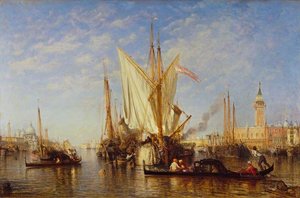
La esencia de la maestría de Ziem se comprende quizás mejor a través de su profunda relación con la luz. Su viaje no fue meramente un desplazamiento geográfico, sino una odiseya emocional a través de diferentes atmósferas. Un momento decisivo en su desarrollo ocurrió durante su visita a Venecia en 1841, una ciudad que se convertiría en su musa eterna. En los canales centelleantes y la grandeza decadente de los palacios venecianos, Ziem encontró la manera de traducir la atmósfera en pigmento. No buscaba documentar la arquitectura con rigidez académica; en su lugar, utilizó pinceladas sueltas y una paleta luminosa para capturar la cualidad efímera de los reflejos sobre el agua y el resplandor suave y brumoso del crepúsculo adriático.

Un viaje a través de la luz y el paisaje

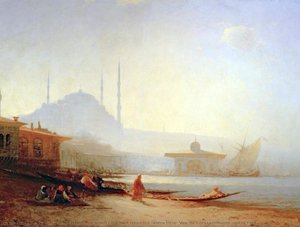
A medida que su carrera florecía en los centros artísticos de Marsella y París, la visión de Ziem se expandió mucho más allá de las fronteras de Francia. Se convirtió en un viajero tanto del mundo como de los sentidos, documentando diversos paisajes con una notable sensibilidad hacia el color. Sus exploraciones lo llevaron al corazón del Imperio Otomano, donde obras como Caiques and Sailboats at the Bosphorus muestran su habilidad para plasmar los azules vibrantes de las aguas turcas y la majestuosidad de las siluetas de las mezquitas. Esta fascinación por Oriente le permitió dominar el estilo orientalista, mezclando el exotismo de Constantinopla y Egipto con una sensibilidad pictórica francesa.

La versatilidad de Ziem le permitió desplazarse sin fisuras entre diferentes entornos, desde los serenos paisajes llenos de pinos de Martigues en obras como Midi, étude de pins, hasta las tranquilas escenas fluviales del norte de Europa, como su representación del río Amstel. Su técnica a menudo dependía de un delicado equilibrio entre el detalle y la abstracción, donde el tema —ya fuera una vista costera o un puerto bullicioso— servía como vehículo para explorar la interacción entre la sombra y el brillo. Esta capacidad de evocar un sentido de lugar únicamente a través de la luz es lo que eleva su obra de la mera pintura de paisaje a una profunda experiencia sensorial.

Significancia artística e influencia perdurable

La importancia histórica de Félix Ziem reside en su papel como maestro de transición. Se situó en la encrucijada de varios movimientos, absorbiendo el naturalismo de los pintores de Barbizon mientras anticipaba las revoluciones centradas en la luz del Impresionismo. Su obra sirve como un vínculo vital entre los paisajes romantizados de principios del siglo XIX y las exploraciones atmosféricas y más experimentales que le sucedieron. Al priorizar la resonancia emocional y el "sentir" de la luz por encima de la precisión topográfica exacta, allanó el camino para un enfoque más subjetivo de la pintura de paisaje.

Hoy en día, el legado de Ziem continúa cautivando tanto a coleccionistas como a historiadores del arte. Su capacidad para transportar al espectador a un tiempo y lugar diferentes —ya sea una mañana brumosa en un río holandés o una tarde bañada por el sol en el Mediterráneo— permanece intacta. La obra de su vida se erige como un testimonio del poder de la observación y de la magia perdurable del mundo natural, capturada a través de un lente de luz pura y sin adulterar.