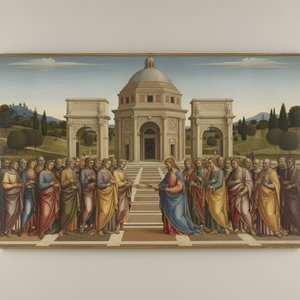
Un visionario del alma gótica de Siena
Sano di Pietro, nacido alrededor de 1405/06, sigue siendo un nombre que resuena con la grandeza y la belleza etérea características de la pintura sienesa durante el Quattrocento. Mientras gran parte del mundo del arte italiano comenzaba a pivotar hacia el floreciente Renacimiento florentino —un movimiento definido por el realismo riguroso y los ideales humanistas—, la visión artística de Sano se aferró con firmeza a las tradiciones de la herencia gótica de Siena. Este compromiso le permitió imbuir sus lienzos con una profundidad espiritual y una cualidad luminosa que lo distinguen como una de las voces más originales y perdurables de su época. Su vida estaba profundamente entretejida en el tejido cívico y espiritual de Siena; más allá del estudio, se desempeñó como líder del distrito de San Donanceto e incluso actuó como árbitro en disputas entre sus colegas maestros, demostrando ser un hombre de gran relevancia social e integridad.
El taller establecido por Sano fue un motor prolífico de creatividad, produciendo una asombrosa variedad de obras que abarcaron diversos medios. No era meramente un pintor de retablos; su maestría se extendía al delicado arte de las miniaturas, a la escala expansiva de los frescos e incluso al intrincado oficio de la encuadernación de libros. Su estilo distintivo es inmediatamente reconocible para cualquier admirador de la escuela sienesa, caracterizado por colores vibrantes y suntuosos yuxtapuestos con draperías elegantes y fluidas. Estos elementos trabajan en armonía para crear composiciones que parecen brillar con una luz interior. Gran parte de esta sensibilidad estética puede rastrearse hasta la influencia de Sassetta, cuyo uso innovador del color y la perspectiva proporcionó la base sobre la cual Sano construyó su propio lenguaje devocional y único.
Obras maestras de devoción y narrativa
La amplitud de la obra de Sano ofrece una ventana a las profundas narrativas religiosas que definieron el siglo XV. Su capacidad para traducir historias bíblicas complejas en imágenes accesibles y emotivas se aprecia quizás mejor en sus diversas representaciones de figuras sagradas. Algunos de sus logros más notables incluyen:
- San Jerónimo: Un retrato impresionante de la figura bíblica en su estudio, donde Sano utiliza colores ricos y detalles intrincados para crear una obra maestra del arte devocional que invita a la contemplación silenciosa.
- Asunción de la Virgen: Una visión celestial de 1448; esta obra captura a la Virgen María ascendiendo entre una multitud de ángeles, encarnando perfectamente la belleza etérea y la gracia divina de la era gótica.
- Escenas de la vida de San Jerónimo: Estos paneles de temple muestran su habilidad para tejer narrativas religiosas complejas a través de figuras vibrantes y un dominio de la tradición sienesa.
- Martirio de Santa Ágata: Una representación conmovedora y luminosa dentro de una letra capitular, que demuestra su destreza en el delicado reino de la iluminación de manuscritos.
A través de estas obras, Sano di Pietro logró un equilibrio poco común entre la belleza ornamental del estilo gótico y una profunda resonancia emocional. Su muerte en 1481 fue marcada por un emotivo tributo, describiéndolo como "un pintor famoso y un hombre totalmente dedicado a Dios". Este epitafio sirve como un resumen apropiado de su legado: un artista cuya vida y obra fueron inseparables de la devoción espiritual de Siena, dejando tras de sí un rastro luminoso de arte que continúa encantando al ojo moderno.
Preguntas y respuestas
¿Puedo explorar las obras de Sano Di Pietro por tema?
Las obras de Sano Di Pietro pueden explorarse por tema en la página Índice temático del artista.
¿Existe una lista completa de las obras de Sano Di Pietro?
Puede explorar todas las obras de Sano Di Pietro en este sitio web desde la página de Todas las obras de arte del artista.
¿A qué periodo histórico pertenecía Sano Di Pietro?
Sano Di Pietro trabajó durante el periodo Renacimiento. Este periodo sitúa la actividad del artista en su contexto histórico.