Menú
Asesoría de arte gratuita

Rombout Verhulst

1624 - 1698

Resumen biográfico

  • Copyright status: Public domain
  • Room fit: salón principal
  • Died: 1698
  • Art period: Edad Moderna
  • Best occasions: acento cromático
  • Top 3 works:
    • Bust of Admiral Michiel Adriaensz. de Ruyter
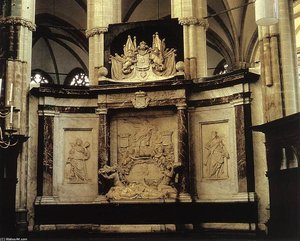
    • Tomb of Maarten Harpertszoon Tromp
    • Bust of Marie von Reygersberg
  • Ver más…

Test de arte

Solo hay una respuesta correcta para cada pregunta.

Pregunta 1:
¿Dónde nació Rombout Verhulst?
Pregunta 2:
¿Con quién estudió escultura Rombout Verhulst?
Pregunta 3:
¿Qué estilo de escultura atribuye usted a Rombout Verhulst?
Pregunta 4:
¿Quién fue el maestro de Rombout Verhulst?
Pregunta 5:
¿Qué obra escultórica más destacada realizó Rombout Verhulst?

Rombout Verhulst: The Baroque Sculptor of Amsterdam and Beyond

Rombout Verhulst (15 January 1624 – buried 27 November 1698) stands as a pivotal figure in the artistic landscape of seventeenth-century Flanders and the Dutch Republic, marking a significant contribution to the burgeoning Baroque style within sculpture. Born in Mechelen, he embarked on his artistic journey under the tutelage of esteemed sculptors Rombout Verstappen and Frans van Loo, establishing a foundation rooted in classical tradition yet swiftly embracing the dramatic expressive qualities characteristic of the era. His formative years instilled an appreciation for meticulous craftsmanship and anatomical accuracy—skills that would prove invaluable throughout his prolific career.

Early Life & Training

Verhulst’s education solidified his understanding of sculptural techniques, notably honed through collaborations with Frans van Loo, a master known for his refined approach to marble carving. This exposure undoubtedly influenced his subsequent stylistic choices and cemented his commitment to achieving unparalleled realism in his works. He studied diligently under Verstappen and Van Loo, absorbing the principles of classical sculpture—particularly the emphasis on idealized proportions and anatomical correctness—which would permeate his entire oeuvre. His formative years instilled a profound respect for detail and precision, shaping him into one of the most accomplished sculptors of his time.

Journey to Italy & Artistic Influences

Between 1646 and 1654, Verhulst undertook a transformative voyage to Italy—a pilgrimage that profoundly impacted his artistic sensibilities. Witnessing the grandeur of Roman sculpture ignited within him an ardent desire to emulate its monumental scale and emotive power. The influence of artists like Bernini became palpable in his later sculptures, particularly evident in the dynamism and theatricality of his compositions. He was captivated by Bernini’s masterful use of drapery and movement—techniques he skillfully adopted to imbue his own works with a similar sense of drama and grandeur. This encounter served as a catalyst for Verhulst's artistic evolution, propelling him toward a bolder, more expressive style.

Amsterdam & Collaboration with Artus Quellinus

Recognizing Amsterdam’s burgeoning artistic milieu, Verhulst relocated there in 1646, where he joined forces with Artus Quellinus the Elder—a sculptor who would become a mentor and collaborator. Their partnership on the decoration of the Nieuwe Stadhuys (New Town Hall) exemplifies Verhulst's dedication to innovation and his willingness to experiment with new techniques. Notably, Verhulst was the sole sculptor to sign individual works within this ambitious project, demonstrating his independent artistic vision amidst a collective effort. He skillfully blended classical ideals with Baroque dynamism—a hallmark of Dutch sculpture during this period—creating monumental reliefs that celebrated civic pride and artistic excellence. Furthermore, he welcomed many Flemish sculptors into his workshop who would become leading artists in their own right.

Sculptural Achievements & Notable Commissions

Verhulst’s reputation soared during the 1660s thanks to patronage from influential families like the Van Reygersberghs. This support enabled him to relocate to Leiden and produce a remarkable array of sculptures—primarily funerary monuments and tomb sculptures—that showcased his mastery of material and form. His groundbreaking commission for Maria van Reygersbergh’s funeral monument in Katwijk-binnen stands as the first private sculptural undertaking of its kind during this period, establishing Verhulst as a pioneer in addressing the evolving tastes of aristocratic clientele. He skillfully crafted terracotta studies for the bronze doors of Amsterdam's Town Hall—a testament to his versatility and artistic ambition. Among Verhulst’s most celebrated works are monumental sculptures commemorating Admiral Michiel de Ruyter—reflecting the heroic spirit of the Dutch Golden Age. These sculptures exemplify his ability to convey emotion and grandeur through meticulous detail.

Legacy & Artistic Significance

Rombout Verhulst's influence extended beyond his immediate commissions; he served as a teacher to Jan Blommendael and Jan Ebelaer, nurturing the talents of future sculptors and perpetuating Baroque artistic traditions. His enduring legacy resides in his pioneering role in introducing the Baroque style into Dutch sculpture—a stylistic shift characterized by dramatic movement, emotional intensity, and opulent ornamentation. Verhulst’s sculptures continue to inspire admiration for their technical brilliance and expressive power, securing his place as one of the foremost sculptors of his era and a cornerstone of Dutch artistic history. He remains an exemplar of Baroque artistry—a testament to the transformative potential of artistic exploration and innovation.