Ramón Acín Aquilué: A Visionary Artist Caught in the Crucible of Revolution
Ramón Acín Aquilué (August 30, 1888 – August 6, 1936) stands as a poignant figure in Spanish art history—a brilliant avant-garde artist tragically silenced by the brutal realities of the Spanish Civil War. Born in Huesca, Aragon, he embodied the spirit of anarchist idealism alongside artistic innovation, leaving behind a legacy that continues to inspire contemplation and debate.
Early Life and Artistic Beginnings
Ramón Acín Aquilué’s artistic journey commenced at a remarkably young age. At ten years old, he began drawing lessons with Félix Lafuente, fostering an innate talent that would blossom throughout his life. This formative experience instilled in him a foundational understanding of visual expression and propelled him toward pursuing art as a vocation. He enrolled in the Second Teaching Institute in Huesca, honing his skills further and developing a keen eye for detail—qualities that would characterize his distinctive artistic style. His dedication to mastering drawing extended beyond mere instruction; it fueled an unwavering curiosity about artistic techniques and aesthetics. Recognizing the importance of disciplined study, Acín pursued chemical sciences at Zaragoza University, demonstrating a multifaceted intellect that transcended conventional academic pursuits. However, he ultimately abandoned this path to dedicate himself entirely to art, prioritizing creative exploration over scientific specialization—a decision that proved pivotal in shaping his artistic output.
A Passion for Drawing and Formal Education
His unwavering commitment to visual arts was reinforced by his enrollment at Zaragoza University where he studied chemical sciences alongside his artistic pursuits. This dual focus reflected a broader intellectual curiosity—a desire to engage with both the natural sciences and the expressive arts. He recognized that mastering drawing required meticulous observation and technical precision, skills honed through rigorous training and experimentation. Furthermore, Acín’s artistic vision was profoundly impacted by the groundbreaking movements of Surrealism and Cubism. These avant-garde philosophies challenged traditional notions of representation, advocating for experimentation with form and color to convey subconscious emotions and perceptions. Artists like Picasso and Braque served as inspiration, encouraging Acín to embrace innovative approaches that defied established conventions—a stylistic hallmark evident in his paintings and sculptures.
The Influence of Surrealism and Cubism
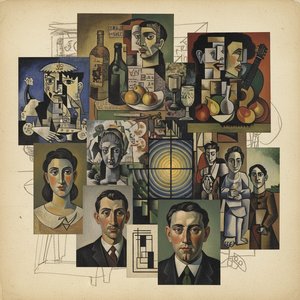
Inspired by the revolutionary ideas of Surrealism and Cubism, Ramón Acín Aquilué sought to transcend conventional artistic boundaries. He embraced techniques that disrupted perspectival illusion and fragmented visual space—reflecting a desire to capture the complexities of human experience beyond mere surface appearances. Artists like Picasso and Braque championed these experimental methods, demonstrating that art could communicate profound truths through unconventional forms and colors. Acín’s stylistic choices mirrored this broader artistic trend, establishing him as a pioneer of avant-garde expression in Spain.
Notable Works: Portrait of Conchita Monrás and Illustrations
Acín’s artistic output encompassed a diverse range of mediums and subjects. Among his most celebrated achievements is “Portrait of Conchita Monrás,” a masterful depiction that exemplifies his ability to capture the essence of human emotion through subtle shading and expressive brushstrokes. This painting, currently available on OriginalUniqueArt.com, stands as testament to Acín’s artistic prowess. Furthermore, he produced evocative illustrations for publications like *El Diario de Avisios de Zaragoza* and *La Ira*, skillfully blending visual storytelling with political commentary—demonstrating his commitment to both artistic excellence and social engagement. His contribution to Luis Buñuel's film *Las Hurdes: Tierra Sin Pan* cemented his place in cinematic history as a co-producer, furthering his reputation as an artist of considerable versatility. He also explored sculpture, experimenting with metal and magic lanterns—creating striking artworks that captured the spirit of his time.
Legacy and Remembrance
Tragically, Ramón Acín Aquilué’s life was cut short during the tumultuous period of the Spanish Civil War. Executed on August 6, 1936, alongside his wife Conchita Monrás—a victim of fascist violence—he became a symbol of anarchist resistance and artistic idealism unjustly silenced by political repression. Despite his untimely demise, Acín’s artwork continues to resonate with audiences worldwide, serving as an enduring reminder of his creative genius and unwavering commitment to revolutionary ideals. His legacy resides prominently in the Museo de Huesca, where visitors can admire several of his paintings—a poignant tribute to a life devoted to art and activism. Ramón Acín Aquilué’s influence extends beyond the confines of artistic circles, inspiring artists and scholars alike to explore the complexities of his oeuvre and its significance within the broader context of 20th-century European culture.