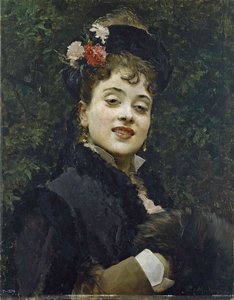
Un Legado de Elegancia: La Vida y el Arte de Raimundo de Madrazo
Raimundo de Madrazo y Garreta, nacido en Roma en 1841, se adentró en un mundo ya impregnado de tradición artística. Su linaje era de un prestigio considerable; su abuelo, José de Madrazo, ocupaba el eminente cargo de Director del Museo del Prado, mientras que su padre, Federico de Madrazo, era él mismo un célebre retratista. Esta base familiar no se limitaba a una mera herencia: inculcó en el joven Raimundo no solo una maestría técnica, sino también una comprensión del poder y el estatus social asociados a la creación artística. Sus primeros aprendizajes se desarrollaron en la intimidad de los estudios familiares, absorbiendo los principios de la técnica clásica tanto de su padre como de su abuelo. Sus estudios formales en la Real Academia de Bellas Artes de San Fernando en Madrid, bajo la tutela de Carlos Luis de Ribera y Carlos de Haes, refinaron aún más sus habilidades, exponiéndolo a las corrientes artísticas contemporáneas. Sin embargo, fue una estancia crucial en París en 1860 lo que verdaderamente transformó su trayectoria. Estudiar con Léon Cogniet y forjar vínculos dentro del mundo del arte parisino definiría su sensibilidad estética durante las décadas siguientes. La influencia de Alfred Stevens durante este periodo resultó particularmente significativa, desplazando sutilmente su enfoque hacia una sensibilidad más refinada y decorativa, alejándose del academicismo estricto para abrazar un estilo imbuido de gracia y encanto.Realismo Impregnado de Refinamiento: Estilo Artístico e Influencias
El estilo artístico de Madrazo está fundamentalmente arraigado en el Realismo, pero trasciende la mera imitación mediante una infusión de elegancia y sofisticación. Aunque comprometido con la representación fiel, sus pinturas poseen una delicada gracia que las distingue de las vertientes más austeras del movimiento. Este refinamiento evolucionó con el tiempo, incorporando sutilmente elementos que recordaban al Rococó —un gusto por el detalle ornamentado y la composición lúdica— y al Japonismo, esa creciente fascinación occidental por el arte japonés, especialmente en su énfasis en la perspectiva plana y los patrones decorativos. Se hizo renombrado por sus retratos, capturando no solo el parecido físico, sino también la esencia interior de sus sujetos con una habilidad extraordinaria. La influencia de Mariano Fortuny es palpable en las escenas de tableautin de menor escala de Madrazo —vistazos íntimos a la vida burguesa— y en su capacidad para retratar un mundo de texturas lujosas y emociones sutiles. El rigor académico de Cogniet, combinado con el toque decorativo de Stevens, sentó las bases de la voz artística única de Madrazo. Él no se limitaba a registrar la realidad; estaba construyendo una visión idealizada de la misma, una que apelaba al gusto de una clientela exigente que buscaba belleza y refinamiento en el arte. Esta capacidad para fundir el realismo con un toque de fantasía le permitió crear obras que eran, a la vez, cautivantes y aspiracionales.Retratos de una Época: Obras Maestras y Temas
La obra de Madrazo está poblada de retratos cautivadores y escenas de género que ofrecen una ventana al mundo social de finales del siglo XIX. Su Retrato de su padre pintando se erige como un testimonio tanto del afecto filial como de la destreza artística, mostrando no solo un parecido, sino el acto mismo de la creación: un pintor retratando a un pintor, un metacomentario sobre el proceso artístico. Obras como Fondos Recuerdos demuestran su talento para evocar la nostalgia y capturar momentos íntimos con una sensibilidad conmovedora. Sin embargo, fueron sus pinturas de género, que a menudo contaban con Aline Masson como modelo, las que le granjearon un reconocimiento mundial. La amante renuente, Después del baño y el Retrato de Aline Masson con mantilla son ejemplos primordiales: escenas sensuales y meticulosamente ejecutadas que celebran la belleza y la gracia femenina. La presencia de Aline Masson es fundamental para comprender la producción artística de Madrazo; ella fue su musa durante muchos años, encarnando el ideal de elegancia refinada que impregnaba sus lienzos. Estas obras no eran meras representaciones de la sociedad de moda; eran fantasías cuidadosamente construidas, diseñadas para atraer a una clientela ansiosa por poseer imágenes de belleza y lujo. El motivo recurrente del encanto femenino, a menudo velado en una atmósfera de suave misterio, se convirtió en el sello distintivo de su estilo.Reconocimiento Internacional e Impacto Duradero
La carrera de Raimundo de Madrazo se desarrolló en un escenario internacional. Su exposición de debut en París en 1860 marcó el inicio de su viaje profesional, seguido rápidamente por frecuentes viajes a Nueva York, donde cultivó una clientela leal entre familias prominentes como los Vanderbilt y Alexander Turney Stewart. A pesar de este éxito en el extranjero, mantuvo cierta reserva respecto a exponer en España. Un testimonio de su compromiso con el fomento del intercambio artístico fue la cofundación de una “Exposición Internacional de Pintura” en París en 1882, junto a Alfred Stevens, de Nittis y Petit, una iniciativa diseñada para promover el trabajo de artistas extranjeros. Expuso constantemente en el prestigioso Salón de París, recibiendo una importante medalla en la Exposition Universelle de 1889, consolidando su reputación como un artista líder de su tiempo. Más allá de sus logros artísticos, Madrazo demostró un compromiso con la preservación cultural a través de su generosa donación de las obras de Francisco de Goya al Museo del Prado en 1894 y su membresía en la Royal Academy de Londres. Raimundo de Madrazo falleció en 1920, dejando tras de sí un legado como uno de los más importantes pintores realistas de España: un maestro del retrato que capturó el espíritu de una era con elegancia, maestría y un atractivo perdurable. Su obra sigue resonando hoy en día, ofreciendo un vistazo al mundo opulento de la Edad Dorada y a las sensibilidades artísticas que la definieron. Su hijo, Federico de Madrazo y Ochoa ("Coco"), continuó la tradición familiar, asegurando que el nombre de Madrazo siguiera siendo sinónimo de excelencia artística para las generaciones venideras. Las pinturas de Madrazo permanecen como un testimonio de su capacidad para tender puentes entre las tradiciones académicas y los estilos modernos emergentes, dejando una huella indeleble en el arte español del siglo XIX.Preguntas y respuestas
¿Qué estados de ánimo expresan las obras de Raimundo de Madrazo y Garreta?
Puedes explorar las obras de Raimundo de Madrazo y Garreta por estado de ánimo en su página Rincón de emociones, donde las piezas se organizan según la emoción que transmiten.
¿Cómo evolucionó el arte de Raimundo de Madrazo y Garreta a lo largo del tiempo?
La Trayectoria de Raimundo de Madrazo y Garreta es una línea de tiempo con desplazamiento vertical que presenta las obras del artista en orden cronológico, agrupadas en capítulos por periodos de su carrera.
¿Puedo explorar las obras de Raimundo de Madrazo y Garreta por espectro de color?
La página Índice de color organiza las obras de Raimundo de Madrazo y Garreta por color.