A Life Bridging Worlds: Pierre Charles L'Enfant and the Birth of a Capital
Pierre Charles L’Enfant, a name often synonymous with the grand design of Washington, D.C., was far more than just an architect or city planner. Born in Paris on August 2, 1754, into a family steeped in artistic tradition – his father, Pierre L'Enfant, served as a painter to King Louis XV – young Charles’s early life unfolded amidst the elegance and intellectual ferment of pre-revolutionary France. He received a rigorous education at the Royal Academy in the Louvre, honing his skills not only in painting but also in engraving and architecture under his father’s tutelage. This formative experience instilled within him a profound appreciation for classical aesthetics and established the foundation for his future artistic endeavors.
Early Artistic Training and Military Service
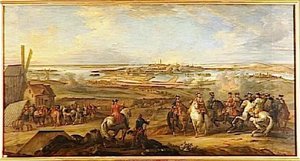
L’Enfant's artistic inclinations were nurtured by his father, Pierre L'Enfant (1704-1787), who was renowned for his panoramic paintings of military battles—a tradition that would continue to inspire L’Enfant throughout his life. Marie Charlotte Leullier, his mother, provided a stable home environment and instilled in him values of diligence and perseverance. Recognizing the importance of practical skills alongside artistic pursuits, he pursued formal training at the Royal Academy, mastering techniques essential for both painting and architectural design. However, fate intervened swiftly when the American colonies erupted into rebellion against British rule. Drawn to the burgeoning spirit of liberty and self-governance, L’Enfant volunteered as an engineer with Major General Lafayette—a pivotal decision that would propel him onto the stage of American history. He bravely served during the Siege of Savannah in 1779, sustaining injuries but demonstrating unwavering resilience. Subsequently, he continued to champion Washington's cause during the remainder of the Revolutionary War, earning the respect of his fellow officers and solidifying his commitment to the nascent nation’s ideals. His military service wasn’t merely a duty; it was an immersion in the crucible of revolution—a formative period that profoundly shaped his worldview.
Designing Washington: A Vision for the Future
The culmination of L'Enfant’s artistic and engineering talents arrived with the commission to design the new capital city, Washington, D.C., following the relocation from Philadelphia. Embracing the influence of European Baroque and Neoclassical styles—a deliberate choice reflecting his academic training—he conceived a plan that transcended mere practicality; it was an assertion of republican virtue. Collaborating closely with Andrew Ellicott and Benjamin Banneker, L’Enfant meticulously crafted a blueprint for a city that would embody the principles of enlightenment and inspire awe. The resulting design—characterized by grand avenues radiating from central circles and squares—was revolutionary for its time, prioritizing civic grandeur and harmonious integration with natural landscapes. It stands as an enduring testament to L'Enfant’s genius—a symbol of American aspiration and a cornerstone of modern urban planning.
Beyond the Capital: Artistic Legacy and Recognition
L’Enfant’s artistic output extended beyond Washington, D.C., encompassing portraits of prominent figures like George Washington, capturing their likenesses with remarkable accuracy and conveying their character through subtle gestures and expressions. He also produced numerous pencil sketches documenting scenes from daily life—a meticulous record of the American experience during the early republic. Furthermore, he designed coins and medals commemorating significant events, demonstrating his versatility as an artist and his dedication to celebrating national achievements. Despite facing financial hardships in his later years and enduring personal challenges—including a protracted legal battle with Richard Soderstrom—L’Enfant remained steadfast in his belief that he deserved compensation for his invaluable contributions to the nation's founding. His unwavering perseverance ultimately yielded recognition from his contemporaries, securing him a professorship at West Point and culminating in a solemn funeral ceremony at Arlington National Cemetery—a fitting tribute to a man who had bridged worlds and indelibly shaped the destiny of America.