El legado luminoso de Peter Hemmel von Andlau
Bajo la luz trémula de la era del gótico tardío, pocos artistas capturaron la esencia divina con tanta vitalidad como Peter Hemint von Andlau. Maestro de la vidriería cuya obra en Estrasburgo floreció entre 1447 y 1501, Hemmel fue más que un simple artesano; era un tejedor de luz y color. Su obra, aunque fragmentada por el implacable paso de los siglos, continúa iluminando nuestra comprensión de las ambiciones espirituales y estéticas del siglo XV. Aunque sus orígenes se remontan a Landau in der Pfalz, Francia, fue dentro de la bulliciosa y cosmopolita atmósfera de Estrasburgo donde su identidad artística cristalizó verdaderamente, permitiéndole dirigir un taller que abastecía a instituciones religiosas en gran parte de la actual Alemania, Austria e Italia septentrional.
La vida de Hemmel von Andlau estuvo marcada tanto por la pasión artística como por la distinción cívica. Más allá del resplandor del horno de vidrio, fue reconocido como terrateniente y consejero, cargos que sugieren un hombre de gran posición social y profundidad intelectual. Su historia personal también está entrelazada con el tejido mismo de la escena artística de Estrasburgo; al casarse con la viuda del pintor Hans Hirtz, se integró en un linaje colaborativo que probablemente expandió su repertorio técnico y el alcance de su taller. Este espíritu de colaboración fue fundamental para su éxito, ya que a menudo trabajó junto a otros artesanos cualificados para materializar grandiosas visiones eclesiásticas, asegurando que su huella estilística se extendiera por las catedrales y capillas más prestigiosas del Sacro Imperio Romano Germánico.
Una sinfonía de vidrio y técnica
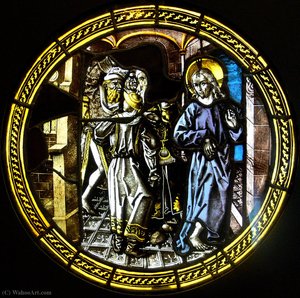
Contemplar un fragmento superviviente de la obra de Hemmel es presenciar un profundo diálogo entre el realismo meticuloso y el esplendor ornamental. Su técnica era un sofisticado matrimonio entre tradición e innovación, fuertemente influenciada por el expresivo dibujo de maestros como Martin Schongauer y la profundidad emotiva de Rogier van der Weyden. Poseía una capacidad singular para manipular el vidrio como si fuera seda fina o un pesado brocado, utilizando vidrio bicromático junto con esmalte negro y amarillo de plata para crear texturas que parecían casi táctiles. Mediante el uso ingenioso de sales de plata, lograba un brillo luminoso que dotaba de vida a los rostros y representaba con asombrosa fidelidad los intrincados patrones de las vestiduras litúrgicas.
Su sello artístico es quizás más evidente en su enfoque de la composición y el detalle:
- Marcos intrincados: Una de sus señas de identidad más reconocibles era el uso de formas de marcos altamente decorativas y complejas que actuaban como ventanas dentro de otras ventanas, guiando la mirada del espectador hacia la narrativa sagrada.
- Detalle naturalista: Más allá de las figuras humanas, Hemmel mostró una profunda reverencia por el mundo natural, representando meticulosamente flora y fauna, una característica que se aprecia con fama en el Vitral del Gremio de la Catedral de Ulm.
- Vibración cromática: El uso estratégico de rojos de hierro brillantes y azules profundos permitía que sus vidrieras transformaran la atmósfera interior de las iglesias, convirtiendo la luz solar en un medio para la narración teológica.
Significado histórico e influencia perdurable
Aunque es una tragedia histórica que hoy sobrevivan tan pocos de sus vitrales completos, el impacto de Peter Hemmel von Andlau es innegable. Se situó en una encrucijada transformadora de la historia del arte, tendiendo un puente entre las estructuras rígidas de la Edad Media y el floreciente naturalismo del Renacimiento. Su taller sirvió como un conducto vital para el intercambio estilístico, llevando los valores estéticos del Rin al corazón de Europa. Al integrar los finos detalles de los grabados contemporáneos en el medio del vidrio, elevó la vidriería de un elemento arquitectónico decorativo a una forma sofisticada de alta expresión artística.
Hoy en día, los fragmentos que permanecen —ya sea en manos de museos como el Getty o resguardados en los rincones silenciosos de las catedrales europeas— sirven como testimonios perdurables de su genio. Sigue siendo una figura fundamental cuya maestría de la luz y el color ayudó a definir el lenguaje visual de la devoción gótica tardía, dejando un legado que continúa inspirando asombro en todos aquellos que contemplan la brillantez de sus visiones reconstruidas.
Preguntas y respuestas
¿A qué periodo histórico pertenecía Peter Hemmel Von Andlau?
Peter Hemmel Von Andlau trabajó durante el periodo Renacimiento. Este periodo sitúa la actividad del artista en su contexto histórico.
¿Puedo explorar las obras de Peter Hemmel Von Andlau por movimiento?
Puedes explorar las obras de Peter Hemmel Von Andlau por movimiento en su página de Todos los movimientos.
¿Dónde se pueden explorar las obras de Peter Hemmel Von Andlau agrupadas por palabras clave?
Explora las obras de Peter Hemmel Von Andlau mediante palabras clave en su página de Por palabras clave. Cada palabra clave agrupa las obras relacionadas.