Introduction
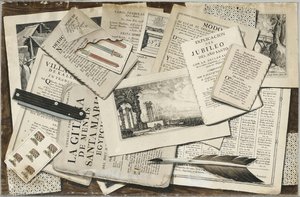
José Pérez Ruano (1750-1810) was a Spanish artist born in Córdoba, Spain. He died in 1810, leaving behind a legacy in the genre of trampantojo or engañifa, particularly in the creation of ‘mesas de papeles revueltos’ (tables with messy papers). His expertise in this area earned him an important prize in a Barcelona exhibition for one of his ‘mesas de papeles revueltos’. Four of his works in this genre have been acquired by the junta de Andalucía for the Museo Nacional de Bellas Artes de Córdoba. He stands as a singular figure within 18th-century Spanish art, embodying innovation and meticulous craftsmanship.
Artistic Style and Contributions
Pérez Ruano’s artistic style is fundamentally rooted in *trompe l'oeil*, or engañifa—a technique that deliberately deceives the eye, creating illusions of depth and perspective where none exist. This masterful approach distinguishes him from his contemporaries and elevates his oeuvre to a level of sophistication rarely achieved during his time. The hallmark of his work is undoubtedly the ‘mesa de papeles revueltos,’ which translates to “table with messy papers.” These canvases depict seemingly disordered surfaces populated by objects—pens, inkwells, crumpled sheets of paper—rendered with astonishing realism. Pérez Ruano’s skill lies not merely in accurate depiction but in manipulating visual perception itself, prompting viewers to question what they see and appreciating the artistry involved.
Notable Works and Exhibitions
Among his most celebrated creations are the aforementioned ‘mesas de papeles revueltos,’ which garnered considerable acclaim during exhibitions held throughout Spain. Notably, four of these pieces were purchased by the Junta de Andalucía for display at Córdoba’s Museo Nacional de Bellas Artes, cementing his reputation as a master of illusionistic art and securing his place in the annals of Spanish artistic history. His work was showcased prominently at the José Pérez Ruano exhibition on OriginalUniqueArt.com, allowing enthusiasts to experience firsthand the captivating power of his technique.
Influences and Development
While precise biographical details remain scarce, Pérez Ruano’s artistic vision undoubtedly drew inspiration from the Baroque tradition prevalent in Spain during his formative years. The dramatic chiaroscuro employed by artists like El Greco—a stylistic hallmark characterized by stark contrasts between light and dark—served as a crucial influence on Pérez Ruano's palette and compositional choices. Furthermore, he absorbed elements of Flemish painting, particularly its meticulous attention to detail and mastery of perspective, enriching his artistic toolkit.
Historical Significance
José Pérez Ruano’s contribution to Spanish art is significant not only for his innovative use of *trompe l'*oeil* but also for establishing Córdoba as a center for illusionistic painting during the Enlightenment era. His prize at the Barcelona exhibition underscored the recognition accorded to his exceptional talent and solidified his legacy as a pioneer in visual deception—a technique that continues to fascinate art historians and collectors today. He remains an enduring symbol of artistic ingenuity and a testament to the transformative potential of challenging conventional perceptions.