Retrato de John Frederick Lewis

Las 100 pinturas más famosas de John Frederick Lewis, una selección de la galería

Actualizado noviembre 2026 · clasificado según nuestro índice de popularidad (búsquedas, visitas y pedidos de cada obra) · 263 obras de John Frederick Lewis en nuestro catálogo

En resumen

De todos los originales que dejó John Frederick Lewis, la más famosa es Interior de la residencia del Pachá, Nueva Orsova (1838). Le siguen muy de cerca Lilium Auratum (1871) y John Clark con los animales en Sandpit Gate (1825). Nuestro catálogo cuenta con 263 obras de John Frederick Lewis; la galería ha conservado las 100 que el mundo más admira, cada una presentada con su fecha, su museo y su historia.

1805 – 1876, Londres Pintura orientalista Más obras: Yale Center for British Art

Las 10 mejores pinturas de John Frederick Lewis: la elección de la galería

1
Interior de la residencia del Pachá, Nueva Orsova (1838) de John Frederick Lewis

Interior de la residencia del Pachá, Nueva Orsova

1838 · Litografía

Interior de la residencia del Pachá, Nueva Orsova es una obra de John Frederick Lewis, ejecutada en 1838. Esta pieza pertenece al estilo del Orientalismo, reflejando el compromiso del artista con las realidades domésticas y arquitectónicas de las regiones de influencia otomana que encontró durante sus viajes.

2
Lilium Auratum (1871) de John Frederick Lewis

Lilium Auratum

1871 · Óleo sobre lienzo · Birmingham Museums And Art Gallery, Birmingham

John Frederick Lewis's "Lilium Auratum," painted in 1871, is more than just a depiction of two women amidst a profusion of flowers; it’s a meticulously crafted window into the opulent sensibilities and burgeoning Orientalist movement of Victorian England. This captivating work, housed within the broader context of Lewis’s extensive travels through the Mediterranean and North Africa, offers a rare glimpse into a world of leisure, beauty, and carefully constructed narratives.…

3
John Clark con los animales en Sandpit Gate (1825) de John Frederick Lewis

John Clark con los animales en Sandpit Gate

1825 · Óleo sobre lienzo · Royal Collection, Londres

En la exuberante y verde extensión de Windsor Great Park, específicamente en la histórica Sandpit Gate, John Frederick Lewis captura un momento que trasciende la mera pintura de paisaje para convertirse en un profundo cuadro de la vida británica del siglo XIX. Completada alrededor de 1825, John Clark con los animales en Sandpit Gate es mucho más que el retrato de un hombre; es una exquisita celebración de la relación…

4
A Gondolier, Venice (1835) de John Frederick Lewis

A Gondolier, Venice

1835 · Oil On Canvas

In A Gondolier, Venice by John Frederick Lewis, the viewer is placed at eye level, standing upon a quay as if sharing a quiet moment of repose. The composition is vertically oriented, drawing the eye upward from the immediate foreground toward the historic architecture of the city. A man stands prominently in the foreground, positioned slightly off-center to the right, his presence grounding the scene. At his feet, a resting…

5
Return of the Sultan Mahmoud from the Mosque (1838) de John Frederick Lewis

Return of the Sultan Mahmoud from the Mosque

1838 · Engraving

The engraving titled Return of the Sultan Mahmoud from the Mosque was created by the artist John Frederick Lewis. This work is a monochromatic print produced through the technique of incising lines into a metal plate, such as copper or steel, to create the final image on paper. The piece dates to about 1838.

6
Sketches of a trip to Spain: Capilla de Villaviciosa (1836) de John Frederick Lewis

Sketches of a trip to Spain: Capilla de Villaviciosa

1836 · Engraving

This monochromatic engraving, titled Sketches of a trip to Spain: Capilla de Villaviciosa, offers a quiet glimpse into the architectural history of Spain. Created by the English artist John Frederick Lewis, the work dates to 1836. It emerged from a period when Lewis was deeply engaged with the Mediterranean, specifically during his travels through Spain and Morocco between 1832 and 1834.

7
Bulgarian Village (1838) de John Frederick Lewis

Bulgarian Village

1838 · Graphite

The scene unfolds within the quietude of a Bulgarian village, a moment captured by the artist John Frederick Lewis in 1838. This work presents a detailed view of a rural settlement, where the architecture of the period takes center stage. A traditional building with a distinctive overhanging roof dominates the view, anchoring the composition amidst a landscape of rolling hills. The atmosphere feels still, as if the viewer has stumbled…

8
the Port of Constantinople (1838) de John Frederick Lewis

the Port of Constantinople

1838 · Ink On Paper

The Port of Constantinople is a work by the English Orientalist painter John Frederick Lewis, dating to about 1838. Born in London, United Kingdom, Lewis developed a specialized focus on Mediterranean and Oriental scenes, often capturing the architectural and maritime life of the Ottoman Empire. This particular piece reflects his interest in the topographical details of the region during his travels.

9
Sweet Waters (in Asia) (1838) de John Frederick Lewis

Sweet Waters (in Asia)

1838 · Charcoal

In Sweet Waters (in Asia), John Frederick Lewis organizes a quiet, observational landscape that draws the eye through a series of layered planes. The central focus is an ornate pavilion, positioned slightly off-center to create a natural, unforced balance. To the left, a body of water occupies a significant portion of the frame, its surface broken only by the presence of a small boat. This aquatic element provides a sense…

10
Turkish Female (1838) de John Frederick Lewis

Turkish Female

1838 · Charcoal

is a work by the English artist John Frederick Lewis. Created about 1838, this piece reflects the artist's engagement with the Mediterranean and Ottoman worlds during a period of significant travel and stylistic development.

La selección de John Frederick Lewis continúa, de 11 a 100

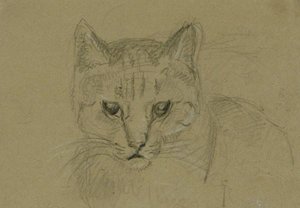
11A Café on the Bosphorus (1838) de John Frederick LewisA Café on the Bosphorus1838 12New Orsova; Exterior of the Pasha'a Residence (1838) de John Frederick LewisNew Orsova; Exterior of the Pasha'a Residence1838 13Yeni Jami, (or Mosque of the New Tomb) (1838) de John Frederick LewisYeni Jami, (or Mosque of the New Tomb)1838 14Tophana (1838) de John Frederick LewisTophana1838 15Asking for Alms (1833) de John Frederick LewisAsking for Alms1833 16Portrait of John Ponsonby, 1st Viscount Ponsonby (1841) de John Frederick LewisPortrait of John Ponsonby, 1st Viscount Ponsonby1841 17Easter Day at Rome (1840) de John Frederick LewisEaster Day at Rome1840 18El Jeque Hussein de Gebel Tor y su hijo (1843) de John Frederick LewisEl Jeque Hussein de Gebel Tor y su hijo1843 · Yale Center for British Art 19The Pipe Bearer (1856) de John Frederick LewisThe Pipe Bearer1856 · Birmingham Museum and Art Gallery 20A Syrian Sheik, Egypt (1856) de John Frederick LewisA Syrian Sheik, Egypt1856 · Fitzwilliam Museum 21The Doubtful Coin (1869) de John Frederick LewisThe Doubtful Coin1869 · Birmingham Museum and Art Gallery 22The Harem (1876) de John Frederick LewisThe Harem1876 · Birmingham Museum and Art Gallery 23On the Banks of the Nile, Upper Egypt (1876) de John Frederick LewisOn the Banks of the Nile, Upper Egypt1876 · Yale Center for British Art 24Arabian Nights (1876) de John Frederick LewisArabian Nights1876 25Turco sentado (1841) de John Frederick LewisTurco sentado1841 · Yale Center for British Art 26Escuela Árabe (1851) de John Frederick LewisEscuela Árabe1851 · Metropolitan Museum of Art 27Estudio de un león y estudio de la cabeza de una leona (1820) de John Frederick LewisEstudio de un león y estudio de la cabeza de una leona1820 · Yale Center for British Art 28El patio de la casa del Patriarca Copto en El Cairo (1864) de John Frederick LewisEl patio de la casa del Patriarca Copto en El Cairo1864 · Tate Britain 29Girl with Two Caged Doves de John Frederick LewisGirl with Two Caged Doves 30Highland Hospitality de John Frederick LewisHighland Hospitality 31Un guardián jefe, Castillo de Windsor (1826) de John Frederick LewisUn guardián jefe, Castillo de Windsor1826 · Yale Center for British Art 32The Bazaar of the Ghûriyah from the Steps of the Mosque of El-Ghûri, Cairo de John Frederick LewisThe Bazaar of the Ghûriyah from the Steps of the Mosque of El-Ghûri, Cairo 33Una escena callejera en Granada el día de la corrida (1833) de John Frederick LewisUna escena callejera en Granada el día de la corrida1833 · Yale Center for British Art 34A View Of The Street And Morque Of Ghorreyah, Cairo de John Frederick LewisA View Of The Street And Morque Of Ghorreyah, Cairo 35The Siesta de John Frederick LewisThe Siesta 36Head of a cow de John Frederick LewisHead of a cow 37El Ramesseum en Tebas (1851) de John Frederick LewisEl Ramesseum en Tebas1851 · Yale Center for British Art 38?A Sketch for `Foresters Stalking Deer' (1824) de John Frederick Lewis?A Sketch for `Foresters Stalking Deer'1824 · Yale Center for British Art 39The Head of a Tigress (felis Tigris). Etching with Engraving (1825) de John Frederick LewisThe Head of a Tigress (felis Tigris). Etching with Engraving1825 40Saint Sophia and Distant View of Sultan Achmet (mosques) (1838) de John Frederick LewisSaint Sophia and Distant View of Sultan Achmet (mosques)1838 41Un araba turco tirado por dos bueyes blancos (1841) de John Frederick LewisUn araba turco tirado por dos bueyes blancos1841 · Yale Center for British Art 42Seraglio Point (1838) de John Frederick LewisSeraglio Point1838 43Artillery Barracks, Tophana (1838) de John Frederick LewisArtillery Barracks, Tophana1838 44An Interior (1834) de John Frederick LewisAn Interior1834 45Four Women in ann Interior, Brussa, Turkey (1841) de John Frederick LewisFour Women in ann Interior, Brussa, Turkey1841 46The Harem Introduction of an Abyssinian slave (1860) de John Frederick LewisThe Harem Introduction of an Abyssinian slave1860 47An Intercepted Correspondence (1869) de John Frederick LewisAn Intercepted Correspondence1869 48Interior de una casa oriental (1851) de John Frederick LewisInterior de una casa oriental1851 · Yale Center for British Art 49Estudio para la Proclamación de Don Carlos (1838) de John Frederick LewisEstudio para la Proclamación de Don Carlos1838 · Yale Center for British Art 50A hunting scene de John Frederick LewisA hunting scene 51Self-portrait sketch 1 de John Frederick LewisSelf-portrait sketch 1 52Portrait sketch of Mrs Birch de John Frederick LewisPortrait sketch of Mrs Birch 53Face of a lion de John Frederick LewisFace of a lion 54Self-portrait of the artist as a boy de John Frederick LewisSelf-portrait of the artist as a boy 55Head of a lioness 1 de John Frederick LewisHead of a lioness 1 56Sleeping Lion 1 de John Frederick LewisSleeping Lion 1 57Head of a man in profile de John Frederick LewisHead of a man in profile 58A hunting scene in winter de John Frederick LewisA hunting scene in winter 59Portrait sketch of Edwin Landseer de John Frederick LewisPortrait sketch of Edwin Landseer 60Portrait drawing of the artist's grandmother de John Frederick LewisPortrait drawing of the artist's grandmother 61J.F. Lewis by himself on the Rhine de John Frederick LewisJ.F. Lewis by himself on the Rhine 62Earl Grey and his daughter Lady Elizabeth Bulteel de John Frederick LewisEarl Grey and his daughter Lady Elizabeth Bulteel 63A group of three figures, one kneeling, possibly before a shrine de John Frederick LewisA group of three figures, one kneeling, possibly before a shrine 64A sleeping child de John Frederick LewisA sleeping child 65A huntsman with dead deer de John Frederick LewisA huntsman with dead deer 66Head and shoulders of a young woman de John Frederick LewisHead and shoulders of a young woman 67Sheet of rough sketches including a caricature of a monk's head de John Frederick LewisSheet of rough sketches including a caricature of a monk's head 68A woman seated in a rustic interior de John Frederick LewisA woman seated in a rustic interior 69A farm horse de John Frederick LewisA farm horse 70Puma and pug at Exeter Change de John Frederick LewisPuma and pug at Exeter Change 71Scutari de John Frederick LewisScutari 72Portrait sketch of Charles George Lewis de John Frederick LewisPortrait sketch of Charles George Lewis 73A sleeping lion de John Frederick LewisA sleeping lion 74A lion at the 'Old Exeter Change' de John Frederick LewisA lion at the 'Old Exeter Change' 75Sleeping Lion de John Frederick LewisSleeping Lion 76A lioness at the Old Exeter Change de John Frederick LewisA lioness at the Old Exeter Change 77Great Mosque at Brusa de John Frederick LewisGreat Mosque at Brusa 78A man and a boy in rustic dress de John Frederick LewisA man and a boy in rustic dress 79A lioness de John Frederick LewisA lioness 80Sleeping Lion and Lioness de John Frederick LewisSleeping Lion and Lioness 81A man sawing timber de John Frederick LewisA man sawing timber 82The Leaning Tower of Saragoza de John Frederick LewisThe Leaning Tower of Saragoza 83J. F. Lewis by himself de John Frederick LewisJ. F. Lewis by himself 84A young girl de John Frederick LewisA young girl 85Contrabandistas (1836) de John Frederick LewisContrabandistas1836 · British Museum 86At Uncle Charles the Binder de John Frederick LewisAt Uncle Charles the Binder 87Windsor Castle de John Frederick LewisWindsor Castle 88Fountain from the Gate of the Seraglio de John Frederick LewisFountain from the Gate of the Seraglio 89Mule and Muleteer de John Frederick LewisMule and Muleteer 90Head of a lion 1 de John Frederick LewisHead of a lion 1 91Cannon Foundry, Tophane de John Frederick LewisCannon Foundry, Tophane 92Head of a cat de John Frederick LewisHead of a cat 93The Coffee Bearer de John Frederick LewisThe Coffee BearerManchester Art Gallery 94Farm workers resting de John Frederick LewisFarm workers resting 95The entrance to the Great Mosque at Bursa, Turkey de John Frederick LewisThe entrance to the Great Mosque at Bursa, Turkey 96Portrait de John Frederick LewisPortrait 97Brusa de John Frederick LewisBrusa 98Study of three Turks at Bursa de John Frederick LewisStudy of three Turks at Bursa 99Arab School de John Frederick LewisArab School 100A Halt in the Desert de John Frederick LewisA Halt in the Desert

Pinturas famosas de John Frederick Lewis, época por época

Los temas que cautivaron la mirada de John Frederick Lewis

Los cuatro temas que se repiten con más frecuencia en estas obras originales, cada uno con su mejor ejemplo.

Los museos que conservan los originales de John Frederick Lewis

Los 8 museos que albergan la mayoría de las pinturas de esta página.

Museos Ciudad Obras de John Frederick Lewis Pinturas de esta lista
Yale Center for British Art, Nueva HavenYale Center for British Art Nueva Haven 28 El Jeque Hussein de Gebel Tor y su hijo, On the Banks of the Nile, Upper Egypt, Turco sentado
Birmingham Museum and Art Gallery, BirminghamBirmingham Museum and Art Gallery Birmingham 4 The Pipe Bearer, The Doubtful Coin, The Harem
Metropolitan Museum of Art, Nueva YorkMetropolitan Museum of Art Nueva York 3 Escuela Árabe
Tate Britain, LondresTate Britain Londres 2 El patio de la casa del Patriarca Copto en El Cairo
British Museum, LondresBritish Museum Londres 2 Contrabandistas
Birmingham Museums And Art Gallery, BirminghamBirmingham Museums And Art Gallery Birmingham 1 Lilium Auratum
Royal Collection, LondresRoyal Collection Londres 1 John Clark con los animales en Sandpit Gate
Fitzwilliam MuseumFitzwilliam Museum 1 A Syrian Sheik, Egypt

John Frederick Lewis década tras década: la obra original que define cada una

Obras por década

Elige una década para ver la obra original que la define.

Preguntas de coleccionistas sobre las pinturas de John Frederick Lewis

¿Por qué obra es más famoso/a John Frederick Lewis?Descubre la respuesta

Interior de la residencia del Pachá, Nueva Orsova (1838). A continuación, Lilium Auratum (1871) y John Clark con los animales en Sandpit Gate (1825).

¿Qué edad tenía John Frederick Lewis cuando se creó Interior de la residencia del Pachá, Nueva Orsova?Descubre la respuesta

33 años: Interior de la residencia del Pachá, Nueva Orsova data de 1838, y John Frederick Lewis nació en 1805.

¿Cuáles son las diez pinturas más famosas de John Frederick Lewis?Descubre la respuesta

Interior de la residencia del Pachá, Nueva Orsova, Lilium Auratum, John Clark con los animales en Sandpit Gate, A Gondolier, Venice, Return of the Sultan Mahmoud from the Mosque, Sketches of a trip to Spain: Capilla de Villaviciosa, Bulgarian Village, the Port of Constantinople, Sweet Waters (in Asia) y Turkish Female. La clasificación anterior indica el año y el museo de cada una.

¿Cuántas pinturas dejó John Frederick Lewis?Descubre la respuesta

Nuestro catálogo cuenta con 263 obras de John Frederick Lewis, datadas desde 1820 hasta 1876.

¿En qué museos se exhiben las obras maestras de John Frederick Lewis?Descubre la respuesta

Principalmente en Yale Center for British Art (Nueva Haven), Birmingham Museum and Art Gallery (Birmingham) y Metropolitan Museum of Art (Nueva York). La tabla de museos arriba los enumera todos.

¿En qué años pintó John Frederick Lewis sus obras más famosas?Descubre la respuesta

En 1830s: 20 de las 100 obras de esta página se realizaron entonces, Interior de la residencia del Pachá, Nueva Orsova de ellas.

¿Cuáles son las primeras y las últimas obras originales de John Frederick Lewis?Descubre la respuesta

En esta página, la más antigua es Estudio de un león y estudio de la cabeza de una leona (1820) y la más reciente The Harem (1876).

¿Qué temas eligió John Frederick Lewis con mayor frecuencia?Descubre la respuesta

Animals (9), Buildings (8) y Architecture (8), en las 100 obras de esta página.

¿Qué técnica utilizó más John Frederick Lewis?Descubre la respuesta

Acuarela, para 6 de las 100 obras de esta página.

¿A qué movimiento artístico pertenece John Frederick Lewis?Descubre la respuesta

Pintura orientalista, a juzgar por los originales de esta página.

¿Qué obras de John Frederick Lewis se exhiben en el Yale Center for British Art?Descubre la respuesta

El Jeque Hussein de Gebel Tor y su hijo, On the Banks of the Nile, Upper Egypt y Turco sentado: el Yale Center for British Art, Nueva Haven posee 11 de las obras de esta página.

John Frederick Lewis: vida y obra

John Frederick Lewis: Una Vida en la Pintura Orientalista

Primeros Años y Formación

John Frederick Lewis, un destacado pintor orientalista inglés, nació el 14 de julio de 1804 en Londres. Era hijo de Frederick Christian Lewis, grabador y pintor paisajista. Este trasfondo familiar artístico sin duda influyó en su desarrollo temprano. Su formación formal comenzó bajo la tutela de Sir Thomas Lawrence, donde perfeccionó sus habilidades junto a otros artistas como Edwin Landseer. Este período fundamental le inculcó un sólido entendimiento de la técnica y la composición.

Carrera Artística y Desarrollo

La carrera artística de Lewis se desarrolló a través de varias fases distintas, cada una marcada por estilos y enfoques temáticos en evolución:

  • Período Orientalista: Lewis emprendió extensos viajes por la región mediterránea, capturando su esencia con precisión en detalladas pinturas al aguafuerte y óleo. A menudo revisaba composiciones, representándolas en múltiples medios.
  • Influencias Españolas y Marroquíes (1832-1834): Un viaje a España y Marruecos resultó decisivo. Producir numerosos litografías que posteriormente se publicaron como “Sketches and Drawings of the Alhambra” (1835) y “Lewis’s Sketches of Spain and Spanish Character” (1836).
  • Período Egipcio (1841-1851): Su estancia en El Cairo fue, sin duda, la más productiva. Aquí perfeccionó su estilo orientalista, creando obras detalladas que mostraban tanto escenas de género realistas como representaciones idealizadas de interiores egipcios de clase alta.

Obras Notables

Lewis creó un importante cuerpo de trabajo celebrado por su meticuloso detalle y atmósfera evocadora. Algunas de sus obras más reconocidas incluyen:

  • A Bedouin (Yale Center for British Art, New Haven) – Un aguafuerte que ejemplifica su estilo orientalista.
  • The Ramesseum at Thebes (Yale Center for British Art, New Haven) – Demostrando su notable atención al detalle arquitectónico.
  • A Young Turkish Woman (Yale Center for British Art, New Haven) – Otro ejemplo impactante de su obra orientalista.
  • Harem Life in Constantinople - Una detallada pintura al óleo que representa la vida doméstica otomana.

Influencias y Estilo Artístico

El estilo de Lewis fue moldeado por varias influencias, siendo las más notables Sir Thomas Lawrence's énfasis en el retrato y la composición. Sin embargo, su observación directa de las culturas del Medio Oriente le permitió desarrollar una estética única caracterizada por:

  • Meticuloso Detalle: Un compromiso con la representación precisa de texturas, patrones y elementos arquitectónicos.
  • Paleta de Colores Rica: Empleando tonos vibrantes inspirados en los paisajes y los atuendos que encontró.
  • Escenas de Género e Interior: Centrándose en la vida cotidiana y los entornos domésticos íntimos.

Legado e Importancia Histórica

La contribución de Lewis al mundo del arte reside en su importante papel en el desarrollo de la pintura orientalista. Sus representaciones meticulosas de la arquitectura islámica, los muebles y los atuendos establecieron nuevos estándares de realismo dentro del género. Ayudó a popularizar una visión romántica pero detallada del Oriente entre el público occidental. Después de regresar a Inglaterra en 1851, continuó pintando hasta su muerte el 15 de agosto de 1876 en Walton-on-Thames.

Su obra continúa siendo estudiada y admirada por su mérito artístico e información histórica sobre las percepciones del Oriente en el siglo XIX.