Retrato de John Ferguson Weir

Pinturas de John Ferguson Weir: Las 29 más famosas, bajo la mirada de una galería

Actualizado noviembre 2026 · clasificado según nuestro índice de popularidad (búsquedas, visitas y pedidos de cada obra) · 31 obras de John Ferguson Weir en nuestro catálogo

En resumen

Para la galería, la pintura más famosa de John Ferguson Weir es La fundición de cañones (1866). El periódico de la mañana (1868) y Forjando el eje (1874) completan el trío que toda mirada reconoce. De las 31 obras de John Ferguson Weir en nuestro catálogo, la galería presenta a continuación las 29 más famosas; cada una original, con su año, su museo y aquello que la hace única.

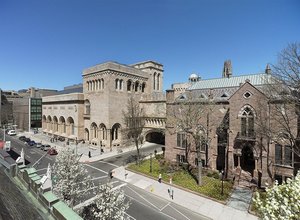
1841 – 1926, West Point Más obras: Yale University Art Gallery

Las 10 mejores pinturas de John Ferguson Weir en la galería

1
La fundición de cañones (1866) de John Ferguson Weir

La fundición de cañones

1866 · Óleo sobre lienzo

es una obra maestra en óleo sobre lienzo realizada por el artista estadounidense John Ferguson Weir. Ejecutada en 1866, la pieza nos transporta al corazón de la fundición de hierro y cañones de West Point, situada en Cold Spring, Nueva York. La escena captura un instante preciso de la producción industrial de mediados del siglo XIX, centrándose con maestría en la fundición de un cañón Parrott. La composición gravita en…

2
El periódico de la mañana (1868) de John Ferguson Weir

El periódico de la mañana

1868 · Óleo sobre lienzo · Metropolitan Museum of Art, Nueva York

En la quietud de un estudio tenuemente iluminado, la obra maestra de 1868 de John Ferguson Weir, “El periódico de la mañana”, invita al espectador a un santuario de profunda quietud. No se trata simplemente del retrato de un caballero anciano absorto en su lectura matutina; es una destilación magistral del espíritu estadounidense durante sus años formativos. Mientras la mirada recorre el lienzo, se percibe el peso de un momento…

3
Forjando el eje (1874) de John Ferguson Weir

Forjando el eje

1874 · Óleo sobre lienzo · Metropolitan Museum of Art, Nueva York

La obra “Forjando el eje” de John Ferguson Weir, pintada en 1874, no es simplemente una representación del taller de un herrero; es un poderoso testimonio de la floreciente era industrial de los Estados Unidos. Nacido en la Academia Militar de West Point, Weir poseía una perspectiva única: su padre fue un profesor de larga trayectoria en dicha institución, y su historia familiar estaba entrelazada con la rápida transformación de…

4
El estudio de un artista (1864) de John Ferguson Weir

El estudio de un artista

1864 · Óleo sobre lienzo · Los Angeles County Museum of Art, Los Ángeles

En 1864, John Ferguson Weir pintó El estudio de un artista. El lienzo captura un momento tranquilo y privado dentro de un espacio de trabajo. En él se representa al padre del artista, Robert W. Weir, sentado entre las herramientas de su oficio. Esta escena sitúa al mayor Weir dentro de los confines familiares de su propio estudio.

5
Daniel Cady Eaton (1834-1895) (1892) de John Ferguson Weir

Daniel Cady Eaton (1834-1895)

1892 · Óleo sobre lienzo · Harvard Art Museums, Cambridge

Un hombre se sienta bajo la silenciosa gravedad de 1892. Daniel Cady Eaton es plasmado al óleo, con su figura emergiendo de un fondo oscuro e indistinto que no ofrece distracciones ante su mirada firme. Se encuentra posicionado ligeramente descentrado, dirigiendo la vista hacia la izquierda del encuadre con una expresión de contemplación silenciosa. La luz desciende desde la parte superior izquierda, esculpiendo los contornos de su rostro y la…

6
Elihu Vedder (1902) de John Ferguson Weir

Elihu Vedder

1902 · Oil On Canvas · Museo de Bellas Artes, Boston

This oil on canvas portrait by John Ferguson Weir captures Elihu Vedder in a moment of quietude. Created about 1902, the work presents the subject as an older man, his presence defined by a thick, drooping mustache and hair of white. He is dressed in formal attire, including a dark jacket, a waistcoat, and a patterned tie, which anchors him within the studio setting.

7
The Rest (1900) de John Ferguson Weir

The Rest

1900 · Oil On Canvas

A woman sits in a moment of stillness, her form anchored by the weight of a violin. She wears a dress of bright yellow, a sudden burst of light against a background of muted, dark green. The fabric of her gown is voluminous, its folds captured through thick, layered oil paint that suggests a heavy, tactile presence. Her expression is serious, a steady gaze that looks inward rather than at…

8
Nochebuena (1865) de John Ferguson Weir

Nochebuena

1865 · Óleo · Yale University Art Gallery, New Haven

Nochebuena se despliega en un reino de sombras y luz suave, donde el pesado peso de la historia se encuentra con el movimiento etéreo de lo divino. Una campana masiva y desgastada cuelga suspendida dentro de un robusto arco de piedra, con su superficie capturando un pálido resplandor lunar que atraviesa los profundos tonos de tierra de sombra y carbón de la noche. La perspectiva eleva la mirada del espectador,…

9
Su modelo favorito (1880) de John Ferguson Weir

Su modelo favorito

1880 · Óleo sobre lienzo · Yale University Art Gallery, Hartford

En la quietud absoluta de una galería de arte, la mirada de John Ferguson Weir se encuentra con la nuestra. Su modelo favorito, un óleo sobre lienzo completado en 1880, nos presenta un momento de profunda serenidad. Dentro de este encuadre, el artista John Ferguson Weir vuelve su atención hacia su propio interior, ofreciéndonos un autorretrato que se siente menos como un registro formal y más como una observación íntima.…

Pinturas de John Ferguson Weir, clasificadas de la 11 a la 29

Los temas que cautivaron la mirada de John Ferguson Weir

Los cuatro temas que se repiten con más frecuencia en estas obras originales, cada uno con su mejor ejemplo.

Los museos que conservan los originales de John Ferguson Weir

Los 8 museos que albergan la mayoría de las pinturas de esta página.

Museos Ciudad Obras de John Ferguson Weir Pinturas de esta lista
Yale University Art Gallery, New HavenYale University Art Gallery New Haven 5 Nochebuena, Lake Como, Niagara Fall
Metropolitan Museum of Art, Nueva YorkMetropolitan Museum of Art Nueva York 3 El periódico de la mañana, Forjando el eje, The Alhambra, Granada, Spain
Yale University Art Gallery, HartfordYale University Art Gallery Hartford 2 Su modelo favorito, Lake Como
Smithsonian American Art Museum, Washington, D.C.Smithsonian American Art Museum Washington, D.C. 2 Kalorama Cottage, Roses
Los Angeles County Museum of Art, Los ÁngelesLos Angeles County Museum of Art Los Ángeles 1 El estudio de un artista
Harvard Art Museums, CambridgeHarvard Art Museums Cambridge 1 Daniel Cady Eaton (1834-1895)
Museo de Bellas Artes, BostonMuseo de Bellas Artes Boston 1 Elihu Vedder
New Britain Museum of American Art, New BritainNew Britain Museum of American Art New Britain 1 Early Morning Light

John Ferguson Weir, una pintura emblemática por década

Obras por década

Elige una década para ver la obra original que la define.

Pinturas de John Ferguson Weir: la galería responde

¿Cuál es la pintura más famosa de John Ferguson Weir?Descubre la respuesta

La fundición de cañones (1866). A continuación, El periódico de la mañana (1868) y Forjando el eje (1874).

¿Qué edad tenía John Ferguson Weir al completar La fundición de cañones?Descubre la respuesta

25 años: La fundición de cañones data de 1866, y John Ferguson Weir nació en 1841.

¿Cuáles son las 10 pinturas principales de John Ferguson Weir?Descubre la respuesta

La fundición de cañones, El periódico de la mañana, Forjando el eje, El estudio de un artista, Daniel Cady Eaton (1834-1895), Elihu Vedder, The Rest, Nochebuena, Su modelo favorito y Kalorama Cottage. La clasificación anterior indica el año y el museo de cada una.

¿Cuántas obras creó John Ferguson Weir?Descubre la respuesta

Nuestro catálogo cuenta con 31 obras de John Ferguson Weir, datadas desde 1860 hasta 1906.

¿Dónde se exhiben los originales más famosos de John Ferguson Weir?Descubre la respuesta

Principalmente en Yale University Art Gallery (New Haven), Metropolitan Museum of Art (Nueva York) y Yale University Art Gallery (Hartford). La tabla de museos arriba los enumera todos.

¿Cuándo creó John Ferguson Weir sus pinturas más famosas?Descubre la respuesta

En 1860s: 10 de las 29 obras de esta página se realizaron entonces, La fundición de cañones de ellas.

¿Cuáles son las primeras y últimas obras famosas de John Ferguson Weir?Descubre la respuesta

En esta página, la más antigua es Kalorama Cottage (1860) y la más reciente East Rock (1906).

¿A qué temas volvió John Ferguson Weir con más frecuencia?Descubre la respuesta

Mountains (4), Maquinaria (2) y Hombre (2), en las 29 obras de esta página.

¿En qué técnica trabajó más John Ferguson Weir?Descubre la respuesta

Óleo sobre lienzo, para 6 de las 29 obras de esta página.

¿Qué obras originales de John Ferguson Weir posee el Yale University Art Gallery?Descubre la respuesta

Nochebuena, Lake Como y Niagara Fall: el Yale University Art Gallery, New Haven posee 5 de las obras de esta página.

John Ferguson Weir: el artista

A Legacy Forged in Fire and Light: The Life and Art of John Ferguson Weir

John Ferguson Weir (1841-1926) stands as a pivotal figure in American art history, embodying the spirit of innovation and dedication that characterized the late 19th century. His artistic journey—marked by groundbreaking depictions of industrial landscapes and an unwavering commitment to fostering art education at Yale University—continues to inspire admiration for its breadth and depth. Born August 28, 1841, in West Point, New York, Weir’s formative years were steeped in the intellectual atmosphere fostered by his father, Robert Walter Weir, a celebrated painter and professor of drawing at the Military Academy – an institution that instilled in him not only artistic technique but also a profound understanding of American history and culture. This familial influence profoundly shaped Weir's worldview and fueled his lifelong passion for capturing the essence of both the natural world and the transformative forces shaping society.

Early Artistic Training and Industrial Vision

Weir’s artistic education began formally at the National Academy in New York City, where he honed his skills alongside fellow artists eager to embrace the burgeoning industrial revolution. Recognizing the profound impact of technological advancements on American life, Weir embarked upon a bold artistic endeavor: portraying scenes of factories and laborers with unprecedented realism and sensitivity. His masterpiece *The Gun Foundry* (1866), commissioned by the West Point Iron and Cannon Factory—a symbol of American ingenuity during the Civil War—demonstrates this commitment to documenting industrial progress while simultaneously exploring themes of labor, craftsmanship, and human resilience. The monumental scale and dramatic chiaroscuro effects employed in *Forging the Shaft* (1867) – a depiction of the creation of a massive shaft for an ocean liner – further solidified Weir’s reputation as a pioneer in capturing industrial landscapes with artistic brilliance. These paintings weren't merely representations of machinery; they were powerful statements about America’s capacity to adapt and innovate amidst turbulent times, establishing Weir as one of the earliest American artists to engage directly with the transformative forces reshaping the nation.

Yale University and Artistic Education

In 1869, Weir accepted an invitation from Yale University president Theodore Dwight Woolsey ’20, ’23MA—a pivotal moment that would define his artistic career and solidify his legacy as a champion of art education. Recognizing the importance of cultivating both foundational skills and imaginative exploration, Weir envisioned a curriculum that blended traditional academic rigor with contemporary European methods – mirroring the approach championed by his brother, Julian Alden Weir, who was pursuing studies at École des Beaux-Arts in Paris. This collaborative spirit underscored a shared conviction that fostering artistic talent required nurturing not only technical proficiency but also intellectual curiosity and critical engagement. Weir’s dedication extended beyond curriculum development; he actively promoted opportunities for women artists—a progressive stance for its time—demonstrating his belief in the transformative potential of art education for all aspiring individuals. His influence on Yale’s School of Fine Arts continues to resonate today, serving as a testament to his visionary leadership and enduring commitment to artistic excellence.

A Painter's Palette: Style and Technique

Weir’s artistic style evolved throughout his career, reflecting the broader currents of Impressionism that swept across Europe during his formative years. While initially influenced by Édouard Manet—particularly *Woman with a Parrot* and *Boy with a Sword*, which Weir purchased during his travels—he gradually embraced the techniques championed by Jules Bastien-Lepage and Albert Pinkham Ryder, prioritizing tonal harmonies and capturing fleeting moments of light and atmosphere. His landscapes—primarily focused on the Hudson River Valley—were characterized by meticulous observation and masterful brushwork, conveying a profound sense of tranquility and beauty. Weir’s ability to evoke emotion through color and texture cemented his place among the foremost landscape painters of his era, establishing him as a master of tonal harmony and atmospheric perspective.

A Lasting Impression: Legacy and Remembrance

John Ferguson Weir died peacefully in Providence, Rhode Island on April 8, 1926—leaving behind an artistic oeuvre that continues to captivate audiences worldwide. His sculptures—including the statue of Woolsey for Yale University and Benjamin Silliman—stand as enduring symbols of intellectual curiosity and artistic achievement. More importantly, Weir’s unwavering dedication to art education at Yale University ensured that his influence would extend far beyond his own lifetime, shaping generations of artists and scholars alike. He remains a beacon of inspiration for those pursuing creative endeavors, reminding us that true artistry lies not merely in technical skill but also in the courage to embrace innovation and champion transformative ideas—a legacy as luminous as the landscapes he so lovingly rendered on canvas.