Heinrich von Angeli: A Master of Victorian Portraiture
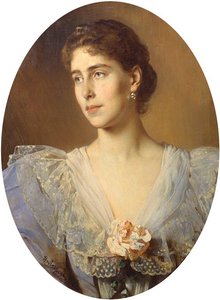
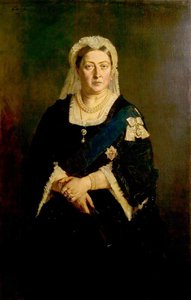
Heinrich Anton von Angeli (1840-1925) stands as a monumental figure in Austrian art history, celebrated primarily for his unparalleled mastery of Victorian portraiture—a genre where he achieved remarkable success capturing the solemn grandeur and refined formality of the era through meticulously crafted paintings. Born in Ödenburg (now Sopron), Hungary, Angeli’s artistic journey commenced with rigorous training at the Academy of Fine Arts Vienna before refining his skills at Düsseldorf and Munich – experiences that profoundly shaped his distinctive style—before returning to Vienna in 1862 where he established himself as a prolific artist and cemented his reputation as one of Austria's foremost portrait painters.
Early Influences: Seeds of Romanticism & Classical Discipline
Angeli’s artistic sensibilities were initially nurtured by the currents of Romanticism, absorbing elements from luminaries like Eugène Delacroix and Friedrich Wilhelm Willebrandt. These artists championed emotion and dramatic narrative—a stylistic impulse that resonated deeply within Angeli's formative years. However, he swiftly transitioned towards Neoclassical principles, demonstrating a masterful command of form and composition—a decisive shift reflecting his intellectual engagement with the ideals of antiquity and emphasizing clarity, balance, and idealized beauty. This duality – Romantic passion tempered by Classical restraint – became a defining characteristic of his artistic vision throughout his career.
Vienna’s Artistic Crucible: Collaboration & Patronage
Vienna served as Angeli's creative epicenter—a vibrant hub fostering collaborations with fellow artists like Johann Heinrich Dannecker and Franz Seraph von Lenbach, attracting commissions from influential patrons including members of the Habsburg imperial family. This environment nurtured his artistic prowess and elevated his social standing, providing him with invaluable opportunities to hone his craft and explore innovative techniques. The patronage system ensured that Angeli’s work benefited from considerable resources—allowing for ambitious projects and furthering the dissemination of Viennese artistic ideals across Europe.
A Portraitist Par Excellence: Technique & Subject Matter
Angeli distinguished himself through an extraordinary ability to portray subjects with breathtaking realism—particularly uniforms and jewelry—a technique that solidified his position as one of the era’s most celebrated portrait painters. He meticulously studied fabrics, textures, and embellishments, capturing them with astonishing accuracy—a testament to his dedication to observation and technical virtuosity. His canvases became windows into Victorian society, conveying not merely likenesses but also an aura of dignity and authority reflecting the social conventions of the time. Notable commissions included portraits of Ulysses S. Grant commissioned by Buckingham Palace, showcasing Angeli’s commitment to capturing character and emotion through visual representation.
Legacy & Recognition: Enduring Influence
Heinrich von Angeli's prolific output spanned decades, producing portraits of monarchs, statesmen, scientists, and aristocrats across Europe—works that now reside in prestigious collections like the British Royal Collection and the Wallace Collection. His enduring legacy rests on his embodiment of Neoclassical Romanticism—a harmonious blend of classical elegance and emotive expression—making him an indelible symbol of Victorian artistic achievement. He received the Pour le Mérite für Wissenschaften und Künste in 1915, acknowledging his contribution to Austrian artistic excellence. Angeli’s paintings continue to captivate audiences with their beauty and historical significance, securing his place as a cornerstone of Austrian art history and a masterful interpreter of the Victorian spirit—a testament to his enduring influence on subsequent generations of artists.