Early Life and Career
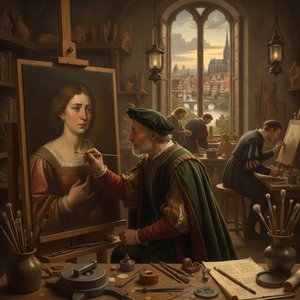
Hans Schlotheim/Schlotthammer (1547 – 1625) emerged from the vibrant artistic landscape of Naumburg an der Saale, Germany, a region steeped in medieval traditions yet embracing the burgeoning spirit of the Renaissance. Born into a family involved in metalworking—a craft deeply rooted in Augsburg’s economic prosperity—Schlotheim's formative years instilled within him a profound appreciation for precision and craftsmanship. He swiftly gained recognition as an exceptional orfèvre, mastering the art of sculpting precious metals and gemstones with unparalleled skill. This early training would prove instrumental in shaping his distinctive artistic vision.
Artistic Achievements: The Marvels of Automata
Schlotheim’s fame rests primarily upon his astonishing creations—the
'Galions mécaniques', a series of monumental mechanical clocks that transcended mere timekeeping to become breathtaking works of art. These intricate devices, conceived by Schlotheim and his collaborators, were not simply functional instruments; they represented a triumph of engineering artistry. The most celebrated exemplar—the Nef of Charles Quint—stood as a testament to Schlotheim’s genius, incorporating elaborate carvings depicting biblical scenes and adorned with shimmering gemstones. This ambitious project showcased his mastery of both sculpture and mechanics, establishing him as one of the foremost innovators of his era.
Museum Collections: Preserving Legacy
Schlotheim's sculptures are housed in prestigious institutions across Germany, offering visitors a chance to contemplate the grandeur of his artistic endeavors. The Kunstsammlungen Graf von Schönborn Pommersfelden proudly displays a remarkable collection of his works—a testament to their enduring beauty and historical significance. Similarly, the Max-Slevogt Galerie showcases Schlotheim’s sculptures alongside other masterpieces of German art from the sixteenth century. These collections serve as invaluable resources for scholars and enthusiasts alike, ensuring that Schlotheim's legacy continues to inspire awe and admiration. Furthermore, a significant portion of his oeuvre can be found in Hugo Fischer’s museum collection in Bühl, Germany.
Influence and Technique
Schlotheim’s influence extended beyond the immediate realm of horology; he captivated contemporaries with his sculptural prowess and elevated the standards of artistic excellence. He achieved the ‘droit de forgeron’—the legal right to practice blacksmithing—in Augsburg in 1573, marking a pivotal moment in his professional development. Subsequently, he ascended to the rank of Meister (master craftsman) in 1576, signifying his mastery of metalworking techniques and cementing his position as a leader within Augsburg's artisan community. His meticulous attention to detail—evident in every facet of his sculptures—demonstrated an unwavering commitment to artistic perfection.
Concluding Remarks: A Titan of Renaissance Craftsmanship
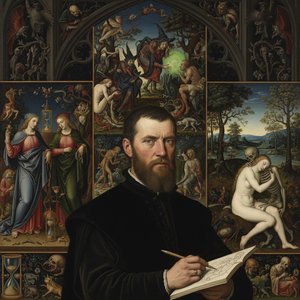
Hans Schlotheim/Schlotthammer stands as an unforgettable figure in the annals of Renaissance art and horology. His unparalleled skill as a sculptor and clockmaker, combined with his daring experimentation in mechanical automata, propelled him to international acclaim. He remains an inspiration for artists and craftsmen worldwide—a beacon of creativity and innovation whose legacy continues to resonate through centuries of artistic history. Explore Schlotheim’s remarkable achievements at
the museum collection hugo fischer (bühl, germany) or delve deeper into his life and work on OriginalUniqueArt.