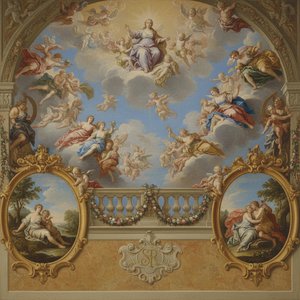
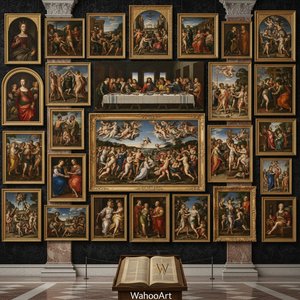
Giovanni Battista Crosato: Venetian Elegance Amidst Baroque Grandeur
Giovanni Battista Crosato (1686 – July 15, 1758) stands as a pivotal figure in the late Baroque and Rococo artistic landscape of Venice. Born into a family steeped in artistic tradition—his uncle Francesco Pittoni was himself a respected painter—Crosato’s formative years instilled within him an appreciation for both monumental grandeur and refined ornamentation, influences that would shape his distinctive oeuvre. While biographical details remain somewhat sparse, scholarly research confirms he studied under Antonio Balestra, though the precise nature of their collaboration continues to be debated by art historians.
Early Life & Training: Crosato’s upbringing fostered a connection with artistic excellence from an early age. His uncle Francesco Pittoni served as a mentor, imparting invaluable knowledge regarding Baroque painting techniques and stylistic considerations. This familial legacy undoubtedly fueled his passion for art and provided him with a foundational understanding of the era's dominant aesthetic principles.
The Rococo Transformation: Around 1720, Crosato underwent a significant stylistic shift—a move away from the heavy formalism of the Baroque towards the airy lightness and pastel hues characteristic of Rococo art. This transformation wasn’t merely an adoption of fashionable trends; it represented a profound reimagining of artistic expression, mirroring broader cultural changes in Venice at the time. Venetian society embraced a new ethos centered on pleasure, intimacy, and delicate beauty—a spirit that found its fullest articulation in the opulent interiors adorned with frescoes and sculptures by artists like Tiepolo and Falconetto. Crosato skillfully captured this atmosphere, prioritizing graceful compositions and subtle color palettes to convey an emotional resonance far surpassing the rigid conventions of his predecessors.
Guild Membership & Academic Recognition: Crosato joined the Fraglia dei Pittori Veneziani guild in 1716, demonstrating his commitment to Venetian artistic institutions and upholding established traditions. Furthermore, his election to the Accademia Clementina of Bologna cemented his reputation as a respected artist and intellectual—a testament to his scholarly pursuits and engagement with broader European artistic discourse.
Establishing Venice’s Artistic Future: Notably, Crosato played an instrumental role in establishing the Veneto Pubblica Accademia di Pittura, Scultura e Architettura (later Accademia di Belle Arti di Venezia) alongside fellow luminaries like Tiepolo, solidifying Venice’s position as a center for artistic innovation. This ambitious undertaking aimed to cultivate talent and disseminate knowledge—reflecting the Venetian Republic's dedication to fostering cultural advancement. Serving as president of the academy from 1758 to 1760 and again in 1763–64 underscored his unwavering commitment to nurturing artistic excellence and shaping Venetian cultural heritage for generations to come.
Notable Works & Artistic Style: Crosato’s prolific output encompassed portraits, religious scenes, and decorative frescoes—works that exemplify the elegance and sophistication of Rococo style. Among his most celebrated paintings is “The Finding of Moses,” a dramatic depiction imbued with emotional intensity and masterful use of chiaroscuro—a technique perfected by Caravaggio and embraced by Venetian artists to heighten visual impact. Similarly impressive is "Apollo's Carriage," showcasing meticulous attention to detail and conveying a sense of serene beauty, mirroring the idealized visions prevalent in Rococo art.
Legacy & Remembrance: Crosato’s tomb resides in San Giacomo dell'Orio Church, Venice—a poignant reminder of his enduring presence within the city’s artistic history and a testament to the lasting influence of Venetian Baroque and Rococo traditions. Giovanni Battista Crosato remains an artist whose work embodies the spirit of Venetian Rococo, securing his place as a cornerstone of 18th-century art and culture—a figure whose legacy continues to inspire admiration for its beauty and intellectual depth.
Por el equipo editorial de OriginalUniqueArt.com
Cuestionario de arte
Cada pregunta tiene una única respuesta correcta.
Pregunta 1:
¿Cuál fue el movimiento artístico que caracterizó las obras posteriores de Giovanni Battista Crosato?
Pregunta 2:
¿Giovanni Battista Crosato estudió bajo quién?
Pregunta 3:
¿Qué institución artística promovió Giovanni Battista Crosato junto con otros artistas destacados?
Pregunta 4:
¿Giovanni Battista Crosato fue presidente de la Academia desde qué año hasta qué año?
Pregunta 5:
¿Dónde está ubicado el monumento funerario de Giovanni Battista Crosato?
Explore the captivating world of Sebastiano Ricci, a leading Venetian Baroque painter renowned for his luminous frescoes & illusionistic masterpieces. Discover his life, techniques, and lasting influence on art history.
Descubre las 25 obras maestras de Jacopo Tintoretto, el genio veneciano del Renacimiento. Explora su arte dramático, composiciones innovadoras y paleta vibrante. Reproducciones de alta calidad en OriginalUniqueArt.com para transformar tu hogar.
Explore the dramatic world of Baroque art! Discover iconic artists like Caravaggio & Rubens, defining techniques, and its lasting impact on art history. Expert insights for collectors & enthusiasts at OriginalUniqueArt.
OAsistente de estudioEn línea · responde en un minuto
¡Hola! Puedo ayudarte a elegir una obra de arte, realizar el seguimiento de un pedido o resolver tus dudas sobre la garantía. ¿En qué puedo ayudarte hoy?