El visionario palladiano de la Rusia imperial
Giacomo Antonio Domenico Quarenghi se erige como una figura singular en los anales de la arquitectura europea, reconocido universalmente como “el último y gran arquitecto de Italia” y, posiblemente, el principal exponente del estilo neoclásico de su época. Moldeó de forma indeleble el paisaje urbano de San Petersburgo y consolidó la reputación de Rusia por su grandeza monumental bajo el mandato de Catalina II, un legado que continúa inspirando a los estudios arquitectónicos en la actualidad. Nacido en Rota d'Imagna, cerca de Bérgamo, Quarenghi descendía de una familia aristocrática con raíces que se remontan a siglos atrás. Aunque inicialmente estaba destinado a las leyes o a la vida eclesiástica, sus inclinaciones artísticas se impusieron gracias al aprendizaje formativo bajo Giuseppe Reggi, discípulo del legendario Antonio Canaletto. Esta temprana exposición le inculcó un profundo aprecio por el disegno —el arte del dibujo—, que se convertiría en una herramienta indispensable a lo largo de su prolífica carrera.
El momento crucial en la vida de Quarenghi llegó en 1763, cuando viajó a Roma, una ciudad que pulsaba con fermento intelectual e ideales clásicos renacidos. Al inscribirse en el estudio de Anton Raphael Mengs, perfeccionó sus habilidades pictóricas junto a otros aspirantes antes de avanzar hacia los estudios arquitectónicos bajo la tutela de Paolo Posí. Sin embargo, fue el encuentro fortuito con los Quattro Libri d'Architettura de Andrea Palladio lo que alteró irrevocablemente su trayectoria. Esta profunda conexión con los principios palladianos definiría más tarde su enfoque de la estructura y la simetría, permitiéndole traducir el antiguo lenguaje de Roma al floreciente paisaje imperial del Este.
Un gran viaje al Imperio Ruso
El curso de la historia arquitectónica cambió para siempre en 1779, cuando el barón Friedrich Grimm consiguió la invitación de Quarenghi a Rusia por parte de la emperatriz Catalina II. Esta transición desde los paisajes bañados por el sol de Italia hacia la grandeza gélida de San Petersburgo marcó el inicio de una edad de oro para el neoclasicismo ruso. Nombrado el “Gran Arquitecto de todas las Rusias”, Quarenghi trajo consigo un sentido refinado de la proporción y una capacidad para dominar el espacio a través de la elegancia en lugar del mero exceso. Su llegada coincidió con un periodo de intensa expansión imperial, donde la arquitectura servía como una herramienta vital para proyectar poder, estabilidad y sofisticación cultural.
Sus primeras comisiones fueron nada menos que legendarias, estableciendo el estilo palladiano dentro de la corte rusa. Entre ellas destacan:
- El Palacio Inglés en Peterhof: Una obra seminal que introdujo un nuevo nivel de clasicismo refinado en las residencias imperiales.
- El Teatro del Hermitage: Una obra maestra del diseño teatral que permanece como testimonio de su capacidad para combinar la funcionalidad con el esplendor estético.
- La Bolsa y el Banco Estatal: Estructuras masivas y autoritarias que demostraron su maestría sobre los monumentos cívicos y económicos.
Un legado perdurable en piedra y acuarela
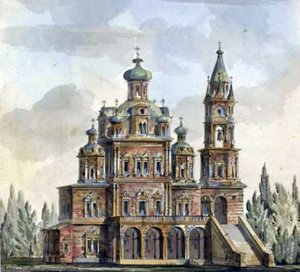
Más allá de la pesada piedra de sus edificios, el alma artística de Quarenghi se expresó a través de delicadas acuarelas y dibujos precisos. Su capacidad para capturar la esencia de una estructura —como la grandiosa fachada del Instituto Smolny o las amplias vistas del Kremlin de Moscú— le permitió documentar tanto la intención arquitectónica como la realidad atmosférica de su época. Sus obras, que van desde ilustraciones topográficas como el Panorama de las aldeas de Kolomenskoye y Dyakovo hasta diseños detallados para arcos de triunfo, revelan a un artista profundamente sintonizado con el juego de luces, sombras y la vida urbana.
La influencia de Quarenghi se extendió mucho más allá de su propia vida. Al integrar la rigurosa lógica del neoclasicismo italiano con la escala monumental requerida por el Imperio Ruso, creó un dialecto arquitectónico único. Sus obras, como la Academia de Ciencias y diversos puentes sobre el Neva, continúan erigiéndose como testigos silenciosos de una era de ambición sin parangón. No se limitó a construir estructuras; forjó la identidad de una nación, dejando tras de sí un modelo de elegancia que permanece grabado en el corazón mismo de San Petersburgo.
Preguntas y respuestas
¿Puedo explorar las obras de Giacomo Quarenghi por estado de ánimo?
La Rincón de emociones de Giacomo Quarenghi organiza las obras del artista según el estado de ánimo.
¿En qué ciudad y país nació Giacomo Quarenghi?
Giacomo Quarenghi nació en Rota d'Imagna, Italia.
¿Cuántas obras de Giacomo Quarenghi hay disponibles para explorar?
Puede explorar 15 obras obras de Giacomo Quarenghi en la página Todas las obras de arte.