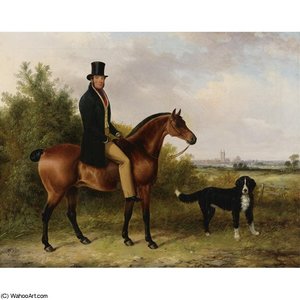
Retrato de George Cole

Las 45 pinturas más famosas de George Cole, una selección de la galería

Actualizado noviembre 2026 · clasificado según nuestro índice de popularidad (búsquedas, visitas y pedidos de cada obra) · 46 obras de George Cole en nuestro catálogo

En resumen

De todos los originales que dejó George Cole, la más famosa es Harvest Rest. Le siguen muy de cerca The departure y View of Windsor Castle from the River (1832). Nuestro catálogo cuenta con 46 obras de George Cole; la galería ha conservado las 45 que el mundo más admira, cada una presentada con su fecha, su museo y su historia.

1810 – 1883, Portsmouth Romanticism Más obras: Anglesey Abbey

Las 10 mejores pinturas de George Cole: la elección de la galería

1
Harvest Rest de George Cole

Harvest Rest

Oil

George Cole presents a quiet moment of communal respite in Harvest Rest. Set during the height of the harvest season, the scene captures a group of nine people gathered in a field. They appear to be taking a necessary break from their seasonal labors, finding a moment of stillness amidst the agricultural cycle. Some figures sit directly on the ground, while others occupy a bench or stand nearby, creating a…

9
Cattle On A Riverbank de George Cole

Cattle On A Riverbank

The painting Cattle On A Riverbank by George Cole Senior is a stunning example of rural landscape art, showcasing the artist's ability to capture the tranquility and beauty of nature. This handmade oil painting reproduction, available on AllPaintingsStore.com, is a must-have for anyone who appreciates the serenity of the countryside. Artist Background George Cole Senior was a British artist known for his landscape paintings, which often featured rural scenes and…

La selección de George Cole continúa, de 11 a 45

Los temas que cautivaron la mirada de George Cole

Los cuatro temas que se repiten con más frecuencia en estas obras originales, cada uno con su mejor ejemplo.

Los museos que conservan los originales de George Cole

Los 4 museos que albergan la mayoría de las pinturas de esta página.

Museos Ciudad Obras de George Cole Pinturas de esta lista
Anglesey AbbeyAnglesey Abbey 2 View of Windsor Castle from the River, Windsor from the River
Te Whare O Rehua Sarjeant GalleryTe Whare O Rehua Sarjeant Gallery 1 Angry Clouds
Sociedad Histórica de Nueva York, Nueva YorkSociedad Histórica de Nueva York Nueva York 1 The Course of Empire Desolation
National Gallery of Art, WashingtonNational Gallery of Art Washington 1 The return

George Cole año tras año: las obras originales que definen cada etapa

Desde 1832 hasta 1878, George Cole trabajó durante 47 años: la selección recorre esa larga trayectoria año tras año, a través de sus originales más excepcionales.

Obras por año

Selecciona un año para ver sus originales.

Preguntas de coleccionistas sobre las pinturas de George Cole

¿Por qué obra es más famoso/a George Cole?Descubre la respuesta

Harvest Rest. A continuación, The departure y View of Windsor Castle from the River (1832).

¿Cuáles son las diez pinturas más famosas de George Cole?Descubre la respuesta

Harvest Rest, The departure, View of Windsor Castle from the River, Windsor from the River, The Log Wagon, Harvesters, A Toy Spaniel, Portrait Of A Hunter With A Dog, Cattle On A Riverbank y Angry Clouds. La clasificación anterior indica el año y el museo de cada una.

¿Cuántas pinturas dejó George Cole?Descubre la respuesta

Nuestro catálogo cuenta con 46 obras de George Cole, datadas desde 1832 hasta 1878.

¿En qué museos se exhiben las obras maestras de George Cole?Descubre la respuesta

Principalmente en Anglesey Abbey, Te Whare O Rehua Sarjeant Gallery y Sociedad Histórica de Nueva York (Nueva York). La tabla de museos arriba los enumera todos.

¿Cuáles son las primeras y las últimas obras originales de George Cole?Descubre la respuesta

En esta página, la más antigua es View of Windsor Castle from the River (1832) y la más reciente Windsor from the River (1878).

¿Qué temas eligió George Cole con mayor frecuencia?Descubre la respuesta

Landscape (6), Scenes (3) y Harvesting (3), en las 45 obras de esta página.

¿A qué movimiento artístico pertenece George Cole?Descubre la respuesta

Romanticism, a juzgar por los originales de esta página.

¿Qué obras de George Cole se exhiben en el Anglesey Abbey?Descubre la respuesta

View of Windsor Castle from the River y Windsor from the River: el Anglesey Abbey posee 2 de las obras de esta página.

George Cole: vida y obra

George Cole Senior: A Painter of Victorian England’s Heartland

George Cole Senior (1810-1883) emerges from the canvas as a quintessential figure of 19th-century English art, specifically embodying the romanticized vision of the rural countryside during the Victorian era. Born in France but establishing his career firmly within England, Cole’s legacy rests upon a remarkable body of work characterized by idyllic landscapes, meticulous depictions of cattle, and evocative harvest scenes—images that capture the essence of a nation deeply connected to its agricultural roots. His paintings aren't merely representations; they are windows into a bygone era, imbued with a sense of tranquility and a profound appreciation for the beauty of the natural world.

Cole’s artistic journey began in Portsmouth, England, though his early life was marked by personal loss – the death of his mother at the tender age of nine. This experience undoubtedly shaped his perspective, fostering a sensitivity to the fragility of life and a desire to immortalize the beauty he found in the world around him. While biographical details remain somewhat sparse, it’s clear that Cole's artistic development was influenced by the prevailing trends of the time, particularly the Romantic movement’s emphasis on emotion, nature, and the sublime. However, unlike many of his contemporaries who embraced dramatic or grandiose subjects, Cole focused intently on the quiet dignity of rural life.

The Language of Landscape: Technique and Subject Matter

Cole's technical skill is immediately apparent in his meticulous attention to detail. He was a master of capturing light and shadow, employing subtle gradations of color to create a sense of depth and atmosphere within his paintings. His landscapes are not simply static scenes; they are alive with movement—the rustle of leaves in the breeze, the grazing of cattle, the golden glow of the setting sun. A key element of his style is his ability to render textures with remarkable accuracy, from the rough bark of a tree trunk to the soft wool of a sheep.

Cattle paintings form a significant portion of Cole’s oeuvre. He didn't simply depict these animals; he captured their character and essence—their strength, their grace, their connection to the land. These aren’t idealized representations; they are honest portrayals of working livestock, reflecting the vital role they played in Victorian society. Harvest scenes further demonstrate his ability to capture a specific moment in time – the culmination of labor, the bounty of the season, and the simple pleasures of rural life. Notable works like “A Toy Spaniel” exemplify his skill in capturing domesticity and detail.

Influences and Context

While Cole’s work stands apart for its distinct focus on rural England, it's important to acknowledge the influences that shaped his artistic vision. The Dutch Masters, particularly their mastery of light and color, undoubtedly played a role in his development. The tradition of landscape painting in Holland—characterized by atmospheric perspective and an appreciation for the beauty of nature—provided a foundation upon which Cole built his own style. Furthermore, the broader context of Victorian England – a period of rapid industrialization and social change – is reflected in Cole’s work. His paintings offer a nostalgic glimpse into a world that was rapidly disappearing, preserving a connection to the land and its traditions.

Legacy and Significance

George Cole Senior's contribution to English art lies not in grand narratives or revolutionary innovations, but rather in his quiet, persistent celebration of rural England. His paintings offer a valuable record of a vanishing way of life—a time when agriculture was deeply intertwined with the rhythms of nature and the lives of ordinary people. His work continues to resonate today, reminding us of the enduring beauty of the countryside and the importance of preserving our connection to the land. Cole’s legacy is one of understated elegance, capturing the heart and soul of Victorian England through the gentle brushstrokes of a dedicated artist.