Menú
Asesoría de arte gratuita

George Barret el Joven

1732 - 1784

Resumen biográfico

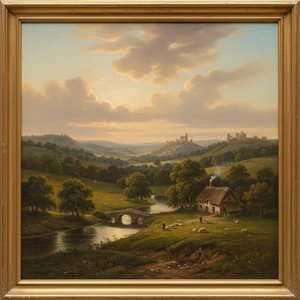
  • Top-ranked work: George Barret, Grasmere
  • Nationality: Reino Unido
  • Museums on APS:
    • Wordsworth Grasmere
    • Wordsworth Grasmere
    • Wordsworth Grasmere
    • Wordsworth Grasmere
    • Wordsworth Grasmere
  • Copyright status: Public domain
  • Born: 1732, Reino Unido
  • Ver más…
  • Lifespan: 52 years
  • Died: 1784
  • Works on APS: 9
  • Top 3 works:
    • George Barret, Grasmere
    • Landscape With Classical Ruins, Figures And Goats
    • Sketcher
  • Art period: Edad Moderna

Test de arte

Solo hay una respuesta correcta para cada pregunta.

Pregunta 1:
¿Cuál fue la profesión de George Barret Sr.?
Pregunta 2:
¿Dónde residía George Barret Sr. después de trasladarse desde Irlanda?
Pregunta 3:
¿En qué tipo de composiciones destacó particularmente el talento artístico de George Barret Jr.?
Pregunta 4:
¿Cuántos años asistió George Barret Jr. a la exposición en la Real Academia?
Pregunta 5:
¿Qué estilo artístico se describe frecuentemente como el de George Barret Jr.?

George Barret the Younger: A Romantic Visionary of Thames Valley Landscapes

George Barret Jr., born in London in 1732, was a son of George Barret Sr., an Irish artist who had established himself in England after relocating from Ireland. His artistic lineage undoubtedly instilled within him a passion for observation and representation—a fascination that would blossom into a prolific career dedicated to capturing the beauty of the English countryside. While biographical details surrounding his formative years remain scarce, it’s understood that he faced considerable hardship following his father's untimely death in 1767, necessitating self-reliance and fostering an early determination to pursue artistic endeavors alongside his brothers and sisters. Remarkably, George Barret Jr.’s talent surpassed even those of his siblings, marking him as a truly gifted artist—a distinction that would define his artistic trajectory. Initially focused on depictions of the Thames Valley and surrounding counties – landscapes bathed in soft light and imbued with pastoral charm – Barret’s artistic vision gradually shifted towards embracing the Romantic movement. Influenced by artists like Claude Lorrain and Nicolas Poussin, he adopted Claudian style, prioritizing atmospheric perspective and idealized compositions that sought to convey emotion and sublimity rather than mere topographical accuracy. This stylistic evolution culminated in breathtaking sunrises and sunsets devoid of specific locale references, reflecting a profound engagement with the spiritual dimension of nature—a characteristic that distinguishes his work from earlier landscape traditions. His meticulous attention to detail and masterful use of color created scenes that transported viewers into realms of sublime beauty, capturing the essence of Romantic idealism. Barret’s unwavering commitment to artistic excellence extended throughout his life, marked by consistent participation in exhibitions at the Royal Academy from 1800 to 1803 and continued membership in the Society of Painters in Watercolours since its founding in 1804. He diligently attended every exhibition for an astounding 38 years, demonstrating a steadfast dedication to his craft and securing his place as one of Britain’s most respected watercolorists. His prolific output speaks volumes about his artistic drive and unwavering belief in the power of visual art to communicate profound ideas. The Society of Painters in Watercolours recognized Barret's contribution to British art history, honoring him with a lifetime membership—a testament to his enduring legacy. Among Barret’s celebrated works are “George Barret, Grasmere,” a serene depiction of Windermere Lake and its surrounding hills, showcasing the artist’s mastery of tonal harmony and subtle color gradations. Similarly impressive is "Returning From Work," which portrays a solitary figure amidst a tranquil rural landscape—a piece imbued with quiet contemplation and conveying a sense of melancholy beauty. Furthermore, “Italianate Landscape With Shepherds” exemplifies Barret's ability to synthesize classical influences with Romantic sensibilities, resulting in an artwork that resonates with grandeur and evokes feelings of nostalgia for a bygone era. These paintings exemplify Barret’s artistic vision—a harmonious blend of observation, technique, and emotional expression. Despite facing persistent financial difficulties—a testament to the challenges inherent in pursuing an artistic vocation during that era—Barret maintained an unyielding spirit, continuing to paint until his death on March 19th, 1842, in Paddington. He was laid to rest in the ancient churchyard of St Mary’s Paddington, cementing his legacy as a significant figure within the British art world. His enduring influence can be seen in subsequent generations of landscape painters who sought inspiration from his masterful handling of color and light—a testament to the timeless beauty and emotional resonance of his artistic vision.