Menú
Asesoría de arte gratuita

Francisco Aurélio De Figueiredo E Mello

1854 - 1916

Resumen biográfico

  • Museums on APS:
    • Museu da República
    • Museo Historico Nacional
    • Museo Historico Nacional
    • Museo Historico Nacional
    • Museo Historico Nacional
  • Art period: Siglo XIX
  • Works on APS: 3
  • Top 3 works:
    • Discovery of Brazil
    • Martirio de Tiradentes
  • Top-ranked work: Discovery of Brazil
  • Born: 1854, Areia, Brasil
  • Ver más…
  • Nationality: Brasil
  • Also known as:
    • Aurélio De Figueiredo
    • Francisco Aurelio De Figueiredo E Mello
    • Aurelio De Figueiredo
  • Lifespan: 62 years
  • Copyright status: Public domain
  • Died: 1916

Test de arte

Solo hay una respuesta correcta para cada pregunta.

Pregunta 1:
¿Qué papel significativo desempeñó Francisco Aurélio de Figueiredo e Mello en la historia brasileña?
Pregunta 2:
¿El estilo artístico de Francisco Aurélio se caracteriza por:
Pregunta 3:
¿Qué museo alberga una colección notable de arte brasileño que incluye obras de Francisco Aurélio de Figueiredo e Mello?
Pregunta 4:
¿Cuál es el medio utilizado predominantemente en "Untitled" por Francisco Aurélio de Figueiredo e Mello?
Pregunta 5:
¿Cómo se puede describir la contribución de Francisco Aurélio de Figueiredo e Mello al monumento homenajeando Júlio de Castilhos en Río Grande do Sul?

Francisco Aurélio de Figueiredo e Mello (1854-1916): A Pioneer of Brazilian Art

Francisco Aurélio de Figueiredo e Mello, a renowned brazilian painter, sculptor, caricaturist, and graphic designer, was born in Areia, Brazil (1854) and died in Rio de Janeiro (1916). His artistic journey began at a young age, shaping him into one of the most influential figures of Brazilian art history. He left an indelible mark on the cultural landscape of his time, particularly recognized for his contributions to national identity and artistic innovation.

Early Life and Artistic Formation

Born in Areia, São Paulo Province, Figueiredo’s formative years were marked by a fascination with drawing and painting—passions nurtured by his family's encouragement. Despite limited formal training initially, he possessed an innate talent that propelled him toward mastering various artistic mediums. His early works demonstrated a keen observation of nature and human figures, establishing the foundation for his distinctive style. Notably, he studied at São Paulo Art School, where he honed his skills under prominent instructors, absorbing influences from Academicism Brazil and Impressionism.

Notable Achievements: Design and Monumental Sculpture

Figueiredo’s artistic career ascended to prominence through several pivotal projects that solidified his reputation as a versatile artist. Perhaps most famously, he designed the blue disc on the Brazilian flag—a symbol of national pride—representing the sky over Rio Grande do Sul during the proclamation of the Republic in 1889. This emblem embodies the spirit of Brazilian patriotism and reflects Figueiredo’s understanding of visual communication as a tool for conveying cultural values. Furthermore, he undertook the monumental sculpture honoring Júlio de Castilhos in Rio Grande do Sul, showcasing his mastery of sculptural technique and his ability to capture grandeur and solemnity. The statue stands as a testament to Castilhos's legacy and symbolizes the state’s commitment to historical remembrance.

Artistic Style and Influences

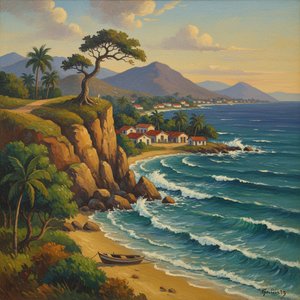
Francisco Aurélio’s artistic style blended traditional brazilian themes with modern artistic influences, primarily Impressionism and Academicism Brazil. He skillfully employed vibrant colors and bold compositions—characteristic of Impressionist painters—to depict landscapes and portraits with remarkable luminosity and dynamism. Simultaneously, he adhered to the rigorous standards of Academicism Brazil, prioritizing anatomical accuracy and idealized forms in his sculptures and paintings. His stylistic choices were informed by artists such as Jean Auguste Ingres and Gustave Moreau, who championed classical ideals and refined artistic craftsmanship.

Legacy and Museums Featuring His Work

Francisco Aurélio de Figueiredo e Mello’s legacy extends beyond his individual artworks; he profoundly impacted Brazilian art education and cultural discourse. He established São Paulo Art School, fostering a generation of artists committed to upholding artistic excellence and exploring diverse creative expressions. Today, his works are housed in prestigious museums across Brazil, including Museu Antonio Parreiras (Niterói) and Museu de Arte do Rio Grande do Sul Ado Malagoli (Porto Alegre), where visitors can appreciate the breadth and depth of his artistic vision. His enduring influence continues to inspire artists and scholars alike, ensuring that Francisco Aurélio de Figueiredo e Mello remains a cornerstone of brazilian art history.