Menú
Asesoría de arte gratuita

Felix Stone Moscheles

1833 - 1917

Resumen biográfico

  • Top 3 works:
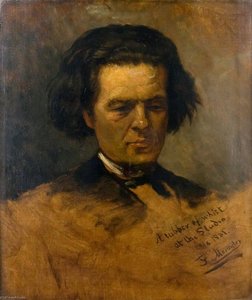
    • 'A rubber of whist at the studio' (Anton Rubinstein, 1829–1894)
    • Sir George Henschel (1850–1934)
    • Eliza Crawshay, née Yeates, with Her Son Edwin
  • Museums on APS:
    • Conservatorio Real de Música
    • Conservatorio Real de Música
    • Mary Ward Centre
    • Mary Ward Centre
    • Mary Ward Centre
  • Lifespan: 84 years
  • Works on APS: 8
  • Born: 1833, Inglaterra
  • Ver más…

Test de arte

Solo hay una respuesta correcta para cada pregunta.

Pregunta 1:
¿Qué instrumento musical era conocido el padre de Felix Moscheles?
Pregunta 2:
¿Dónde estudió Felix Moscheles?
Pregunta 3:
¿Qué papel desempeñó Felix Moscheles en la promoción de la paz internacional?
Pregunta 4:
¿Por qué idioma defendió Felix Moscheles la comunicación internacional?
Pregunta 5:
¿En qué ciudad nació Felix Moscheles?

Felix Stone Moscheles: A Painter of Peace and Impressionistic Portraits

Felix Stone Moscheles (1833–1917) represents a singular convergence of artistic talent and humanist conviction within Victorian England—a painter who not only captured the beauty of everyday life but also tirelessly advocated for global harmony. Born into a family steeped in musical excellence, his father, Ignaz Moscheles, was himself a celebrated pianist and pedagogue, establishing a foundation for Felix’s lifelong passion for artistic expression. Margaret Moscheles, his mother—a gifted artist in her own right—further nurtured this creative spirit, fostering an environment where imagination flourished alongside meticulous observation. His godfather, composer Felix Mendelssohn, wielded considerable influence over his formative years, shaping his musical sensibilities and instilling within him a profound appreciation for artistic innovation. This familial legacy propelled Moscheles toward formal education at St. Thomas School before he transitioned to Slade School of Fine Art in London, where he benefited from the guidance of masters like Frederic Leighton—a pivotal encounter that decisively molded his artistic style. Leighton’s emphasis on idealized realism served as a cornerstone for Moscheles' approach, encouraging him to strive for accuracy while simultaneously conveying emotional depth. Moscheles’ distinctive artistic vision emerged from this confluence of influences: a masterful blend of meticulous realism and Impressionistic brushwork. He excelled particularly in genre scenes—depictions of domestic life and social interactions—subjects that resonated powerfully with Victorian audiences concerned about capturing the nuances of human experience. His canvases pulsated with vibrant color palettes and textured surfaces, reflecting the burgeoning Impressionist movement’s fascination with capturing fleeting moments of light and atmosphere. “A Rubber of Whist at the Studio,” completed in 1881, stands as a testament to his technical prowess—a luminous portrayal conveying both leisure and artistic contemplation—demonstrating Rubinstein's impact on Moscheles’ stylistic choices. Throughout Europe—Paris, Antwerp, London—Moscheles showcased his ability to communicate emotion through visual mediums. His subjects frequently explored themes of familial warmth and tranquility, mirroring the moral values prevalent during his era. Beyond his artistic pursuits, Moscheles possessed an unwavering commitment to humanitarian endeavors. Recognizing the imperative for fostering international understanding and resolving conflicts peacefully, he spearheaded the establishment of the London Esperanto Club in 1903—a bold initiative championing Esperanto as a universal language designed to transcend linguistic barriers and promote intercultural dialogue. He served as president of the International Arbitration and Peace Association, actively participating in discussions concerning diplomatic protocols at The Hague—a reflection of his steadfast belief in diplomacy and collaborative problem-solving. His contribution extended beyond individual projects; Moscheles collaborated with Henry Mayers Hyndman, a socialist leader, shaping conversations on international relations and advocating for social justice. Exploring Musée Félix Ziem in Martigues – France – offers insight into the broader artistic landscape of Provence—a celebration of Fauvist art alongside Ziem’s own oeuvre—providing visitors with a richer comprehension of Moscheles' time and context. Visiting San Felice, Florence – Italy’s Renaissance treasure! Admire Giotto frescoes & Dominican history near Pitti Palace. Immerse yourself in authentic Florentine art & culture.