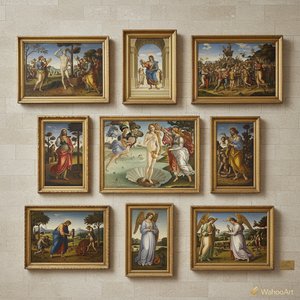
La visión luminosa de Domenico Veneziano
Domenico Veneziano, un nombre que resuena con el suave resplandor del Renacimiento temprano, sigue siendo uno de los enigmas más cautivadores del siglo XV. Nacido alrededor de 1410 en la vibrante atmósfera marítima de Venecia, el viaje de su vida lo llevaría finalmente a convertirse en una figura fundamental de la escuela florentina. Aunque gran parte de su biografía temprana permanece envuelta en las brumas de la historia, la brillantez de sus lienzos ofrece una ventana clara a un alma dedicada al dominio de la luz. Su evolución artística no fue simplemente una progresión personal, sino un movimiento transformador que tendió un puente entre la elegancia decorativa del estilo gótico internacional y la profunda claridad estructural del Renacimiento.
Los cimientos del genio de Veneziano se establecieron a través de una serie de encuentros prestigiosos con los maestros de su época. Su aprendizaje bajo el renombrado Gentile da Fabriano en Florencia, durante principios de la década de 1420, le permitió absorber el detalle intrincado y la gracia rítmica característicos de la tradición gótica tardía. Sin embargo, fue su exposición al floreciente enfoque científico de la perspectiva y la forma —defendido por figuras como Piero della Francesca— lo que verdaderamente encendió su espíritu creativo. Esta síntesis de la sensibilidad colorística veneciana y el rigor estructural florentino le permitió desarrollar un lenguaje visual único, uno donde la luz no solo ilumina una escena, sino que se convierte en un participante activo de la propia narrativa.
Un dominio de la luz y el color
Lo que distingue la obra de Domenico Veneziano de la de sus contemporáneos es su audaz y revolucionario enfoque del medio pictórico. Fue un pionero en el uso de paletas luminosas y delicadas que parecían respirar con una radiancia interna. En obras maestras como La Madonna y el Niño con Santos, se puede ser testigo de su espíritu experimental; su decisión de utilizar la pintura al óleo en una época en la que la temple era el estándar supuso una ruptura audaz con la convencia. Esta técnica permitió gradaciones tonales sutiles y efectos atmosféricos que capturaban la cualidad efímera de la luz al incidir sobre una superficie, creando una sensación de profundidad y aire sin precedentes.
Su capacidad para tejer la emoción espiritual en el tejido mismo de sus composiciones es quizás más evidente en obras como el Retablo de Santa Lucía. Aquí, las figuras no están simplemente pintadas; están bañadas por un resplandor celestial que suaviza sus contornos y las integra en un espacio armonioso y unificado. Este dominio de la perspectiva atmosférica —la forma en que la luz y el color cambian para sugerir la distancia— se convirtió en el sello distintivo de su estilo. Ya fuera representando la solemnidad de un icono religioso o la energía vibrante de la Adoración de los Magos, Veneziano poseía la rara habilidad de utilizar el color como una herramienta tanto para el realismo físico como para la profunda trascendencia espiritual.
Legado y el horizonte del Renacimiento
La influencia de Domenico Veneziano se extendió mucho más allá de su propia vida, dejando una huella indeleble en la trayectoria del arte italiano. Sus innovaciones en luz y color proporcionaron un plano vital para la siguiente generación de maestros. La claridad estructural que ayudó a establecer, combinada con su uso emotivo de la luminosidad, puede verse reflejada en las obras de gigantes posteriores como Andrea Mantegna, quien se inspiró en las sofisticadas disposiciones espaciales que Veneziano perfeccionó.
Aunque sus detalles biográficos siguen siendo escasos, su legado artístico está escrito en la brillantez perdurable de sus obras supervivientes. Se erige como un puente entre eras: un pintor que tomó la riqueza decorativa del pasado y la infundió con la luz científica y humanista del futuro. Estudiar a Veneziano es presenciar el momento en que el Renacimiento comenzó verdaderamente a brillar, transformando el lienzo de una superficie plana en una ventana de infinita y luminosa posibilidad.
Preguntas y respuestas
¿Cómo se divide la trayectoria de Domenico Veneziano en periodos?
Un recorrido cronológico por la obra de Domenico Veneziano está disponible en la página Trayectoria del artista, donde las obras se presentan en orden de creación, capítulo a capítulo.
¿Cuántas obras de Domenico Veneziano hay disponibles para explorar?
Puede explorar 27 obras obras de Domenico Veneziano en la página Todas las obras de arte.
¿Puedo ordenar las obras de Domenico Veneziano por color?
Las obras de Domenico Veneziano pueden explorarse por color en la página Índice de color del artista.