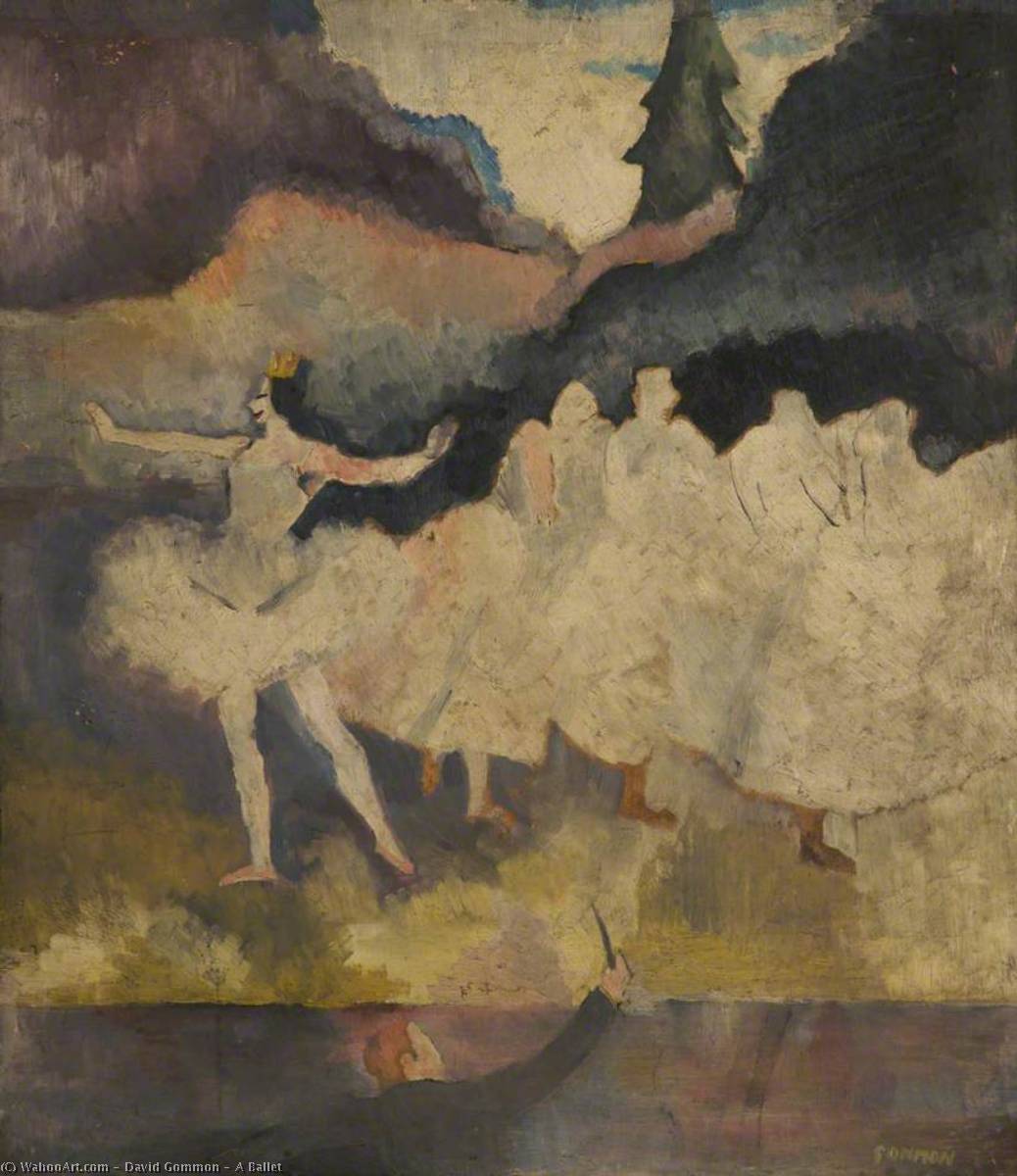
A Life Immersed in Landscape and Light: The World of David Gommon
David Gommon (1913–1987) stands as a singular figure within twentieth-century British art, an artist whose life unfolded in harmonious accord with the landscapes he so passionately rendered. Born in Battersea, London, on December 12th, 1913, into a working-class family, Gommon’s formative years instilled in him a deep appreciation for simplicity and observation – qualities that would permeate his artistic vision throughout his life. His father was a carpenter, grounding him in the tangible realities of craftmanship and shaping his understanding of materiality. From an early age, he demonstrated an innate fascination with art, enrolling at Battersea Polytechnic and Clapham School of Art at sixteen—institutions that nurtured his burgeoning talent and provided foundational knowledge for his future endeavors.
- Early Artistic Influences: Gommon’s formative years were profoundly impacted by exposure to the Old Masters during visits to galleries in Holland, where he studied the works of Rembrandt and Vermeer. This immersion instilled in him a meticulous attention to detail and an understanding of chiaroscuro—the dramatic interplay of light and shadow—techniques that would become hallmarks of his distinctive style.
- The Neo-Romantic Spirit: Like many artists of his time, Gommon embraced the neo-romantic movement, championed by poets such as Wordsworth and Coleridge. This aesthetic sensibility prioritized emotion, imagination, and a communion with nature—values that resonated deeply within him and informed his artistic explorations.
The Group of Twenty’s Embrace and Wertheim’s Patronage
Gommon’s artistic trajectory gained momentum through his association with the “Group of Twenty,” a collective of British artists who sought to forge a new path for modern art—a movement spearheaded by Christopher Wood, Barbara Hepworth, Roger Hilton, Robert Medley, David Burton and Victor Pasmore. This group fostered an atmosphere of experimentation and collaboration, encouraging artists to challenge conventions and explore uncharted territories. Crucially, Gommon’s artistic journey received invaluable support from Lucy Carrington Wertheim, a pioneering London gallerist who recognized his potential and became his lifelong patron. Wertheim’s generosity enabled him to pursue his ambitions without constraint, providing him with financial resources and fostering connections within the art world—a relationship that proved instrumental in shaping his career. Wertheim's gallery hosted Gommon's first solo exhibition in 1934, marking a pivotal moment of recognition and establishing him as an emerging talent on the British artistic scene.
- Wertheim’s Influence: Wertheim championed artists who dared to push boundaries—artists like Christopher Wood and Alfred Wallis—and her unwavering belief in Gommon’s vision propelled him forward, fostering connections within a vibrant circle of intellectuals and fellow creatives.
Painting Landscapes: Dorset and Beyond
Gommon’s artistic focus crystallized during his transformative encounter with Chesil Beach in Dorset—a coastal landscape that captivated him profoundly. Inspired by the sublime beauty of the sea and sky, he embarked on a series of paintings that captured not merely visual appearances but also the emotional essence of these places—a feat achieved through masterful use of color and simplified forms. His style blended realism with lyrical abstraction, reflecting his deep understanding of both observation and imagination. He sought to convey the feeling of wonderment and delight inherent in experiencing nature’s grandeur.
- The Dorset Landscape: Gommon's paintings of Chesil Beach exemplify his artistic philosophy—a commitment to capturing not just what is seen but also how it feels, imbued with a sense of poetic beauty.
Teaching and Legacy
Gommon’s dedication extended beyond the easel; he served as an art teacher at Northampton Grammar School for several decades—a role that nurtured young artistic minds and solidified his belief in the transformative power of education. He skillfully employed reproductions of celebrated paintings to illuminate his lessons, fostering a love of art among his students and demonstrating his commitment to disseminating knowledge about visual culture. Furthermore, he designed sets for school theatrical productions, blending artistic creativity with practical engagement—a testament to his holistic approach to artistic development. His influence resonated throughout the British art world, inspiring subsequent generations of artists and contributing to the preservation of a distinctive aesthetic tradition. David Gommon’s legacy resides in his ability to find beauty in the everyday, to reveal the hidden poetry of the natural world, and to remind us of the enduring power of art to enrich our lives. His paintings continue to inspire contemplation and admiration, securing his place as one of Britain's most cherished landscape artists.
Recognition and Critical Acclaim
Ian Mayes’ insightful review of Gommon’s 1975 exhibition at St Catharine’s College, Cambridge—characterized by its profound appreciation for the artist’s work—underscored his artistic merit and cemented his reputation as a visionary painter. Mayes eloquently captured the essence of Gommon’s oeuvre, praising its “sense of joy in life” and its capacity to convey “wonderment and delight in nature.” David Gommon passed away peacefully in 1987, leaving behind a body of work that continues to resonate with viewers today—a testament to his unwavering devotion to artistic expression and his enduring contribution to British art history.


 Galería de Arte y Museo de Salford
 Towner Eastbourne