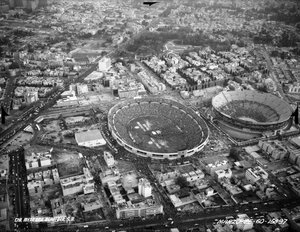
Compañía Mexicana Aerofoto: Chronicling Mexico's Landscape Through Aerial Photography
Compañía Mexicana Aerofoto, S.A., a name synonymous with meticulous documentation of Mexican territory from the 1930s to 1989, stands as an unparalleled archive of visual history. Founded in Mexico City by Luis struck, this pioneering company embarked on a mission to capture the essence of Mexico’s geography and urban development through the lens of aviation—a revolutionary approach for its time. More than just taking pictures; Aerofoto undertook a monumental task: assembling nearly one million images spanning 1.2 million square kilometers across Latin America.
The legacy of Compañía Mexicana Aerofoto resides in its extraordinary collection, representing an astonishing breadth of subjects. Primarily focused on panoramic views of lakes and lagoons—including Mexico’s majestic Chapala Lake and Guerrero Lagoon—the archive meticulously charted river basins like Río Balsas and Río Lerma, explored forested areas encompassing Sierra Madre Occidental and Sierra Madre Oriental, mapped dam projects reshaping the landscape, documented irrigation districts vital to agricultural productivity, and painstakingly recorded urban centers such as Mexico City and Guadalajara. Furthermore, Aerofoto’s involvement extended beyond simple observation; it collaborated extensively in topographic surveys across Colombia, Dominican Republic, Panama, Peru, and Honduras, utilizing its expertise to advance scientific understanding of these regions.
Aerofoto's contribution wasn't merely about recording locations; it was about transforming them into detailed geospatial datasets. Employing aerofotogrammetry—the science of reconstructing terrain from aerial photographs—the company conducted comprehensive cadastral surveys, providing invaluable information for land management and planning. As satellite imagery gained prominence in the late 1980s, Aerofoto gracefully transitioned to this newer technology, marking a pivotal moment in the evolution of mapping and visual representation.
- Key Achievements: The creation of an unprecedented photographic archive covering vast stretches of Mexico and Latin America.
- Technique: Pioneering aerofotogrammetry and cadastral surveying techniques.
- Collaboration: Extensive partnerships with governments and scientific institutions across multiple countries.
Luis struck’s vision for Compañía Mexicana Aerofoto stemmed from a fascination with the possibilities offered by aviation—a burgeoning field in the early 20th century. The company drew inspiration from advancements in photographic technology, mirroring developments occurring globally during this period. Moreover, Aerofoto's work coincided with broader societal shifts toward scientific observation and mapping, reflecting the growing importance of geospatial data for economic planning and resource management.
The meticulousness of Compañía Mexicana Aerofoto’s work speaks volumes about its dedication to preserving Mexico’s heritage. Its archive serves as an invaluable resource for historians, geographers, ecologists, and anyone interested in understanding Mexico’s past and present. The company’s pioneering use of aerial photography established a benchmark for future endeavors in visual documentation, cementing Compañía Mexicana Aerofoto’s place as one of the most significant contributors to Mexican cultural heritage.
Its photographic output—primarily breathtaking vistas of lakes and lagoons—became emblematic of a particular aesthetic: an unwavering commitment to accuracy combined with artistic sensitivity. Each image captured not only the physical topography but also conveyed a palpable sense of place, transporting viewers back in time to experience Mexico’s landscapes as they appeared during the mid-century era. The archive continues to be studied by researchers examining environmental change and urban development trends. Compañía Mexicana Aerofoto's enduring influence can be seen in subsequent geospatial projects—a testament to its foundational role in shaping our understanding of Mexico’s visual history.