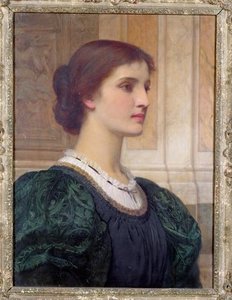
Retrato de Charles Edward Perugini

Las 15 pinturas más famosas de Charles Edward Perugini, cada una única en su clase

Actualizado noviembre 2026 · clasificado según nuestro índice de popularidad (búsquedas, visitas y pedidos de cada obra) · 15 obras de Charles Edward Perugini en nuestro catálogo

En resumen

En el invernadero es la pintura de Charles Edward Perugini que más llama la atención. Después, la mirada se dirige a Conozco a una doncella hermosa de ver y John Forster (1887). De las 15 obras de Charles Edward Perugini en nuestro catálogo, estas 15 son las más famosas; cada una es un original único presentado con su año, su museo y la razón de su trascendencia.

1839 – 1918, Nápoles Más obras: Minneapolis Institute of Art

Las 10 mejores pinturas de Charles Edward Perugini, bajo la mirada de la galería

1
En el invernadero de Charles Edward Perugini

En el invernadero

Óleo sobre lienzo

La obra al óleo sobre lienzo titulada En el invernadero fue creada por el pintor inglés de origen italiano Charles Edward Perugini. Esta pieza específica forma parte de la colección de las Manchester City Art Galleries. La pintura, que data de aproximadamente 1878, representa a una única figura femenina en un entorno botánico controlado.

2
Conozco a una doncella hermosa de ver de Charles Edward Perugini

Conozco a una doncella hermosa de ver

Óleo · Minneapolis Institute of Art, Minneapolis

En este retrato íntimo, nos sentimos atraídos hacia el espacio silencioso y contemplativo de una mujer joven. Ella es capturada en un momento de quietud, con su tez pálida y su cabello pelirrojo captando la luz contra un profundo y oscuro fondo. Existe un cierto peso en su expresión, una sensación de mirar hacia algo invisible que sugiere una narrativa más allá del marco. Viste el elegante atuendo del siglo…

3
John Forster (1887) de Charles Edward Perugini

John Forster

1887 · Óleo sobre lienzo

En este retrato formal de tres cuartos realizado por Charles Edward Perugini, el sujeto, John Forster, se presenta con un ligero giro hacia su derecha. Su mirada se dirige hacia la izquierda del espectador, creando una sensación de compromiso silencioso. La composición es central, centrando la atención en la presencia digna del hombre mayor sobre un fondo oscuro e indistinto. Viste un atuendo formal de la época victoriana, que consiste…

Pinturas famosas de Charles Edward Perugini, de la número 11 a la 15

Los temas que cautivaron la mirada de Charles Edward Perugini

Los cuatro temas que se repiten con más frecuencia en estas obras originales, cada uno con su mejor ejemplo.

Los museos que conservan los originales de Charles Edward Perugini

El museo que alberga la mayor parte de las obras de esta página.

Museos Ciudad Obras de Charles Edward Perugini Pinturas de esta lista
Minneapolis Institute of Art, MinneapolisMinneapolis Institute of Art Minneapolis 1 Conozco a una doncella hermosa de ver

Charles Edward Perugini a través de los años: los originales únicos de cada uno

Todos los originales de Charles Edward Perugini fechados que se muestran aquí pertenecen a un mismo año, 1887: aparecen en orden de fama.

Obras por año

Selecciona un año para ver sus originales.

Pinturas de Charles Edward Perugini: preguntas para la galería

¿Cuál es la obra más famosa de Charles Edward Perugini?Descubre la respuesta

En el invernadero. A continuación, Conozco a una doncella hermosa de ver y John Forster (1887).

¿Cuáles son las diez pinturas más famosas de Charles Edward Perugini?Descubre la respuesta

En el invernadero, Conozco a una doncella hermosa de ver, John Forster, Between School Hours, The Hop Picker, Lovers in a Garden, Portrait Of Kate Dickens, Portrait of a Woman, A Summer Shower y Girl Reading -. La clasificación anterior indica el año y el museo de cada una.

¿Cuántas obras de Charles Edward Perugini se conocen?Descubre la respuesta

Nuestro catálogo cuenta con 15 obras de Charles Edward Perugini.

¿Dónde se pueden ver los originales más famosos de Charles Edward Perugini?Descubre la respuesta

Principalmente en Minneapolis Institute of Art (Minneapolis). La tabla de museos arriba los enumera todos.

¿Qué temas prefería Charles Edward Perugini?Descubre la respuesta

Mujer (2), Libro (2) y Portraits (2), en las 15 obras de esta página.

¿Con qué materiales pintó más Charles Edward Perugini?Descubre la respuesta

Óleo sobre lienzo, para 2 de las 15 obras de esta página.

Charles Edward Perugini: un retrato del artista

Early Life and Training

Charles Edward Perugini, originally Carlo Perugini, was born in Naples, Italy (1839) during a brief visit by his Italian parents, who had for many years previously resided in England. He received his artistic training primarily in Italy under Giuseppe Bonolis and Giuseppe Mancinelli, institutions known for their rigorous academic standards. These formative years instilled in him a profound understanding of classical art principles—elegance, purity, and correctness of draughtsmanship—qualities that would permeate his entire oeuvre. Simultaneously, he honed his skills in Paris under the tutelage of Ary Scheffer, a prominent figure in Impressionism and a respected mentor who fostered Perugini’s artistic vision. Scheffer's studio provided an environment conducive to experimentation and innovation, shaping Perugini’s approach to painting.

Artistic Career and Notable Works

Perugini’s artistic career gained considerable momentum thanks to Lord Leighton, who recognized his talent and invited him back to England in 1863. Leighton’s influence proved pivotal, guiding Perugini toward a more commercially viable path while simultaneously nurturing his aesthetic sensibilities. Initially focused on classical subjects—a stylistic choice reflecting the prevailing tastes of the era—Perugini swiftly transitioned into portraiture and depictions of women and children, genres that resonated with Victorian audiences. One of Perugini’s most celebrated achievements is undoubtedly “A Girl Reading” (1878), now housed in the Manchester Art Gallery. This masterpiece exemplifies Perugini's mastery of capturing psychological nuance—a hallmark of his artistic style—and embodies the Romantic ideal of portraying inner emotion through visual representation. Another noteworthy piece, Perugini’s portrait of Sophie Gray, initially mistaken for a work by Sir John Everett Millais, underscores the enduring fascination with Pre-Raphaelite aesthetics and demonstrates Perugini's ability to evoke atmosphere and emotion.

Influences and Artistic Style

Perugini’s artistic style was deeply rooted in the traditions of Raphael and Carlo Dolci—artists revered for their harmonious blend of elegance and technical precision. He meticulously studied these masters, absorbing their techniques and stylistic conventions. This dedication to scholarship informed his approach to painting, resulting in works characterized by exceptional draughtsmanship, refined color palettes, and a palpable sense of tranquility. His canvases often depict serene landscapes or intimate domestic scenes—subjects that reflect the Victorian preoccupation with beauty and moral contemplation.

Personal Life and Legacy

In 1874, Perugini married Kate Dickens, the youngest daughter of novelist Charles Dickens, forging a connection that extended beyond artistic collaboration. Their marriage symbolized the intersection of art and literature—a defining feature of Victorian society—and fostered an environment conducive to intellectual discourse and creative inspiration. Perugini’s active participation in artistic circles cemented his reputation as a respected figure within the Victorian art world. He died peacefully in London on December 22, 1918, leaving behind a legacy of captivating paintings that continue to inspire admiration for their beauty and psychological depth. His work remains an enduring testament to the Romantic spirit—a celebration of emotion, imagination, and artistic excellence.