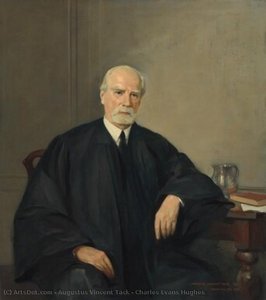
Retrato de Augustus Vincent Tack

Las 72 pinturas más famosas de Augustus Vincent Tack, una selección de la galería

Actualizado noviembre 2026 · clasificado según nuestro índice de popularidad (búsquedas, visitas y pedidos de cada obra) · 76 obras de Augustus Vincent Tack en nuestro catálogo

En resumen

De todos los originales que dejó Augustus Vincent Tack, la más famosa es Autorretrato (1897), que forma parte de la colección del The Phillips Collection, Washington, D.C.. Le siguen muy de cerca Mountain Slopes (1914) y Elihu Root (1922). Nuestro catálogo cuenta con 76 obras de Augustus Vincent Tack; la galería ha conservado las 72 que el mundo más admira, cada una presentada con su fecha, su museo y su historia.

1870 – 1949, Pittsburgh Más obras: The Phillips Collection

Las 10 mejores pinturas de Augustus Vincent Tack: la elección de la galería

1
Autorretrato (1897) de Augustus Vincent Tack

Autorretrato

1897 · Fotografía · The Phillips Collection, Washington, D.C.

Autorretrato presenta una vista simétrica de una entrada con portón que conduce hacia una estructura de una sola planta. Un camino pavimentado ocupa el primer plano, cuya textura de grava gris guía la mirada a través de puertas de metal negro. La perspectiva se define por las líneas paralelas del sendero y la verticalidad de los árboles circundantes. Una exuberante vegetación y densos doseles enmarcan la escena, mientras que los…

2
Mountain Slopes (1914) de Augustus Vincent Tack

Mountain Slopes

1914 · Photography · The Phillips Collection, Washington, D.C.

The painting titled Mountain Slopes was created by the American painter Augustus Vincent Tack. This specific work was executed about 1914. It offers a glimpse into the early development of an artist who would eventually become a significant figure in American art history.

3
Elihu Root (1922) de Augustus Vincent Tack

Elihu Root

1922 · Oil On Canvas · National Portrait Gallery, Washington, D.C.

The portrait depicts an older man seated in a dark suit against a muted brown background. He is positioned centrally, his posture creating a strong vertical line within the frame. The subject wears a formal dark jacket and a white shirt, with the fabric of his clothing rendered through visible brushstrokes that suggest a textured surface. His face is oval-shaped, illuminated by a directional light source originating from above and…

4
Rosa Mystica (1923) de Augustus Vincent Tack

Rosa Mystica

1923 · Oil · Cleveland Museum of Art, Cleveland

In Rosa Mystica, Augustus Vincent Tack organizes the pictorial space through a hierarchical perspective that separates the celestial from the mortal. The composition centers on a divine female figure, likely the Virgin Mary, who floats within a luminous blue mandorla. She is positioned in a higher plane above the earthly realm, surrounded by a sky of fragmented, pale clouds. Her arms are outstretched in a gesture of grace, draped in…

5
Benjamin Nathan Cardozo (1931) de Augustus Vincent Tack

Benjamin Nathan Cardozo

1931 · Oil On Canvas

In this formal portrait, Augustus Vincent Tack presents Benjamin Nathan Cardozo in a moment of quiet, judicial dignity. Painted about 1931, the work captures the subject in his capacity as a judge, a role that informs the entire gravity of the piece. There is a certain stillness here, a sense of the weight of responsibility that accompanies such a position. Tack avoids the superficiality of a mere likeness, focusing instead…

6
John Munro Woolsey (1934) de Augustus Vincent Tack

John Munro Woolsey

1934 · Oil · Sociedad Histórica de Nueva York, Nueva York

This oil portrait by Augustus Vincent Tack depicts John Munro Woolsey, a United States district judge. Painted about 1934, the work presents the subject in a formal setting that emphasizes his professional status. The composition focuses on the man seated behind a wooden desk, positioned in a medium close-up view that establishes a direct presence before the viewer.

7
Charles Evans Hughes (1941) de Augustus Vincent Tack

Charles Evans Hughes

1941 · Oil On Canvas

This formal portrait of Charles Evans Hughes, executed by Augustus Vincent Tack, offers a quiet moment of reflection. Painted about 1941, the work captures the subject in a setting that suggests a private study or a professional office. There is a sense of stillness here, as if we have interrupted a moment of deep thought. The composition places Hughes at the center of the viewer's attention, establishing a presence that…

8
Harry S. Truman (1948) de Augustus Vincent Tack

Harry S. Truman

1948 · Oil On Canvas

In this formal portrait of Harry S. Truman, Augustus Vincent Tack captures the subject in a half-length composition that centers the viewer's attention on the man's face and upper body. The figure sits slightly off-center to the right, creating a subtle tension within the frame. A strong light source emerges from the upper left, casting deep shadows that define the contours of the face and the heavy folds of the…

9
Harlan F. Stone (1944) de Augustus Vincent Tack

Harlan F. Stone

1944 · Oil On Canvas

In this formal portrait, Augustus Vincent Tack presents Harlan F. Stone in a moment of quiet, seated dignity. Painted in 1944, the work captures the subject in a three-quarter view, a composition that emphasizes his presence and the weight of his position. There is a certain stillness to the figure, which is likely intended to reflect Stone's role as Chief Justice of the United States Supreme Court. The subject's expression…

10
The High Command Right Panel (1949) de Augustus Vincent Tack

The High Command Right Panel

1949 · Oil On Canvas · National Portrait Gallery, Washington, D.C.

The High Command Right Panel is a work by Augustus Vincent Tack, executed in 1949. The painting captures two men seated within the quiet confines of an office setting. Their presence is anchored by the weight of their surroundings, suggesting a moment of professional stillness. The subject matter centers on naval officers or individuals tied to maritime affairs, a theme reflected in the nautical elements that populate the scene.

La selección de Augustus Vincent Tack continúa, de 11 a 72

11Getsemaní de Augustus Vincent TackGetsemaníThe Phillips Collection 12Canyon de Augustus Vincent TackCanyonThe Phillips Collection 13Rising Wind and Tide (1905) de Augustus Vincent TackRising Wind and Tide1905 · Museo Público de Reading 14Windswept (Snow Picture, Leyden) de Augustus Vincent TackWindswept (Snow Picture, Leyden)The Phillips Collection 15Passacaglia de Augustus Vincent TackPassacagliaThe Phillips Collection 16Ideal Figure in Rose de Augustus Vincent TackIdeal Figure in RoseThe Phillips Collection 17Court of Romance (Garden of Romance) de Augustus Vincent TackCourt of Romance (Garden of Romance)The Phillips Collection 18Allegro Giocoso de Augustus Vincent TackAllegro GiocosoThe Phillips Collection 19Canyon (The Valley) (1914) de Augustus Vincent TackCanyon (The Valley)1914 · The Phillips Collection 20The Entombment (1922) de Augustus Vincent TackThe Entombment1922 · The Phillips Collection 21Spring Night (1931) de Augustus Vincent TackSpring Night1931 · The Phillips Collection 22Outposts of Time II (1929) de Augustus Vincent TackOutposts of Time II1929 · The Phillips Collection 23Liberation (1929) de Augustus Vincent TackLiberation1929 · The Phillips Collection 24Flight (Fugue) (1930) de Augustus Vincent TackFlight (Fugue)1930 · The Phillips Collection 25Far Reaches (1930) de Augustus Vincent TackFar Reaches1930 · The Phillips Collection 26Ecstasy (1929) de Augustus Vincent TackEcstasy1929 · The Phillips Collection 27Christmas Night (1931) de Augustus Vincent TackChristmas Night1931 · The Phillips Collection 28Balance (1929) de Augustus Vincent TackBalance1929 · The Phillips Collection 29Night, Amargosa Desert (1935) de Augustus Vincent TackNight, Amargosa Desert1935 · The Phillips Collection 30Reverend Cornelius Clifford (1937) de Augustus Vincent TackReverend Cornelius Clifford1937 · Campion Hall 31The High Command Left Panel (1949) de Augustus Vincent TackThe High Command Left Panel1949 · National Portrait Gallery 32Truman and his Military Advisors (1949) de Augustus Vincent TackTruman and his Military Advisors1949 · National Portrait Gallery 33Dwight D. Eisenhower (1949) de Augustus Vincent TackDwight D. Eisenhower1949 34Winter (1934) de Augustus Vincent TackWinter1934 · The Phillips Collection 35John La Farge (1897) de Augustus Vincent TackJohn La Farge1897 · Metropolitan Museum of Art 36La voz de las muchas aguas de Augustus Vincent TackLa voz de las muchas aguasThe Phillips Collection 37Nubes nocturnas y polvo de estrellas de Augustus Vincent TackNubes nocturnas y polvo de estrellasMetropolitan Museum of Art 38Study for Mr. Winthrop's Portrait de Augustus Vincent TackStudy for Mr. Winthrop's PortraitThe Phillips Collection 39Self-Portrait de Augustus Vincent TackSelf-PortraitThe Phillips Collection 40Self-Portrait de Augustus Vincent TackSelf-PortraitThe Phillips Collection 41Sea of Hills de Augustus Vincent TackSea of HillsThe Phillips Collection 42Sketch for Portrait of Nicholas Murray Butler de Augustus Vincent TackSketch for Portrait of Nicholas Murray ButlerThe Phillips Collection 43Portrait of Nicholas Murray Butler de Augustus Vincent TackPortrait of Nicholas Murray ButlerThe Phillips Collection 44Portrait of Man with Dog de Augustus Vincent TackPortrait of Man with DogThe Phillips Collection 45Elizabeth Hudson de Augustus Vincent TackElizabeth HudsonThe Phillips Collection 46Palace of Enchantment de Augustus Vincent TackPalace of EnchantmentThe Phillips Collection 47Ox Cart de Augustus Vincent TackOx CartThe Phillips Collection 48Winter (New York in Snow) de Augustus Vincent TackWinter (New York in Snow)The Phillips Collection 49Allegory - Love and Life (Mother and Child) de Augustus Vincent TackAllegory - Love and Life (Mother and Child)The Phillips Collection 50Magi's Journey de Augustus Vincent TackMagi's JourneyThe Phillips Collection 51Largo de Augustus Vincent TackLargoThe Phillips Collection 52Hill and Sky (Hilltop?) de Augustus Vincent TackHill and Sky (Hilltop?)The Phillips Collection 53Head of Model, Profile de Augustus Vincent TackHead of Model, ProfileThe Phillips Collection 54The Glacier de Augustus Vincent TackThe GlacierThe Phillips Collection 55Forgotten Poem de Augustus Vincent TackForgotten PoemThe Phillips Collection 56Figure in Red with Beads de Augustus Vincent TackFigure in Red with BeadsThe Phillips Collection 57Evening de Augustus Vincent TackEveningThe Phillips Collection 58Deerfield in Twilight (The Dance) de Augustus Vincent TackDeerfield in Twilight (The Dance)The Phillips Collection 59Study of Sister Death for Death of St. Francis de Augustus Vincent TackStudy of Sister Death for Death of St. FrancisThe Phillips Collection 60Death of St. Francis de Augustus Vincent TackDeath of St. FrancisThe Phillips Collection 61Daybreak de Augustus Vincent TackDaybreakThe Phillips Collection 62Dawn de Augustus Vincent TackDawnThe Phillips Collection 63The Crowd de Augustus Vincent TackThe CrowdThe Phillips Collection 64Cloud Wrack de Augustus Vincent TackCloud WrackThe Phillips Collection 65Christ Bearing the Cross de Augustus Vincent TackChrist Bearing the CrossThe Phillips Collection 66Blue Oval de Augustus Vincent TackBlue OvalThe Phillips Collection 67Twilight de Augustus Vincent TackTwilightThe Phillips Collection 68Above the Treetops de Augustus Vincent TackAbove the TreetopsThe Phillips Collection 69David E. Finley de Augustus Vincent TackDavid E. Finley 70John Russell Pope de Augustus Vincent TackJohn Russell Pope 71Gran patio de Augustus Vincent TackGran patioThe Phillips Collection 72Madonna de las colinas eternas de Augustus Vincent TackMadonna de las colinas eternasThe Phillips Collection

Los temas que cautivaron la mirada de Augustus Vincent Tack

Los cuatro temas que se repiten con más frecuencia en estas obras originales, cada uno con su mejor ejemplo.

Los museos que conservan los originales de Augustus Vincent Tack

Los 7 museos que albergan la mayoría de las pinturas de esta página.

Museos Ciudad Obras de Augustus Vincent Tack Pinturas de esta lista
The Phillips Collection, Washington, D.C.The Phillips Collection Washington, D.C. 55 Autorretrato, Mountain Slopes, Getsemaní
National Portrait Gallery, Washington, D.C.National Portrait Gallery Washington, D.C. 4 Elihu Root, The High Command Right Panel, The High Command Left Panel
Metropolitan Museum of Art, Nueva YorkMetropolitan Museum of Art Nueva York 2 John La Farge, Nubes nocturnas y polvo de estrellas
Cleveland Museum of Art, ClevelandCleveland Museum of Art Cleveland 1 Rosa Mystica
Sociedad Histórica de Nueva York, Nueva YorkSociedad Histórica de Nueva York Nueva York 1 John Munro Woolsey
Museo Público de Reading, ReadingMuseo Público de Reading Reading 1 Rising Wind and Tide
Campion Hall, OxfordCampion Hall Oxford 1 Reverend Cornelius Clifford

Augustus Vincent Tack década tras década: la obra original que define cada una

Obras por década

Elige una década para ver la obra original que la define.

Preguntas de coleccionistas sobre las pinturas de Augustus Vincent Tack

¿Por qué obra es más famoso/a Augustus Vincent Tack?Descubre la respuesta

Autorretrato (1897), The Phillips Collection, Washington, D.C.. A Mountain Slopes (1914) y Elihu Root (1922) le siguen.

¿Qué edad tenía Augustus Vincent Tack cuando se creó Autorretrato?Descubre la respuesta

27 años: Autorretrato data de 1897, y Augustus Vincent Tack nació en 1870.

¿Cuáles son las diez pinturas más famosas de Augustus Vincent Tack?Descubre la respuesta

Autorretrato, Mountain Slopes, Elihu Root, Rosa Mystica, Benjamin Nathan Cardozo, John Munro Woolsey, Charles Evans Hughes, Harry S. Truman, Harlan F. Stone y The High Command Right Panel. La clasificación anterior indica el año y el museo de cada una.

¿Cuántas pinturas dejó Augustus Vincent Tack?Descubre la respuesta

Nuestro catálogo cuenta con 76 obras de Augustus Vincent Tack, datadas desde 1897 hasta 1949.

¿En qué museos se exhiben las obras maestras de Augustus Vincent Tack?Descubre la respuesta

Principalmente en The Phillips Collection (Washington, D.C.), National Portrait Gallery (Washington, D.C.) y Metropolitan Museum of Art (Nueva York). La tabla de museos arriba los enumera todos.

¿En qué años pintó Augustus Vincent Tack sus obras más famosas?Descubre la respuesta

En 1930s: 9 de las 72 obras de esta página se realizaron entonces, Benjamin Nathan Cardozo de ellas.

¿Cuáles son las primeras y las últimas obras originales de Augustus Vincent Tack?Descubre la respuesta

En esta página, la más antigua es Autorretrato (1897) y la más reciente The High Command Right Panel (1949).

¿Qué temas eligió Augustus Vincent Tack con mayor frecuencia?Descubre la respuesta

Man (4), Árboles (3) y Portraiture (3), en las 72 obras de esta página.

¿Qué técnica utilizó más Augustus Vincent Tack?Descubre la respuesta

Oil On Canvas, para 6 de las 72 obras de esta página.

¿Qué obras de Augustus Vincent Tack se exhiben en el The Phillips Collection?Descubre la respuesta

Autorretrato, Mountain Slopes y Getsemaní: el The Phillips Collection, Washington, D.C. posee 55 de las obras de esta página.

Augustus Vincent Tack: vida y obra

Augustus Vincent Tack: Pionero del Paisaje Espiritual

Augustus Vincent Tack (1870 – 1949) se erige como una figura singular en la historia del arte estadounidense, reconocido primordialmente por su distintiva mezcla de realismo y abstracción, un enfoque estilístico que presagió el floreciente movimiento del Expresionismo Abstracto. Nacido en Pittsburgh, Pensilvania, la trayectoria artística de Tack comenzó con una formación académica en el St. Francis Xavier College antes de perfeccionar sus habilidades en la Art Students League de Nueva York, donde absorbiya las influencias de luminarias como John La Farge, cuyo estudio frecuentaba. Este periodo formativo estableció los cimientos para sus exploraciones posteriores en la pintura de paisaje y, fundamentalmente, hacia representaciones profundamente simbólicas de la naturaleza, una preocupación que definiría gran parte de su obra.
  • Inicios y de Influencias: La exposición debut de Tack en las Kraushaar Galleries en 1896 marcó el comienzo de una prolífica carrera artística caracterizada por un compromiso constante con instituciones prominentes como el Worcester Art Museum, las Carnegie International Exhibitions y la Pennsylvania Academy of Fine Arts. Sus colaboraciones con Duncan Phillips —particularmente su participación en el Allied War Salon de 1918— demostraron no solo sus conexiones sociales, sino también su compromiso de abordar preocupaciones sociales apremiantes a través de la expresión artística.
  • La Colonia de Deerfield y su Matrimonio: En busca de inspiración y camaradería, Tack se trasladó a Deerfield, Massachusetts, donde estableció una colonia de artistas y contrajo matrimonio con Agnes Gordon Fuller, hija del renombrado pintor George Fuller. Esta unión fomentó un entorno de apoyo propicio para las búsqueda creativas y consolidó su posición dentro de la comunidad artística.
  • Docencia y la Universidad de Yale: El papel pedagógico de Tack se extendió más allá de Deerfield; impartió conferencias en la Art Students League de Nueva York entre 1906 y 1910, y posteriormente enseñó en la Universidad de Yale de 1910 a 1913, transmitiendo su visión artística a una nueva generación de artistas.

Un Estilo Distintivo: Realismo Infundido con Misticismo

El estilo artístico de Tack se distinguió por un equilibrio cuidadoso entre el realismo tradicional y una abstracción evocadora. Mientras que sus retratos se adherían a las convenciones académicas —capturando semejanzas con un detalle meticuloso y una iluminación dramática—, sus paisajes trascendían la mera descripción para adentrarse en reinos de contemplación espiritual. Pinturas como “Time and Timelessness” ejemplifican este enfoque, yuxtaponiendo formas geométricas con elementos figurativos para transmitir una sensación de belleza perdurable y un profundo simbolismo. La crítica señaló que la obra de Tack "era una reinterpretación contemporánea del idealismo heroico del siglo XIX", resaltando su ambición de elevar al espectador más allá de lo mundano.
  • Obras Notables: Entre sus piezas más celebradas se encuentran “The High Command Right Panel” (19449), que retrata a oficiales navales con un realismo magistral y complejidad compositiva; los retratos de Harry S. Truman y Elihu Root —ejecutados en 1948 y 1922 respectivamente—, que demuestran la capacidad de Tack para transmitir carácter y emoción mediante una pincelada matizada; y “Time and Timelessness”, una obra maestra del paisaje que refleja su fascinación por los temas espirituales.

Legado y Reconocimiento

A pesar de los reveses comerciales, el legado artístico de Tack persiste como un precursor del Expresionismo Abstracto, un movimiento que remodelaría el panorama del arte estadounidense en las décadas posteriores a su muerte. Sus pinturas permanecen resguardadas en importantes colecciones y continúan inspirando tanto a artistas como a académicos. La contribución de Augustus Vincent Tack al arte estadounidense no reside meramente en sus innovaciones estilísticas, sino también en su inquebrantable búsqueda de la verdad artística: un testimonio del poder perdurable de la imaginación y la visión.