Antonin Marie Moine: A Sculptor Haunted by Beauty and Tragedy
Antonin Marie Moine (1796 – 1849) stands as a poignant figure in the Romantic landscape of French sculpture. Born in Saint-Étienne, he embarked on an artistic journey initially focused on painting landscapes—a genre deeply rooted in the fascination with nature prevalent during his era—before gravitating towards sculpting, where he achieved considerable renown and left an indelible mark on Parisian public art.His formative years were spent studying under Pierre Révoil in Lyon, absorbing the stylistic principles of École Lyonnaise de Beaux-Arts. This influential training instilled in him a meticulous attention to detail and an appreciation for classical forms—elements that would profoundly shape his subsequent artistic endeavors.
- Salon Exhibitions & Recognition: Moine’s debut at the Salon in 1833 garnered considerable acclaim, particularly for his portrait of Queen Mary—a piece celebrated for its expressive realism and masterful handling of drapery. This success propelled him into the spotlight and established him as a rising talent within the Parisian artistic community.
Moine’s most significant contribution to French art history lies in his involvement with the ambitious project to embellish Place de la Concorde. Alongside Louis-Parfait Merlieux and Jean-Jacques Elshecht, he spearheaded the creation of sculptures for the Fontaine des Mers and Fontana dei Quattro Fiumi—a monumental undertaking commissioned by the mairie de Paris. Architect Jacques-Ignace Hittorff oversaw the overall design, cementing Moine’s reputation as a sculptor capable of tackling grand artistic challenges.
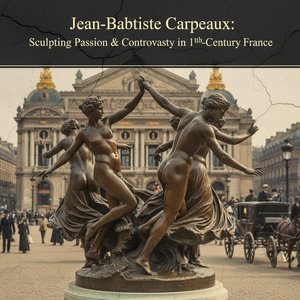
- The Néréides of Place de la Concorde: Moine's sculptural prowess shone brightest during the creation of the three néréides adorning each fountain. These figures—inspired by classical mythology—were meticulously crafted to embody grace and serenity, reflecting the ideals of Romantic aesthetics. The collaborative effort ensured that the fountains became enduring symbols of Parisian grandeur and artistic innovation.
Despite his professional accomplishments, Moine’s life was tragically cut short in 1849 due to suicide—a perplexing event shrouded in speculation and fueled by personal struggles. However, his artistic legacy persists through the enduring beauty of his sculptures and the poignant portrait commissioned by Queen Mary, which continues to captivate viewers at the Musée national des châteaux de Versailles et de Trianon.
Moine’s work exemplifies the Romantic preoccupation with emotion and idealism, skillfully blending classical influences with expressive dynamism. His sculptures serve as powerful reminders of both artistic brilliance and human vulnerability—a duality that elevates him beyond mere craftsman to a figure worthy of enduring admiration.