Un polímata del Renacimiento florentino: El mundo de Andrea del Verrocchio
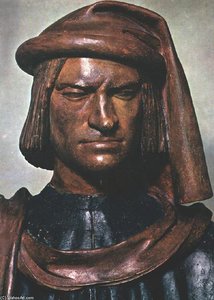
Andrea di Michele di Francesco de' Cioni, conocido en la historia como Andrea del Verrocchio, ocupa una posición fundamental en el Renacimiento italiano. Nacido en Florencia alrededor de 1435, su vida coincidió con un periodo de extraordinario fermento artístico e intelectual. Aunque hoy es celebrado por sus esculturas —particularmente por la monumental estatua ecuestre de Bartolomeo Colleoni—, Verrocchio fue mucho más que un simple escultor; fue pintor, orfebre y, crucialmente, un maestro artesano que dirigió uno de los talleres más influyentes de Florencia. Este taller sirvió como un crisol donde se forjó el talento artístico, nutriendo de manera notable el genio de Leonardo da Vinci. La formación temprana de Verrocchio permanece envuelta en cierto misterio, aunque sus antecedentes familiares sugieren una base inicial en la orfebrería, un oficio profundamente arraigado en las tradiciones artesanales florentinas. Existen conjeturas sobre aprendizajes bajo maestros como Donatello o Fra Filippo Lippi, pero las pruebas concretas son esquivas. Independientemente de sus experiencias formativas precisas, Verrocchio demostró rápidamente una aptitud extraordinaria tanto para la escultura como para la pintura, sentando las bases de una carrera que tendería un puente entre las convenciones artísticas medievales y la floreciente estética del Alto Renacimiento.De orfebre a escultor: Una estrella ascendente en Florencia
El ascenso de Verrocchio dentro del mundo del arte florentino fue impulsado por su habilidad excepcional y el mecenazgo de familias poderosas, principalmente los Médici. Sus primeras obras revelan un dominio creciente de la forma y una ambición cada vez mayor por abordar temas complejos. El Putto con un delfín, por ejemplo, muestra su capacidad para capturar el movimiento y la emoción en el bronce, cualidades que se convertirían en sellos distintivo de su estilo. Sin embargo, fue a través de encargos de mayor escala donde Verrocchio consolidó verdaderamente su reputación. No se limitaba a ejecutar diseños; supervisaba un taller entero, coordinando los esfuerzos de sus ayudantes mientras mantenía un nivel de calidad consistentemente alto. Esta destreza organizativa, combinada con su visión artística, le permitió emprender proyectos ambiciosos como el David, una escultura de mármol que refleja una influencia clásica pero posee una gracia juvenil distinta a las representaciones anteriores del héroe bíblico. La estatua ecuestre de Bartolomeo Colleoni, encargada para Venecia y completada tras su muerte en 1488, se erige como la obra maestra indiscutible de Verrocchio. Este colosal monumento de bronce encarna los ideales renacentistas de virtud cívica y destreza militar, demostrando una precisión anatómica sin parangón y una composición dinámica que captura la energía y el poder tanto del caballo como del jinete. Sigue siendo un testimonio de su habilidad técnica y ambición artística.La mano de un pintor: Colaboración y legado
Aunque se le reconoce principalmente como escultor, las contribuciones de Verrocchio a la pintura no deben subestimarse, especialmente considerando su papel en el desarrollo de uno de los más grandes artistas de la historia. El Bautismo de Cristo es quizás su obra pictórica más famosa, aunque es célebre por lo que revela sobre otro: Leonardo da Vinci. Verrocchio pintó a Juan el Bautista y a un ángel dentro de la composición, mientras que a Leonardo —entonces un joven aprendiz en su taller— se le confió la pintura del otro ángel y partes del paisaje de fondo. Se dice que la pura calidad de la contribución de Leonardo impresionó tan profundamente a Verrocchio que supuestamente abandonó la pintura por completo, aunque este relato es probablemente apócrifo. No obstante, subraya el impacto transformador que Verrocchio tuvo en el viaje artístico de Leonardo. Otras pinturas atribuidas principalmente a Verrocchio, como La Virgen y el Niño con dos ángeles, demuestran su capacidad para crear escenas religiosas serenas y emocionalmente resonantes. Estas obras revelan un toque delicado y una sensibilidad hacia la luz y el color que consolidan aún más su posición como un artista versátil y consumado.La influencia perdurable del taller de Verrocchio
El legado de Andrea del Verrocchio se extiende mucho más allá de sus obras individuales. Su mayor contribución pudo haber sido el taller que estableció, el cual sirvió como campo de entrenamiento para una generación de artistas talentosos. Leonardo da Vinci es, por supuesto, el discípulo más célebre, pero otros —incluyendo a Pietro Perugino y Lorenzo di Credi— también perfeccionaron sus habilidades bajo la guía de Verrocchio. El sistema de talleres en sí mismo fue crucial para el floreciente entorno artístico de la Florencia renacentista, fomentando la colaboración, la innovación y una búsqueda compartida de la excelencia. La influencia de Verrocchio puede verse en las obras de sus alumnos, quienes llevaron adelante su énfasis en la precisión anatómica, la composición dinámica y la maestría técnica. Jugó un papel vital en la dirección de la escultura florentina, mezclando influencias clásicas con técnicas innovadoras para crear un estilo que era a la vez elegante y poderoso. Su trabajo encarna el espíritu del Renacimiento temprano —un renovado interés por el arte clásico, el humanismo y la representación naturalista— mientras allanaba simultáneamente el camino para los logros artísticos del Alto Renacimiento. Murió en Venecia alrededor de 1488, dejando tras de sí un legado que continúa inspirando a artistas y cautivando al público siglos después.Preguntas y respuestas
¿Puedo explorar las obras de Andrea del Verrocchio por espectro de color?
La página Índice Espectral organiza las obras de Andrea del Verrocchio por color.
¿Dónde se encuentran las obras de Andrea del Verrocchio agrupadas por paleta?
Las obras de Andrea del Verrocchio pueden explorarse por paleta de colores en la página de Por paletas de colores del artista.
¿Con qué otros nombres se conoce a Andrea del Verrocchio?
Andrea del Verrocchio aparece bajo los nombres alternativos Andrea di Michele di Francesco de Cioni, Verrocchio.