El visionario de Bolonia: La vida y el legado de Alessandro Tiarini
Alessandro Tiarini (1577–1668) se erige como una figura fundamental dentro del vibrante paisaje artístico de Bolonia durante el periodo Barroco, encarnando el espíritu de innovación y la devota expresión religiosa característica de su época. Nacido en Bolonia, Italia, sus primeros años estuvieron marcados por la tragedia: la muerte prematura de su madre lo dejó bajo el cuidado de una tía que luchó por orientarlo hacia una vocación clerical. A pesar de estos desafíos iniciales, el talento artístico de Tiariente brilló con fuerza, encontrando su influencia formativa en la tutela de Lavinia Fontana y su padre Prospero Fontana, estableciendo así un vínculo con uno de los pintores más célebres de Bolonia. Posteriormente, perfeccionó sus habilidades bajo la dirección de Bartolomeo Cesi, aunque, de manera crucial, evitó integrarse en la Academia Carracci, una decisión que, posiblemente, fomentó su visión artística independiente.
La trayectoria de la vida de Tiarini no estuvo exenta de convulsiones dramáticas. Una disputa contenciosa que resultó en el desafortunado fallecimiento de otro artista lo obligó a huir de Bolonia, un punto de inflexión descrito por los cronistas contemporáneos Malvasia y Amorini como un cambio profundo en su carrera. En busca de refugio en Florencia, aprovechó las oportunidades para colaborar con maestros prominentes como Domenico Passignano, Bernardino Punicetti y Jacopo da Empoli. Fue durante este periodo florentino cuando Tiarini emprendió ambiciosos encargos de frescos, incluyendo la Adoración de los Pastores en el Palazzo Pitti, un testimonio de su maestría en la pintura monumental y los ideales clásicos. Esta era consolidó su reputación como un artesano hábil y cimentó su lealtad a los principios humanistas.
Maestría de la emoción y devoción barroca
Al regresar a Bolonia y Reggio Emilia bajo el patrocinio de Ludovico Carracci, Tiarini experimentó un resurgimiento del fervor artístico, produciendo obras que definirían la profundidad emocional de la Escuela Boloñesa. Su capacidad para entrelazar una iluminación dramática, texturas ricas y un profundo sentimiento religioso le permitió capturar la esencia misma de la piedad barroca. Uno de sus logros más conmovedores es ‘El duelo por Jesús muerto’, que se encuentra en la Pinacoteca Nazionale de Bolonia, y que sirve como una representación bellamente inquietante del dolor inherente a la devoción religiosa.
El repertorio de Tiarini era notablemente diverso, abarcando desde íntimas escenas devocionales hasta composiciones grandiosas y complejas. Su obra a menudo presentaba:
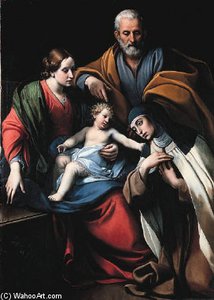
- La Sagrada Familia con Santos (1620): Una obra maestra que muestra el drama barroco a través de las figuras de José, María y Jesús, rodeados por la presencia de San Francisco y Juan el Bautista en un entorno ricamente detallado.
- El matrimonio místico de Santa Catalina: Una exhibición exquisita de composición dinámica e iluminación dramática que captura el intenso fervor religioso de la época.
- Frescos narrativos: Como su representación del viaje de Erminia hacia Jerusalén, que combina nobleza y fe con una gracia clásica y serena.
Significado histórico y herencia artística
La importancia de Alessandro Tiarini reside en su posición única entre las tradiciones clásicas del Renacimiento tardío y la intensidad emotiva del Barroco pleno. Al mantener un camino independiente, alejado de las rigideces de la Academia Carracci, aportó una cualidad personal, a menudo más sombría e introspectiva, a sus temas religiosos. Sus obras no se limitan a ilustrar las escrituras; invitan al espectador a una experiencia compartida de santidad y sufrimiento humano.
A lo largo de su larga vida, que abarcó casi nueve décadas, Tiarini enriqueció el patrimonio artístico boloñés con una capacidad inigualable para plasmar la textura y la luz. Su legado permanece grabado en las grandes galerías de Italia, donde sus retablos y frescos continúan sirviendo como ejemplos profundos de cómo el arte puede tender un puente entre lo terrenal y lo divino. A través de su maestría en el óleo sobre lienzo y el fresco monumental, Tiarini aseguró que el espíritu de la Escuela Boloñesa perdurara como una piedra angular del arte europeo del siglo XVII.